

UN will oversee tests at Iran’s Parchin site, diplomats say
IAEA inspectors will accompany Iranian technicians taking samples at suspected nuclear testing site, officials now claim
 Add ToI as a Preferred Source on Google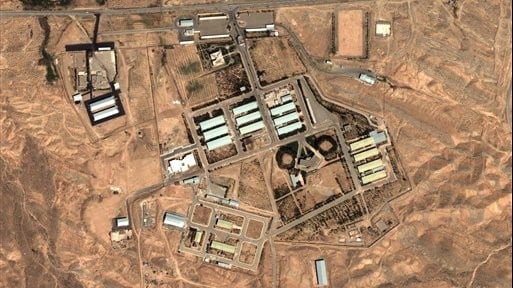
Inspectors from the United Nations nuclear watchdog will be present at Iran’s controversial Parchin military installation when samples are taken from the site, diplomats said Friday, according to Reuters.
The officials spoke based on familiarity with a confidential agreement between Iran and the International Atomic Energy Agency concerning inspections at Parchin, which is suspected of having been used to test nuclear weapons-related technologies. The agreement accompanies the internationally brokered agreement on Iran’s nuclear program, reached on July 14.
“There was a compromise so the Iranians could save face and the IAEA could ensure it carried out its inspections according to their strict requirements,” one diplomat told Reuters. “The IAEA will be present when the Iranians take the samples (at Parchin). This approach to managed access is something that’s fairly standard in the IAEA toolbox. Nothing to worry about really.”
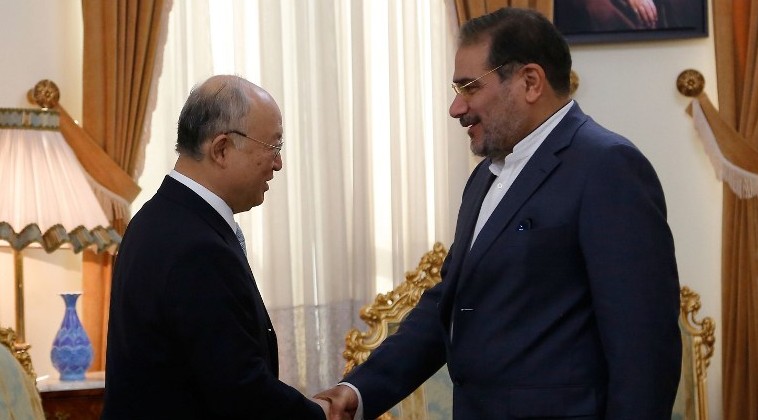
Last month IAEA chief Yukiya Amano attempted to assuage concerns about the nuclear agreement’s enforcement by the atomic watchdog. “The arrangements made with Iran are technically sound and consistent with IAEA safeguards,” he said. “They do not compromise our standards in any way.”
The IAEA wants to probe allegations that at least until 2003, Iran’s nuclear program had “possible military dimensions” — in other words that it conducted research into making a nuclear weapon.
To this end, Iran and the agency agreed a “road map” — also on July 14 — with the aim of the IAEA being to complete all meetings and visits in its investigation by October 15 and to issue a final report by December 15.
Iran has said that the allegations that it sought to build a bomb — including that it conducted relevant explosives tests at Parchin — are groundless and based on faulty intelligence provided by its enemies to a gullible and partial IAEA.
Neither the IAEA nor Iran have disclosed the details of the inspection procedures concerning Parchin. According to a leaked draft of the agreement, published last month by The Associated Press, Iran will provide the agency with photos, videos and environmental samples, but it suggested that IAEA inspectors wouldn’t be allowed into the military facility.
Referring to the leaked draft, the unidentified diplomat told Reuters that “there have been distortions and inaccuracies in the media that made it look like Iran would simply inspect itself. That’s not how it works.”
Iran provided the IAEA with a dossier of information on August 15 that included “explanations in writing, and related documents,” according to the agency. Amano says it was a “substantive volume” of material.
The IAEA said Wednesday that information provided by Iran regarding its nuclear program contained “ambiguities” and that it was seeking clarification from Tehran.
“The IAEA submitted on 8 September questions to Iran on ambiguities regarding the information Iran provided to the IAEA on 15 August 2015,” the agency said.
It gave no further details, saying in a statement that “technical-expert meetings, technical measures and discussions will be organized in Tehran prior to 15 October 2015 to remove the ambiguities identified by the IAEA.”
Earlier this month, the former number two official at the IAEA told The Times of Israel in an interview that the nuclear deal’s mechanism for inspecting Iran’s Parchin military complex appears to be unreasonably lax and called on the agency to release details concerning the side-deals with Iran governing inspection.



The Times of Israel Community.