

With Obama in town, Kenya says it’s not a ‘hotbed of terror’
President pays respects to victims of attacks on US Embassy in Nairobi, as locals use Twitter to rebuff CNN remark
 Add ToI as a Preferred Source on Google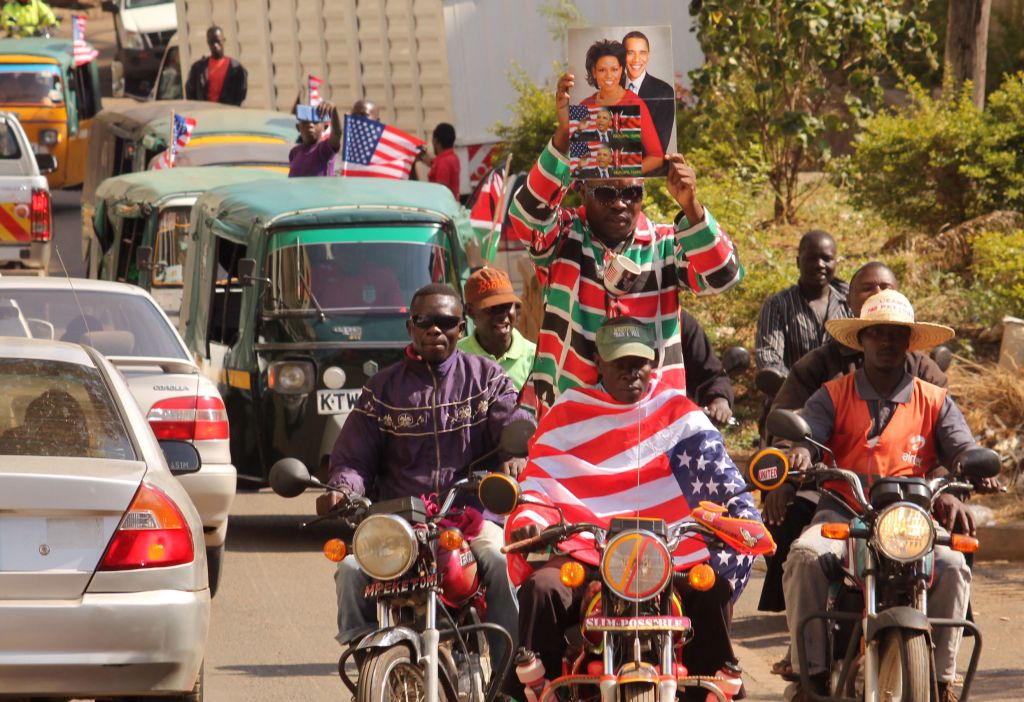
NAIROBI — Kenyans eager to have their country in the spotlight during President Barack Obama’s visit have been irked by a news report describing the East African nation as a “hotbed of terror.”
Kenyans quickly mobilized a Twitter campaign using the hashtag #SomeoneTellCNN to correct what many here have called an exaggeration by the television network.
President Uhuru Kenyatta even joined in, telling attendees at the Global Entrepreneurship Summit that they will find Kenya to be “a hotbed of vibrant culture, spectacular natural beauty, and a wonderful people with infinite possibility.” The crowd laughed and applauded at his remarks.
Kenya has struggled to contain the threat from al-Shabab militants based in neighboring Somalia. Al-Shabab, a group linked to al-Qaeda, has conducted major attacks in Kenya, including the 2013 attack on Nairobi’s Westgate mall and an April attack in Garissa town that killed nearly 150 people.
CNN later added an editors’ note to its story on its website that read: “The headline and lead of this article has been recast to indicate the terror threat is a regional one.” A CNN spokeswoman said the network had no further comment aside from the editors’ note.
Kenyan troops are deployed in Somalia to counter al-Shabab, and the United States has carried out drone strikes against suspected militants there.
Obama’s first full day in Africa came with a solemn reminder of deep losses the US has suffered on the continent.
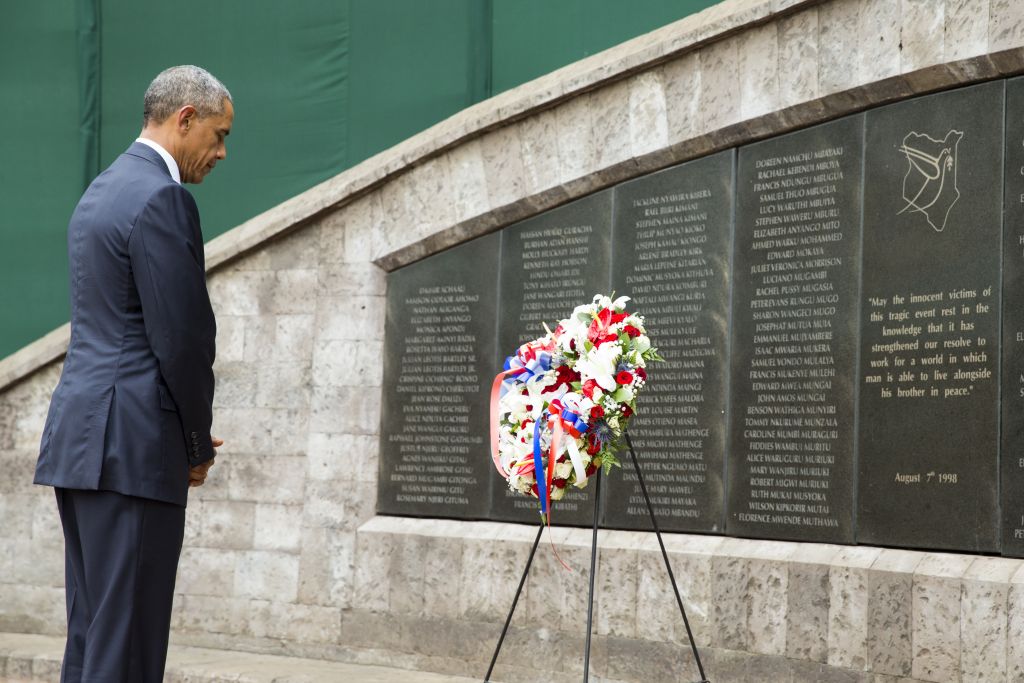
In between meetings in Nairobi, Obama placed a red-and-white wreath at the site of the 1998 bombing of the US Embassy here, bowing his head for a moment before studying the names of the victims etched into a brick wall. He was joined at the site by his national security adviser, Susan Rice, who was the top US diplomat to Africa at the time of the bombing.
Extremists simultaneously attacked the US embassies in Nairobi and Dar es Salaam, Tanzania, on Aug. 7, 1998. The Kenya attack killed more than 200 Kenyans and 12 Americans at the embassy.
Thousands were injured, including Julie Ogoye, a Kenyan government worker, who was sitting at her desk when the explosion occurred. She suffered grievous injuries in the attack and has long questioned whether the United States will provide financial compensation to her and other victims.
“I just want to know what his view is on the issue,” Ogoye said of Obama on Saturday.
Ogoye, who has three children, was able to resume her work for the government body that oversees teachers. She said she was grateful for American funding soon after the bombing that enabled her to get medical treatment in Germany.
“I feel at least the initial support has helped a number of us get on our feet,” she said.
Copyright 2015 The Associated Press.



The Times of Israel Community.