

A horrific attack thwarted, but every reason to fear that worse is ahead
Israel is limited to defensive actions, and Egypt cannot even bring security to its mainland, so more terror from the Sinai seems certain
 Add ToI as a Preferred Source on Google
Mitch Ginsburg is the former Times of Israel military correspondent.
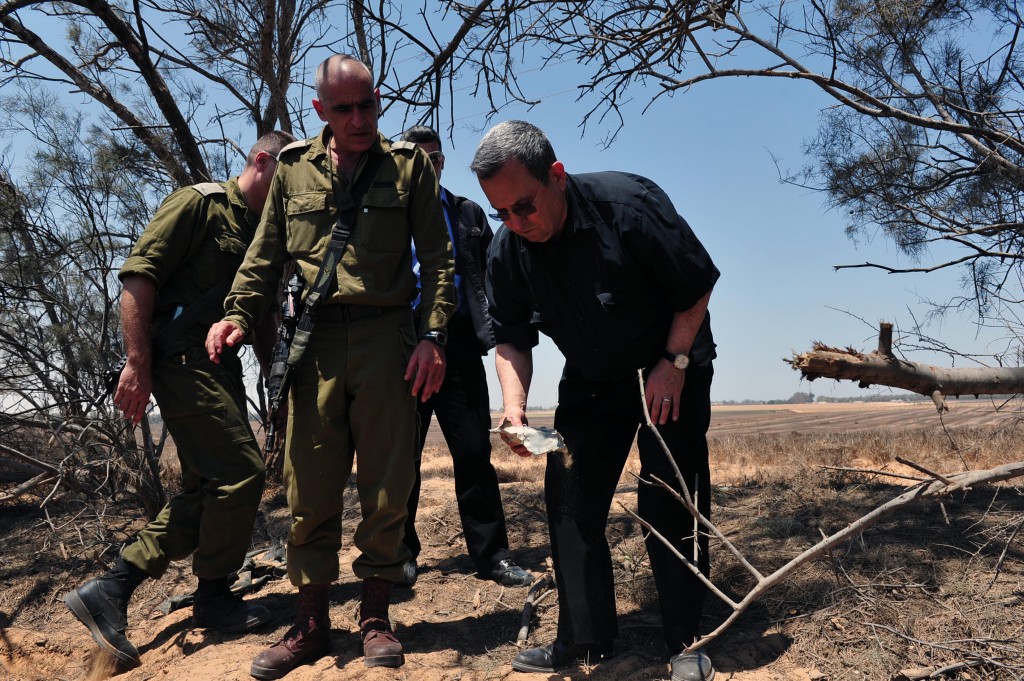
The IDF managed on Sunday evening to halt a squad of suicidal terrorists each armed with explosive belts and in possession of an armored vehicle and a truck packed with 1,000 pounds of explosives.
The army’s initial investigation revealed an optimal result from top to bottom, including close cooperation between the Shin Bet and the IDF, and smooth coordination between the infantry, the armored forces and the air force.
Yet this success does not change one central, grim fact: Neither Egypt nor Israel has the capacity to fully defuse the ticking bomb of terror in the Sinai. Which means there will be further attacks, with potentially devastating consequences.
Both sides are shackled. Israel is constrained by its aspiration to cling to the strategic peace accord with Egypt, and therefore acts only defensively in the southwestern border region. Egypt is held back by its desire not to be seen to be aiding Israel or abandoning its Islamic principles, and by its chronic and fundamental domestic troubles.
Mainland Egypt today is in a state “of complete and utter chaos,” according to Brig. Gen. (res.) Shalom Harari, a member of the Institute for Counter-Terrorism and a former adviser to the Defense Ministry on Palestinian affairs. He says that citizens in Egypt proper no longer enjoy even a basic sense of security. Copts have come under mass attack, their houses burned; segments of the train track between Cairo and Aswan are stolen on a daily basis; the Saudi Arabian embassy, in the heart of Cairo, was vandalized, the life of the ambassador reportedly threatened.
‘There are 85 million mouths to feed, there is no tourism, there is no electricity. And you want them to deal with the Sinai?’
“Ever since the Tahrir uprising, the police have been stripped of legitimacy,” Harari said. “Security forces are helpless even in the Nile Delta… There are 85 million mouths to feed, there is no tourism, there is no electricity. And you want them to deal with the Sinai?”
Harari contends that although the Sunday night assailants killed 16 Egyptian border police officers inside their base, as they sat down to break their daily Ramadan fast, President Mohammed Morsi and the Muslim Brotherhood will still be portrayed as serving Israel’s interests if they crack down on the Islamist terror cells in central and northeastern Sinai.
Other Israeli analysts claim that this attack is different, and will prompt a more substantive Egyptian response. But even they agree that the bottom line is the same — Egypt will not eradicate the terror cells in the Sinai, cells that threaten the peace between the two nations.
Dr. Jacques Neriah, an analyst at the Jerusalem Center for Public Affairs and a former colonel in the IDF’s military intelligence corps, for instance, expects Morsi will act, but within limits.
He said that in this attack the army’s pride had been wounded, there was blood to avenge, and the enemy was widely believed to have acted in a cowardly manner by striking while soldiers broke their fast. “Morsi has reason to want to chop off a few heads, to show that order has been restored,” said Neriah. “But he does not have enough oxygen in his lungs to launch a major operation.”
Harari and Neriah agreed that a successful military mission, to achieve a strategic reassertion of Egyptian control in the Sinai, would require months and not weeks. Both believed that Egypt would request an amendment to the military agreements of the Camp David Accords, allowing for a larger military presence in the four demilitarized zones in the Sinai Peninsula. Both believed that Israel would acquiesce to a slightly increased, mostly infantry-based rise in troop levels. And neither thought it would do much good in the long term.
The IDF, for its part, has altered its deployment along the southwestern border.
It has added a new brigade near Eilat. It has established Rimon, a reconnaissance unit trained specifically to fight in the desert. It has begun sending top-level infantry forces to the region instead of Border Police and reservists. It has heightened its surveillance presence.
According to former intelligence officials, it has surely shuffled intelligence priorities, devoting both technical and human resources to the once-sleepy desert that has become a mini Tora Bora, a hotbed of terrorist activity beyond the reach of the law.
And ever since last August’s attack on Route 12, in which eight Israelis were killed in a sophisticated cross-border terrorist infiltration from Sinai, the Defense Ministry has been working feverishly to finish the security barrier along the border. A spokesman said that the fence would be completed in September or October.
Yet all of these actions are defensive.
But then defensive actions are the only actions Israel feels it can take to try to prevent more attacks like Sunday’s.
Nobody doubts that there will be more. They may not all end as successfully as this one did for Israel. And the longer they continue, the more they will erode the 34-year-old Israel-Egypt peace treaty.







The Times of Israel Community.