

Ahead of Rosh Hashanah, 71% of Israelis view national mood as poor, survey finds
Israeli Jews more pessimistic than Israeli Arabs; at the same time, 33% of Israelis think coming year will be better, up from 23% last year
 Add ToI as a Preferred Source on Google
Michael Horovitz is a breaking news editor at The Times of Israel
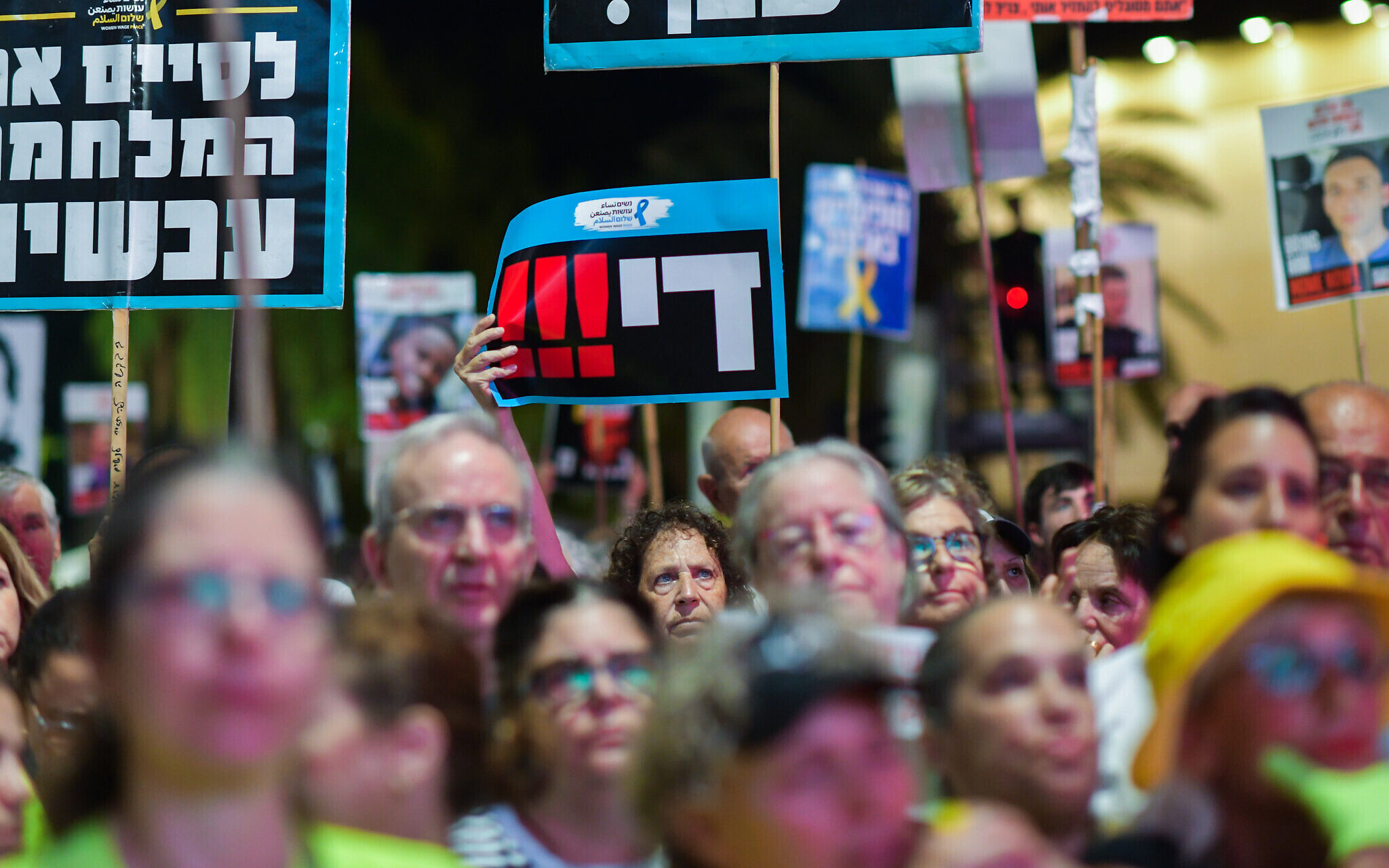
Ahead of the new Jewish year, a majority of Israelis view the country’s national mood as poor, according to a new survey published Wednesday. At the same time, there is greater optimism regarding the coming year than there was a year ago.
According to the August 2025 Israeli Voice Index by the Israel Democracy Institute, 71 percent of the public believes the national mood is fairly poor or very poor, with more Jewish Israelis (73%) holding this view than Arab citizens (58%).
Among Jewish respondents, a majority of all communities, except for national religious Jews, view the national mood poorly, including Haredim (59%), traditional religious Jews (55%), traditional non-religious Jews (81%) and secular Jews (86%). Among national religious Jews, 49% say the national mood is low.
Additionally, the survey found that most Jewish citizens in all three political camps viewed the national mood poorly, with vast majorities on the left (93%) and center (89%) feeling pessimistic. The right, at 61%, was slightly less so.
The survey was released as Israel neared two years of war with Hamas in Gaza, a fight that began after the terror group’s October 7, 2023, massacre.
In addition to the war in Gaza, over the past year, Israelis experienced a 12-day war with Iran, a war with Hezbollah in Lebanon, mass anti-government protests and rallies for hostages who remain in the Strip, conflict over Haredi enlistment and political uncertainty. The country also faces growing international isolation over the ongoing war and humanitarian crisis in the Strip.
Rosh Hashanah will be celebrated from the evening of September 22 through September 24.

The IDI survey found that people were a bit more optimistic when it came to their personal mood: While 48% see things poorly, 49.5% view matters as fairly good or very good, “which may suggest that the public tends to evaluate the national mood as worse than it really is,” IDI said in a statement.
Among Jewish respondents, Haredim (73.5%) and national religious communities (73%) have the most positive evaluations of their personal mood, followed by traditional religious (59.5%), while only a minority of traditional non-religious people (44%) and secular Jews (41%) view their personal mood positively.
Divided into political camps, only 35% of right-wing people define their mood as poor, compared to 69% of respondents on the left and 61% in the center.
Only 39% of Arab respondents (39%) view their personal mood as good, compared to 52% of Jewish respondents.
IDI said that according to a cross-tabulation of responses, 62% of those who evaluate the national mood as poor make the same judgment regarding their personal mood, while 89% who view the national mood as good will also define their personal mood as such.
IDI determined that Israelis are more optimistic than they were last year ahead of the Jewish New Year, with only 24.5% of respondents expecting the coming year to be worse than the current one — down from 42% who said the same last year.
Furthermore, 33% of respondents believe next year will be better than the last — up from 23% last year — while 30% think things will stay the same. Some 12.5% didn’t know how to respond.
Broken down by political camp, right-wingers were the most optimistic about next year, with 46% saying the coming year would be better and only 14% thinking it would be worse. Another 31% said things would stay the same, and 9% did not know what to answer.
Among centrists, 30% believed the next year would be better than the last, and 32% believed it would be the same. Meanwhile, 28% said it would be worse than the last, and 10% didn’t know.
The left wing was the only group in which a plurality of respondents, 43%, said the next year would be worse than the current one, with only 19% optimistic about next year. Twenty percent said it would be the same as the last, and 18% replied that they didn’t know.
IDI surveyed 600 people interviewed in Hebrew and 150 in Arabic. The research was conducted by internet and telephone between August 24-28, and has a margin of error of 3.58%.








The Times of Israel Community.