

As one Palestinian family’s history shows, home demolitions won’t stop attacks
Israel’s government won’t speak with the much vilified PA head Abbas, but holds indirect talks with Hamas even as it carries out terrorism in West Bank

 Add ToI as a Preferred Source on Google
Avi Issacharoff, The Times of Israel's Middle East analyst, fills the same role for Walla, the leading portal in Israel. He is also a guest commentator on many different radio shows and current affairs programs on television. Until 2012, he was a reporter and commentator on Arab affairs for the Haaretz newspaper. He also lectures on modern Palestinian history at Tel Aviv University, and is currently writing a script for an action-drama series for the Israeli satellite Television "YES." Born in Jerusalem, he graduated cum laude from Ben Gurion University with a B.A. in Middle Eastern studies and then earned his M.A. from Tel Aviv University on the same subject, also cum laude. A fluent Arabic speaker, Avi was the Middle East Affairs correspondent for Israeli Public Radio covering the Israeli-Palestinian conflict, the war in Iraq and the Arab countries between the years 2003-2006. Avi directed and edited short documentary films on Israeli television programs dealing with the Middle East. In 2002 he won the "best reporter" award for the "Israel Radio” for his coverage of the second intifada. In 2004, together with Amos Harel, he wrote "The Seventh War - How we won and why we lost the war with the Palestinians." A year later the book won an award from the Institute for Strategic Studies for containing the best research on security affairs in Israel. In 2008, Issacharoff and Harel published their second book, entitled "34 Days - The Story of the Second Lebanon War," which won the same prize.
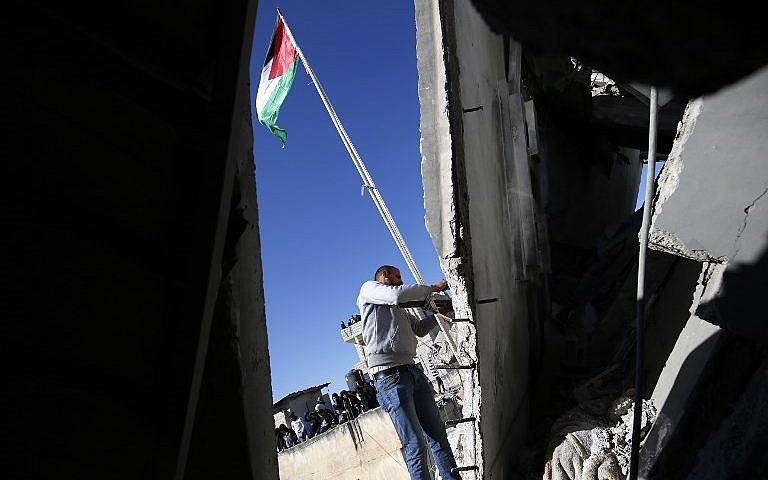
The Abu Hamid family, whose home was demolished by the Israeli military early Saturday, has a long history of involvement in attacks on Israeli security forces.
In 1991, the Israel Defense Forces destroyed the family’s home in the al-Amari refugee camp near Ramallah over the involvement of one of the brothers — Nasser, a Fatah member — in terrorism. That house was later rebuilt… before being demolished again Saturday.
In 1994 another brother, Abdul Munim Abu Hamid, along with two Hamas members, killed Shin Bet agent Noam Cohen. Abdul himself was killed a few months later.
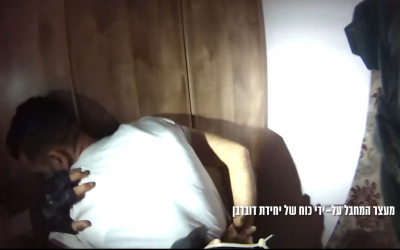
Nasser Abu Hamid, upon his release from prison, became a founder of Fatah’s Al-Aqsa Martyrs’ Brigades at the start of the Second Intifada and in April 2002 was arrested by the IDF during Operation Defensive Shield, not far from the family home.
Other brothers would also spend time in Israeli prisons over the years, among them Islam Yousef Abu Hamid.
During an operation of the elite Duvdevan unit in al-Amari in May, he is said to have thrown a marble slab from a roof at Israeli forces, killing Staff Sgt. Ronen Lubarsky — and leading to the razing of the family home early Saturday.
The sound and the fury
The family’s history shows that home demolitions are, unfortunately, highly unlikely to deter would-be attackers.
Although some seem to believe destroying assailants’ homes is a comprehensive solution to preventing terrorism, the case of the Abu Hamid family shows that not only do they not prevent attacks — they can sometimes even fuel motivation for revenge.
The Abu Hamid home will be rebuilt within a few years, likely with Palestinian Authority funding, as one Fatah leader has said.
Even if the Fatah money is not forthcoming, someone else — perhaps Hamas — will provide the funds.
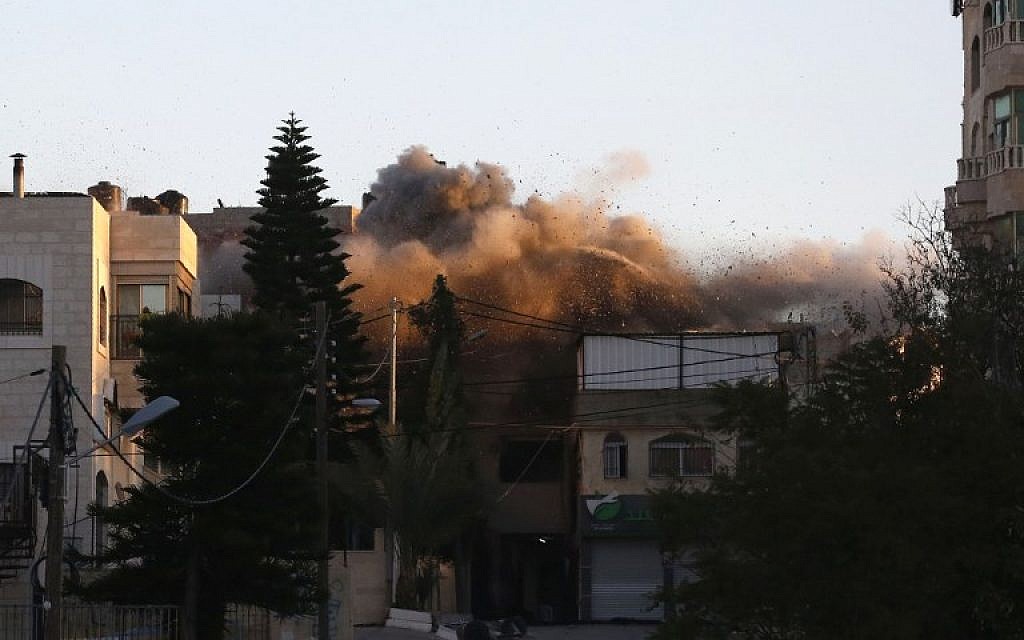
There is no magical solution for preventing attacks on Israeli citizens and soldiers, and anyone who holds up house demolitions as the ultimate means to do so is either mistaken or deliberately misleading others. It is an excellent way of soothing the families of the victims and an Israeli public out for revenge, but nothing more than that.
At the height of the suicide bombing wave of 2003, three years after the start of the Second Intifada, a report was drawn up by the IDF on the policy of home demolitions, a practice that had received an official green light in the summer of 2002. Hundreds of terrorists’ family homes had since been destroyed.
But the report determined there was no evidence that the demolitions had a deterrent effect and that furthermore, the number of attacks actually rose a few months after the implementation of the policy.
In early 2005, a committee appointed by then-IDF chief of staff Moshe Ya’alon and headed by Gen. Udi Shani recommended ending the razing of homes on the grounds that they were not proven to be a deterrent, and declared that the damage outweighed any benefit.
A deceptive calm
While this fact may be unfortunate and while the Israeli public and politicians may be thirsty for justice, attacks such as that perpetrated by Abu Hamid — and those in the West Bank this week — will continue regardless of Israeli retribution, so long as the status quo revered by the Israeli government persists.
Terror attacks have occurred under left-wing and right-wing governments, and the current situation in the West Bank shows they are not going away any time soon.
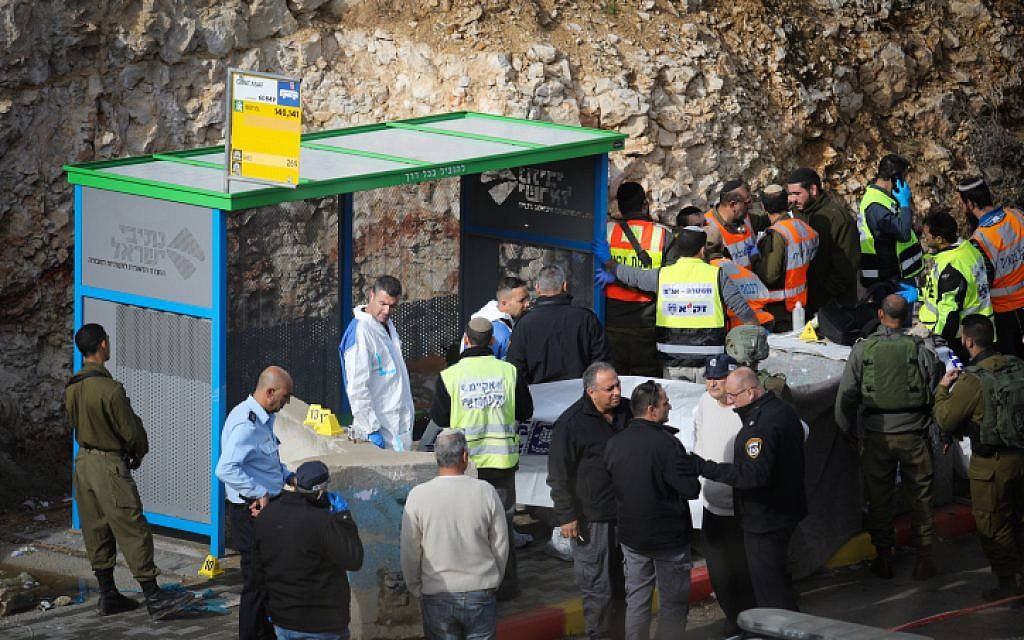
While Israelis in recent years have become used to a rather low number of attacks, the lava in the volcano that is the West Bank continues to bubble beneath the surface. The Shin Bet and IDF can attest to this, having prevented hundreds of attacks over the past year — sometimes with the close cooperation of the Palestinian Authority’s security services.
The problem, though, is that it is never truly possible to know when a volcano will erupt, and once it does, it is incredibly difficult to put out the flames; even an excellent intelligence network like the one the Shin Bet runs in the West Bank will have a hard time stopping that eruption once it starts.
Public enemy number one
Accompanying the growing demand for home demolitions, there are also increasing calls on the right to hold Palestinian Authority Mahmoud Abbas responsible for the current situation. Some extreme wings have even called to to assassinate him.
While Abbas is indeed responsible for paying stipends to the families of terrorists, he does so while simultaneously helping thwart attacks.

His removal will not have a calming effect on the ground but rather the opposite, and an explosion after he leaves the scene appears ever more likely.
In this context it is impossible to ignore Israeli actions vis-a-vis Hamas, such as allowing the indirect transfer of funds from Qatar to its military wing — the very same military wing that operates terror cells in the West Bank and murders Israelis.
Amid such absurdity, it is perhaps no wonder that a change is being felt in the West Bank: Israel’s policy of not speaking with the internationally recognized Palestinian Authority but holding indirect negotiations with Hamas is seen as reinforcing a long-held Palestinian sentiment: The Jews, led by the Netanyahu government, only understand the language of force.







The Times of Israel Community.