

As UK festivals go anti-Israel, some Jewish concert-goers try to crowd surf above the hate
Despite pervasive anti-Israel sentiment in music culture, some Jewish attendees also say they have no trouble finding others in tune with their values
 Add ToI as a Preferred Source on Google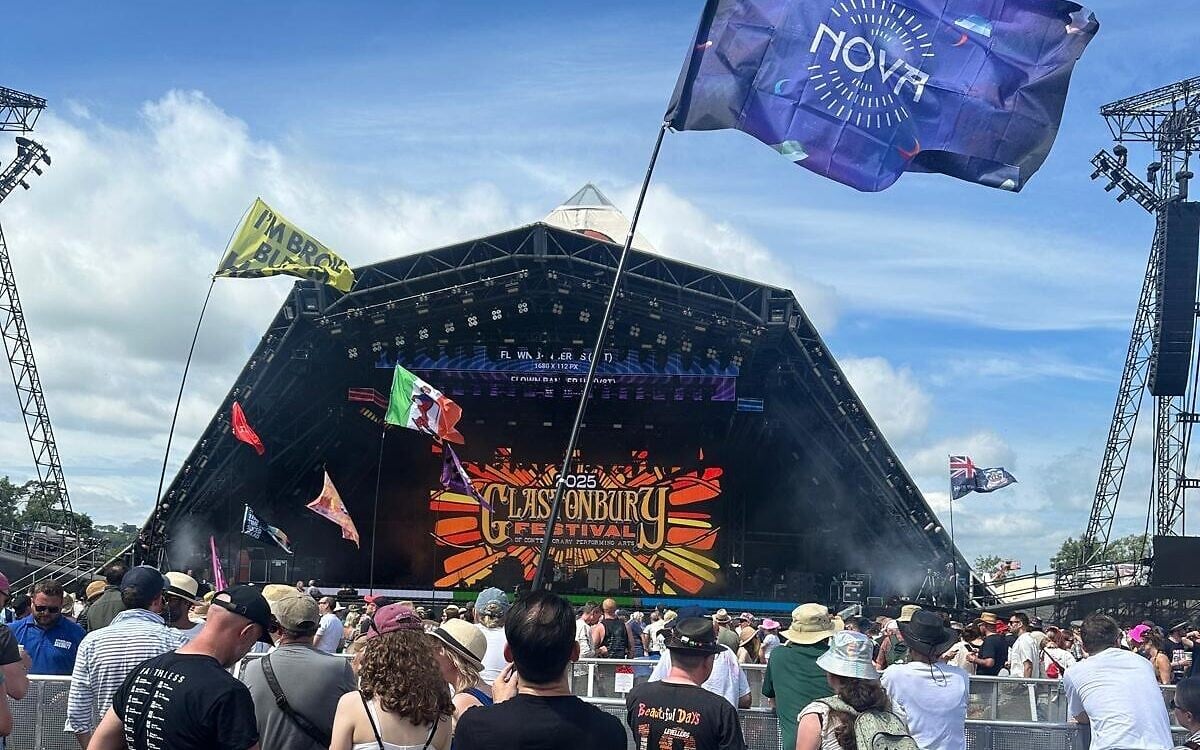
LONDON — When Michael Garcia ran the Brighton Marathon last year, he wore a “Bring Them Home” T-shirt to honor the hostages still being held by Hamas and other terror groups in Gaza. It was a small gesture, but one that felt important for the 48-year-old Londoner.
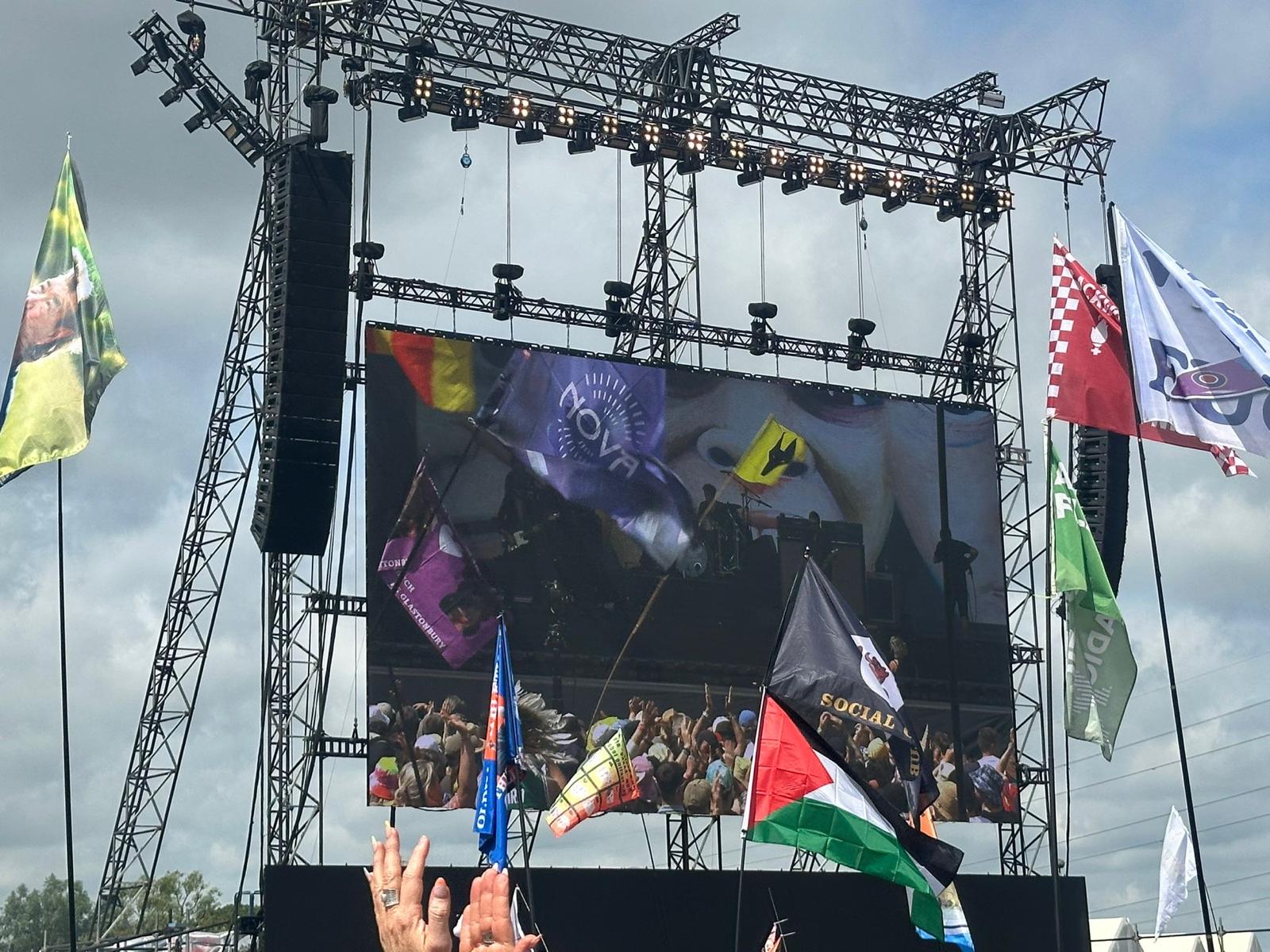
So when he snagged tickets for the Glastonbury music festival this year, Garcia decided to ramp up his quiet act of solidarity by taking along a six-foot pole to fly the flag of the Nova music festival.
In doing so, Garcia was memorializing the more than 360 revelers who were brutally slaughtered at the music festival near Kibbutz Re’im on October 7, 2023, during the Hamas-led terror invasion that saw some 1,200 people murdered in southern Israel and 251 abducted to the Gaza Strip.
Although initially apprehensive, Garcia said the experience was “overwhelmingly positive” and “like a bat signal for Jews.”
“I was obviously nervous over whether I should be doing it, but within 10 minutes of the first concert ending, I realized there was actually something more important going on and it was actually joyful,” he said. “I met three or four groups of Jewish kids who made a beeline for me as soon as that performance was over, as well as a non-Jewish Austrian girl who had an Israeli friend and was sympathetic.”
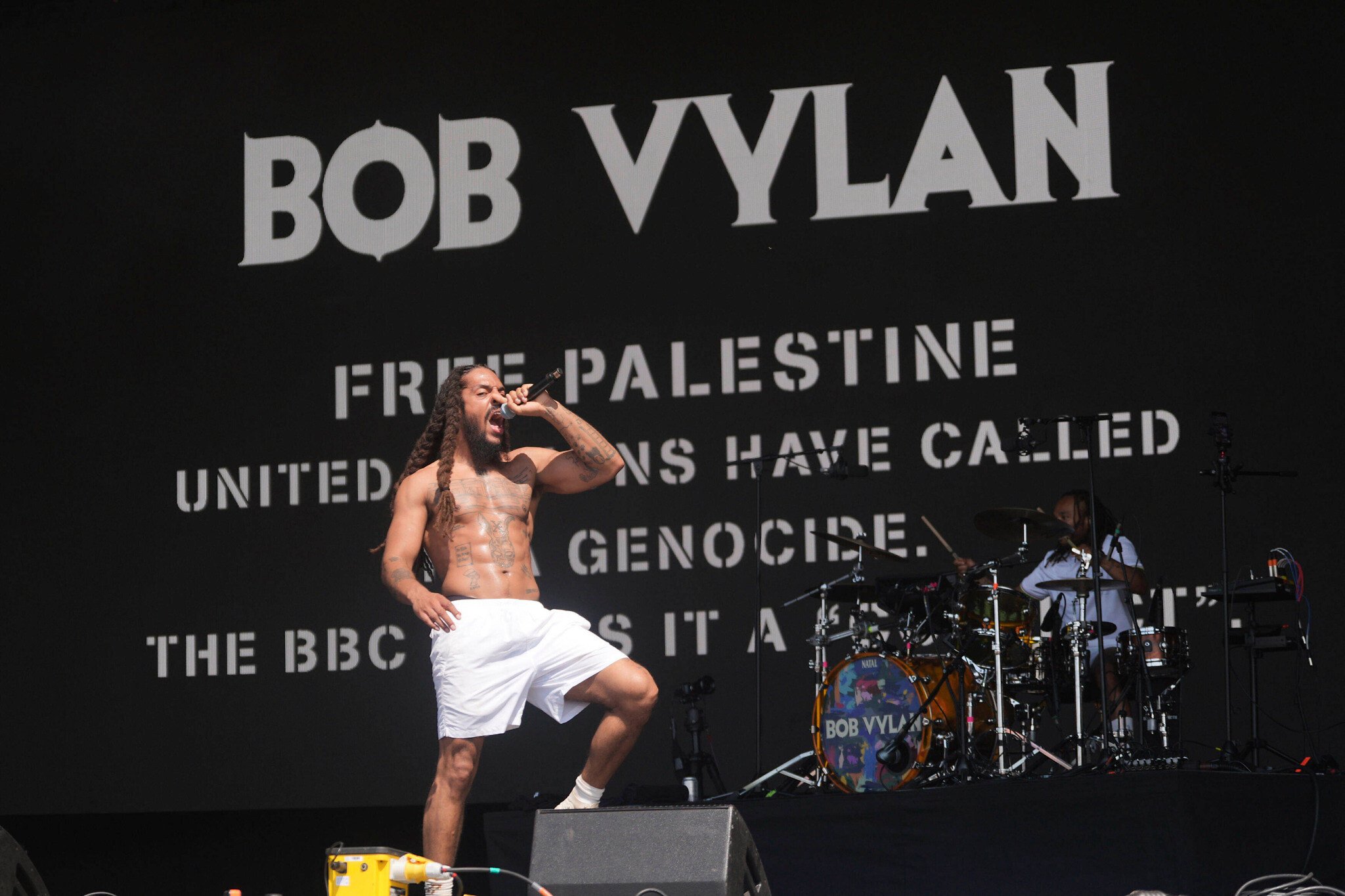
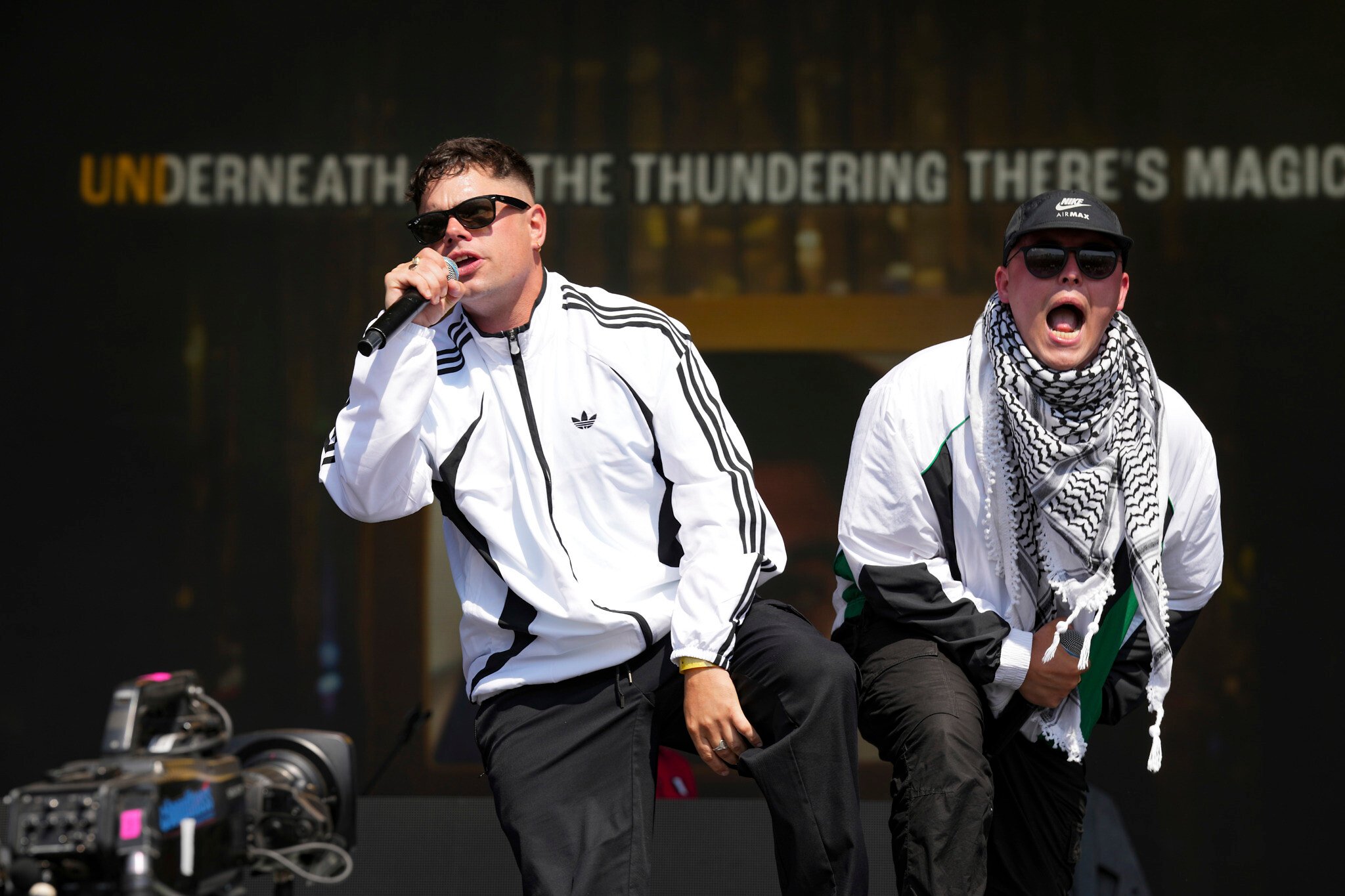
For Jews and supporters of Israel, stories such as Garcia’s have provided a welcome counterpoint to some of the uglier scenes at Glastonbury, which ran from June 25-29, such as when punk duo Bob Vylan ranted about working for a “Zionist” and led the crowd in chants of “Death to the IDF,” having declared that “you’ve got to get your message across with violence.”
The band, largely unknown before its infamous performance, has since been dropped by its agents and from a host of future events, and the BBC’s decision to live stream its performance sparked an outcry.
The music industry has “a severe antisemitism problem,” said Adam Sagir, director of The Noise Cartel Limited, a UK music PR firm specializing in rock, metal and alternative music.
Numerous acts pulled out of the Radar Festival in Manchester last weekend in protest of Bob Vylan’s removal, while fans at Black Sabbath’s farewell concert in Birmingham on Saturday booed David Draiman, vocalist of the band Disturbed, apparently due to his support for Israel.
Kneecap broke the dam of hate
Despite one of its members facing terror charges for displaying support for Hezbollah, Irish band Kneecap recently played to a crowd of 45,000 in London’s Finsbury Park, its largest gig to date. Meanwhile, Jewish music executives who called for the group to be banned from Glastonbury have been doxed online, according to the Mail on Sunday.
It is the latest development in a worrying trend, said Sagir.
“Kneecap broke the dam of hate when they stood onstage at Coachella and declared, ‘Fuck Israel. Free Palestine,’” he said. “Despite a couple of festivals and shows dropping them, the band doubled down on their rhetoric, their management and agent fully supported them, petitioning other artists to sign their names in support and solidarity, and media fawned over them, even after their apparent support of Hamas and Hezbollah.”
“This would have been unthinkable a couple of years ago, but apparently now it’s chic to support terrorist groups with manifestos based on the elimination of Jews,” he said.
Sagir believes that while festivals are not unsafe, there is a definite air of uneasiness.
“I have spoken with people who have left concerts halfway through due to something one of the acts said that they were outraged and upset by,” Sagir said. “Personally, I have avoided sets at festivals by certain bands, and am skipping one festival this year where I have artists playing on the same bill as a particularly ignorant and hate-filled act whose audience I have no desire to be anywhere near.”
Creating ‘bubbles of light’
Debs Armstrong is an events producer and has been organizing music festivals for over 20 years.
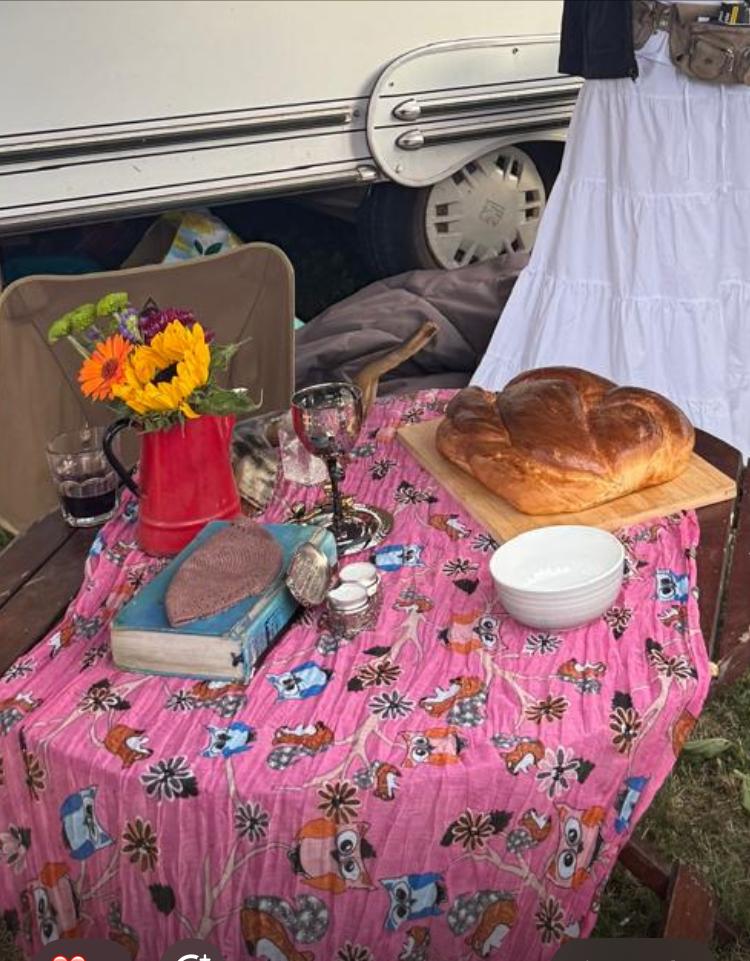
She explained that Glastonbury is made up of several different areas put together by different organizers, two of which she co-founded. Her efforts this year were on a smaller backstage area, which she described as a “little mini club.” The venue hosted a Glastonbury-style Shabbat celebration on Friday night, complete with homemade challah.
“I was there to create a bubble of light in a dark space,” Armstrong said. “What I decided to do was to really lean in to support the other Jewish people that I knew on site and have a nice Shabbos and get together and make everyone know that there’s people that they can talk to if they are worried about anything.”
“Antisemitism is everywhere,” she said, adding that “festivals are a reflection of life and culture.”
Yet avoidance is not the answer, she believes.
“You can’t fight the tide, but you can surf it,” Armstrong said. “There’s a lot of people who are great and haven’t bought into the mass hysteria. You just have to tune in with them, Jewish and non-Jewish. It’s the same that applies to everything.”
You can’t fight the tide, but you can surf it
That was the approach adopted by Romy Pikoos, a kosher food blogger who said that “99.9% of Jewish people… avoided that stage [where Kneecap and Bob Vylan played] like the plague.”
There had been much hype around Kneecap’s performance on the West Holts stage on Saturday afternoon, and organizers had to close off the site due to overcrowding. Bob Vylan immediately preceded Kneecap.
Avoiding that stage, Pikoos said, was easy, as dozens of acts were performing simultaneously. Pikoos, an Australian living in London, said she found out what had happened after reading about it on social media the following day.
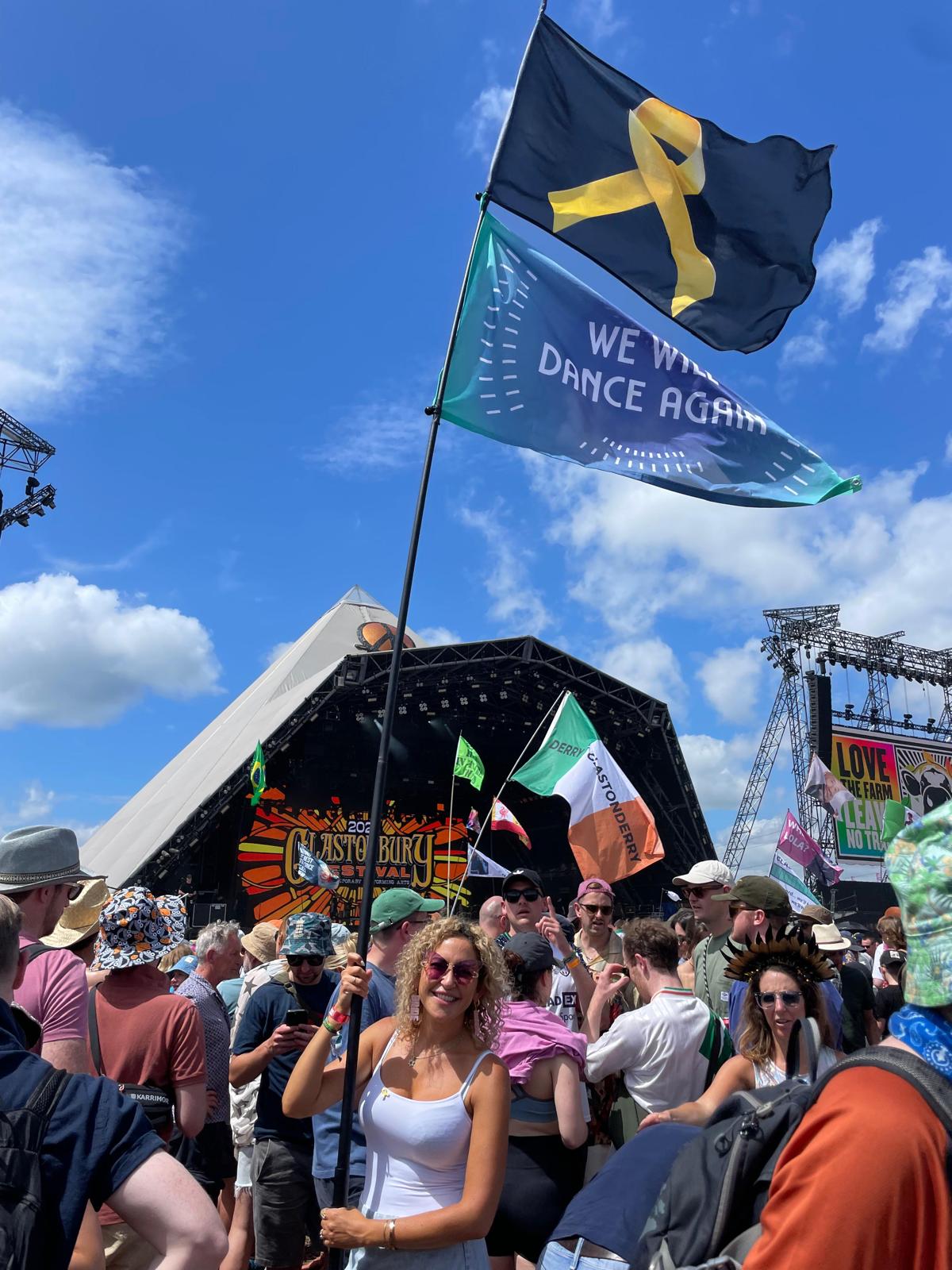
“The vibe definitely felt different,” said 38-year-old Pikoos. “Did we experience anyone discriminating against us or being horrible to us because we were Jews? No.”
Pikoos spent the weekend with her husband and their friends, most of whom are Jewish. They wore pins in support of the hostages, waved “Bring Them Home” flags, and chatted throughout about how they were feeling.
This intensified after the Bob Vylan performance. As Pikoos and her friends chatted to people waiting in line for the bathrooms or refreshments on Sunday, they couldn’t help wondering, “Were they chanting, ‘Death to the IDF’ yesterday?” she said.
While she said her festival experience was largely positive, Pikoos admits the “bar is so low for Jewish people right now.”
This isn’t the time to be hiding, it’s the time to be proud
“It could be the most random, obscure act, and you were just there enjoying the music. They’d barely introduced themselves and would then make some comment [about Israel],” she said. “So whenever we went to a gig… if they finished the set and hadn’t said anything, we’d all look at each other and there was this collective sigh of relief.”
Shared experiences created bonds, Pikoos said. “I was wearing a Star of David the whole time. This guy came over and pulled out his Star of David from his pocket and said, ‘I’ve taken mine off because I was scared how it would be received.’ I said: ‘Put it back on. This isn’t the time to be hiding, it’s the time to be proud.’”
A flag-waving Israel supporter
There was no hiding for Garcia. For three days, the father of three walked around the sprawling site with the huge Nova festival flag.
“I couldn’t have a real experience of enjoying myself without recognizing the most significant event that happened at any music festival in the world,” he said. “However token a gesture, I wanted to make sure I was representing the people who went to a festival and didn’t come back.”
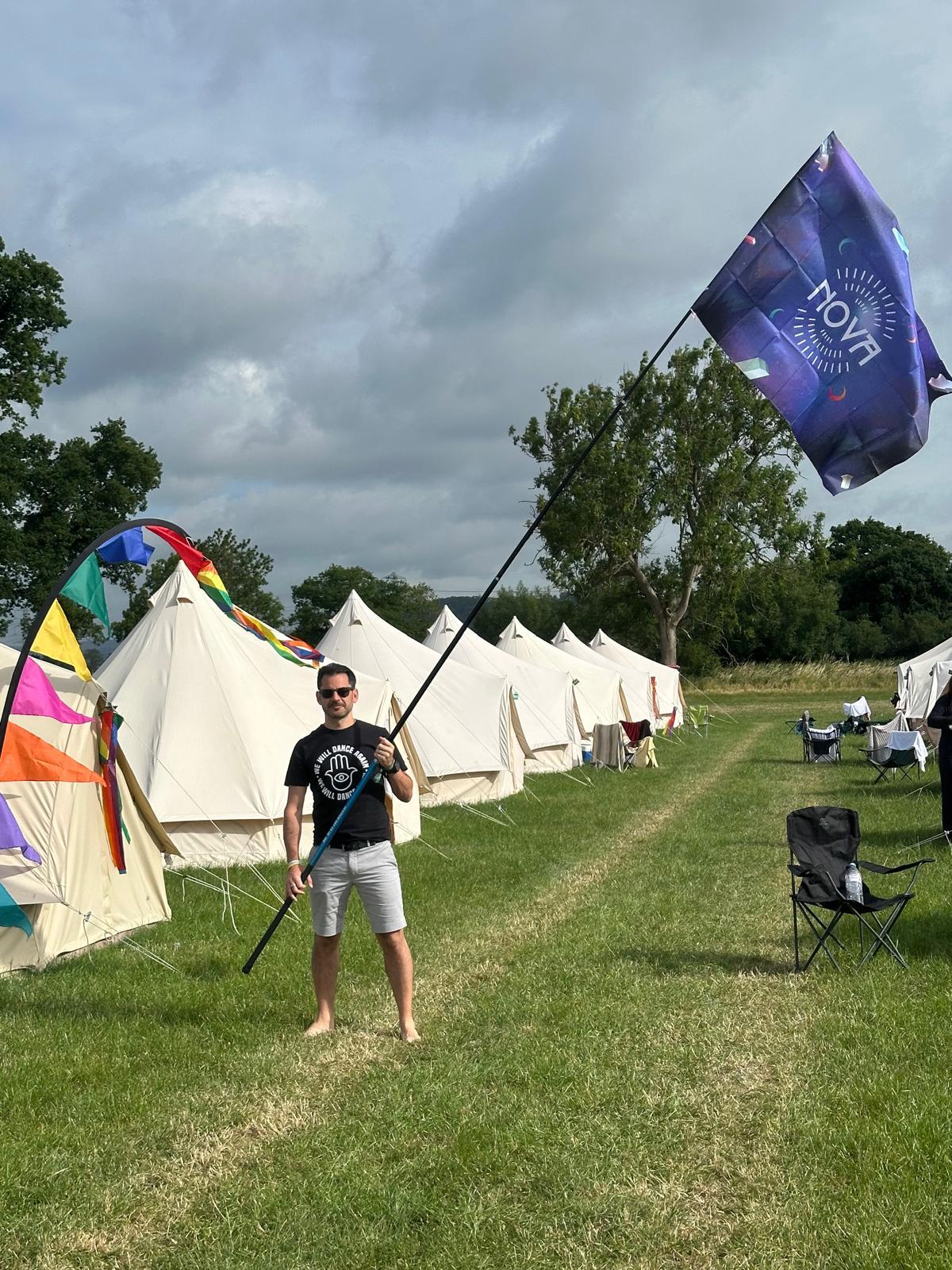
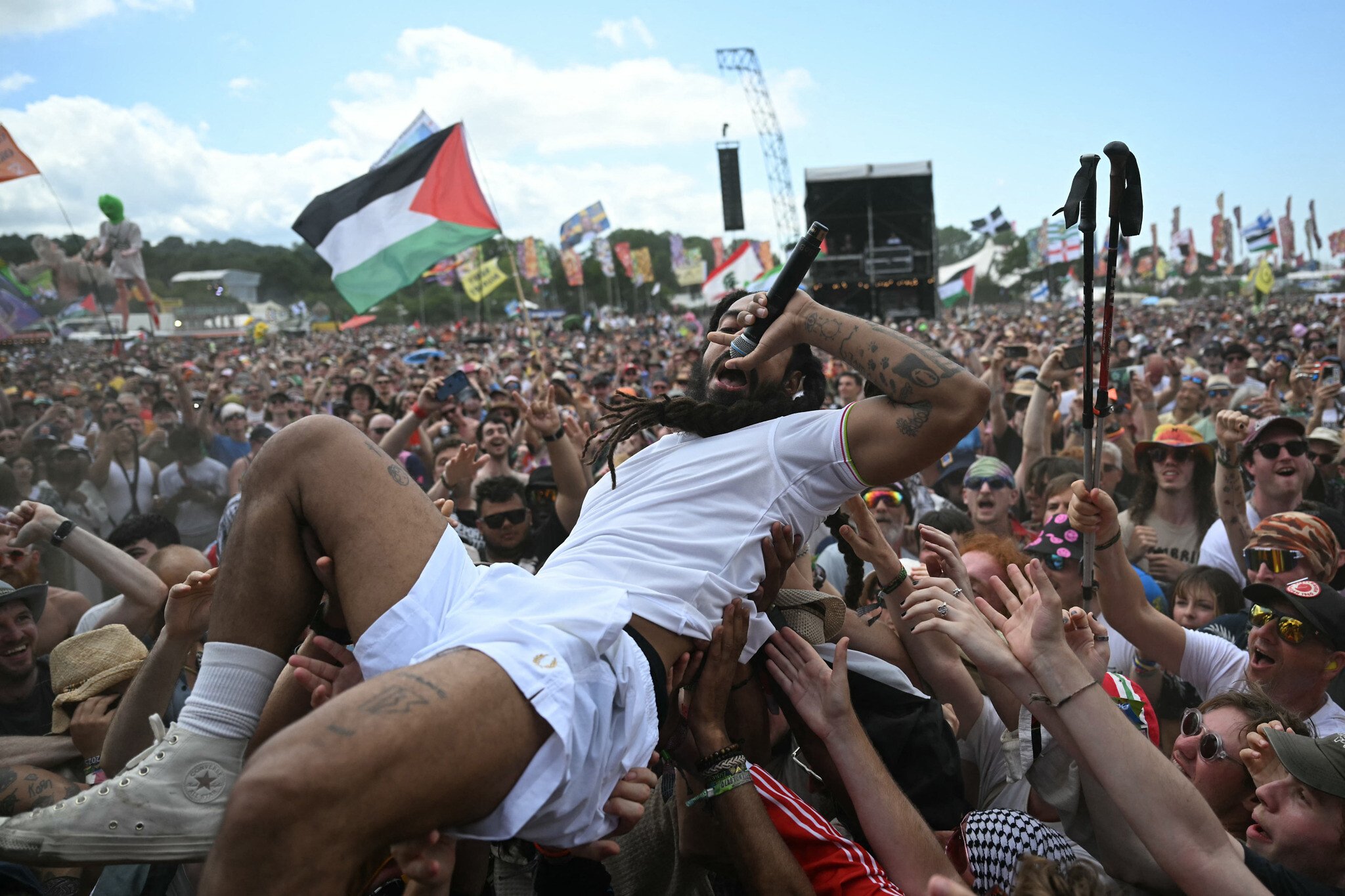
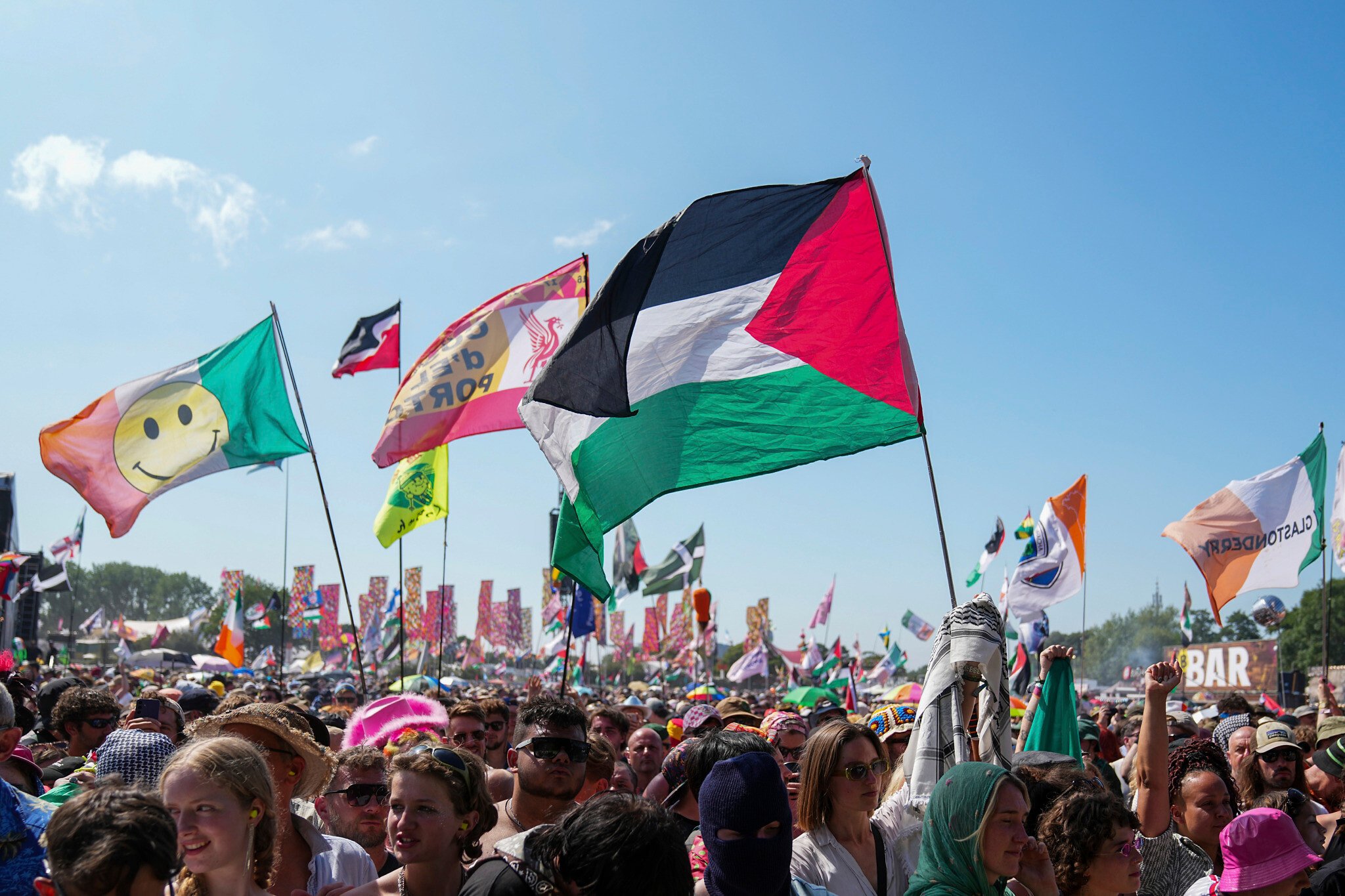
Garcia said that while he went expecting to see a sea of Palestinian flags, the reality was that it was only a “tiny tiny percentage.” That said, he saw a few other causes being championed.
“I didn’t see a single Ukrainian flag. I didn’t see a single ‘Just Stop Oil’ flag, transgender rights flags. Any other left-wing causes, apparently they don’t matter anymore. Nothing about Sudan, nothing about Yemen. Nothing.”
Then, on Saturday of the festival, came Bob Vylan’s anti-Israel rant.
“By Sunday, I was more determined to wave it than ever — I was walking between stages holding it. It’s a bit of a shlep holding this big pole, but I had it everywhere I went and people kept stopping me. It was amazing,” Garcia said, using the Yiddish word for “drag.”
“It was lovely just to meet people and people were having a nice chat,” he said. “I maybe expected people to say hi, I didn’t expect them to say thank you, I didn’t expect them to say how much it helped them.”
Will he return? “In a heartbeat,” said Garcia. “Next time I’ll take a bigger flag with a taller pole.”



The Times of Israel Community.