

Author plays Indiana Jones on the trail of ‘the World’s Oldest Bible’
In 1883, Moses Shapira claimed to have found ancient parchments with the text of Deuteronomy in the Judean Desert. But they were dismissed as forgeries, and he committed suicide. Decades later, the Dead Sea Scrolls were uncovered in the same area. Chanan Tigay set out to discover if Shapira was wronged
 Add ToI as a Preferred Source on Google
Reporter at The Times of Israel

BOSTON — Whether or not the “oldest Bible” he hunted was forged, journalist Chanan Tigay just wrote a myth-shattering prequel to the epic 1947 discovery of the Dead Sea Scrolls.
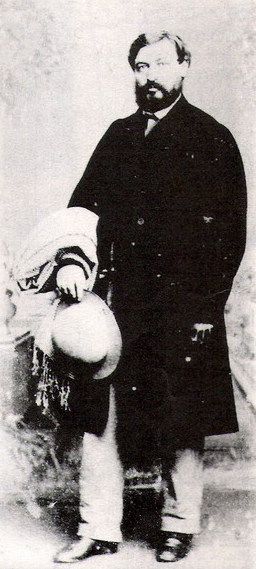
Set for publication by HarperCollins on April 12, “The Lost Book of Moses: The Hunt for the World’s Oldest Bible,” follows Moses Wilhelm Shapira, a Polish-born, Jerusalem-based treasure hunter who, in 1883, claimed to have found the oldest copy of the Bible. Unfortunately for the charming, social-climbing Shapira, his musty parchments’ authenticity was called into question during their exhibition at the British Museum, sending Shapira into a tailspin.
Without needing a spoiler alert, Tigay opens the book by examining Shapira’s suicide in Rotterdam, the Netherlands, six months after the accusation of forgery. Putting Shapira’s 1884 death up front helped Tigay probe what he said most intrigued him about the story — “what was it, in the end, that led Shapira to believe there was just no way to go on,” as the award-winning writer told The Times of Israel in an interview.
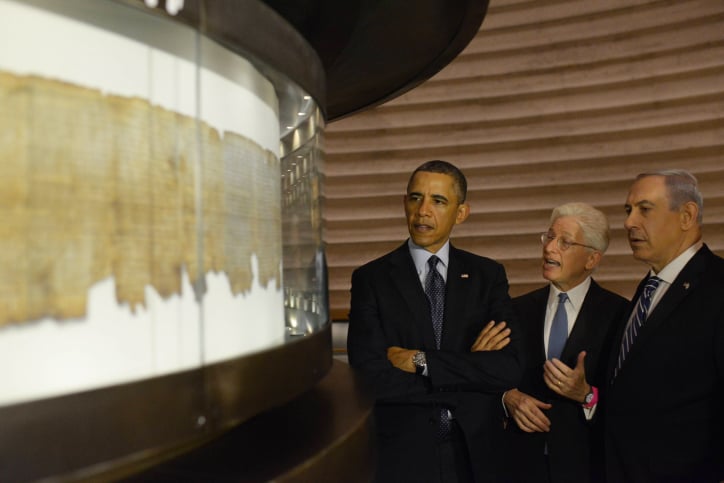
More than half a century after the 53-year old Shapira’s suicide, a pair of Bedouin shepherds happened upon seven biblical scroll fragments in caves overlooking the Dead Sea. Coincidentally — or not — the besmirched antiquities dealer had claimed his 15 parchments were found at the edge of the Judean desert, close to where the Dead Sea Scrolls were ultimately discovered six decades later, at Qumran. Eventually some 1,000 Dead Sea Scrolls were discovered in follow-up expeditions through 1956.
These unprecedented — and authenticated — finds renewed interest in the so-called “Shapira strips,” which, in the interim, had been lost to the British Museum and history alike. In particular, some scholars began to question the assumption that Shapira’s parchments had been a forgery.
Shapira’s frayed, leathery parchments were from the Book of Deuteronomy, the last of the Five Books of Moses, in which the Hebrew slaves’ four-decade, forced wandering is recounted, along with Judaism’s major laws. More than 2,000 years old, Deuteronomy is the classic Old Testament framing of a person’s ideal relationship with God, and the consequences of lapsing in that devotion.
The Tigay family’s affinity for Deuteronomy includes the 40-year-old author’s father, Biblical scholar Jeffrey H. Tigay, who in 2003 wrote the Jewish Publication Society’s commentary on the book.
“Growing up, the word Deuteronomy was like the words peanut butter and jelly in any other house,” said Tigay. “We knew my dad was working on it every single day for 16 years,” he said.
During a 2010 Shabbat conversation about Biblical artifacts, Tigay’s father mentioned the supposed “first” Dead Sea Scrolls and their aptly named purveyor, a man named Moses who had converted from Judaism to Christianity, and had lived among Jerusalem’s Anglican missionaries. Among the Shapira parchments was a mysterious, Christian-sounding 11th Commandment — “Thou shalt not hate thy brother in thy heart: I am God, thy God.”
Tigay’s father’s account of the saga immediately appealed to the journalist, who was ready to visit seven countries in pursuit of Shapira’s controversial “strips” — supposedly lost in a fire — and to understand the man accused of holy fraud.
Before booking airfare, however, Tigay had some doubts about putting an Indiana Jones-like quest at the center of his narrative non-fiction, with more than half a century having lapsed since Shapira and his scrolls received much attention.
“Who in God’s name do I think I am, that I am going to track down this bible that has been missing for 100 years, that a large number of people smarter than I tried at and failed,” Tigay remembered feeling at the time.
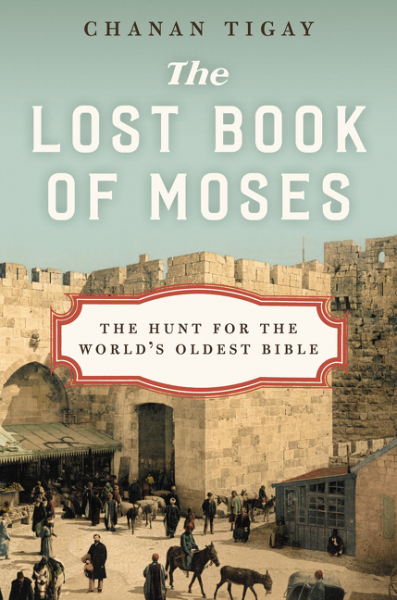
“Everyone involved was dead, and all the information I wanted I had to glean from letters and other documents written in the late 19th century,” he said.
Getting to the bottom of so-called “naughty boy” Shapira’s motivations, as well as hunting for the strips, was “extremely exciting” for Tigay, who looked for clues in Jerusalem, wandering along the Old City’s Christian Quarter Road, once home to Shapira’s fabled antiquities shop. Tigay also conducted research at the lush Beit Ticho home for artists, on today’s Rav Kook Street, where Shapira had lived with his wife and two daughters.
“I had this on my mind all the time, trying to interpret every piece of information I discovered,” said the author, whose fair take on the suspected forger runs 260 pages.
“You get lost in these tiny little details that become one line or half a sentence in the book, if they even make it in,” said Tigay. “What do I need to include that will be interesting to everyone else but isn’t simply interesting to me as a guy who has been obsessed with this for five years?”
Did Tigay conclude that “World’s Oldest Bible” was a fake, or was Shapira misjudged? To answer that, you’ll have to read the book.
What Tigay did next
Holding an MFA from Columbia University, Tigay studied Mideast politics and religion at the University of Pennsylvania. Today a professor of creative writing at San Francisco State University, Tigay recently completed an investigative reporting fellowship with the University of California, Berkeley, through which he probed US-Israel relations.
Within that realm, Tigay has been known to identify incongruous, interest-piquing topics, including his 2014 story for McSweeney’s, “The Special Populations Unit,” on the role of Israeli-Arabs serving in the Israel Defense Forces.
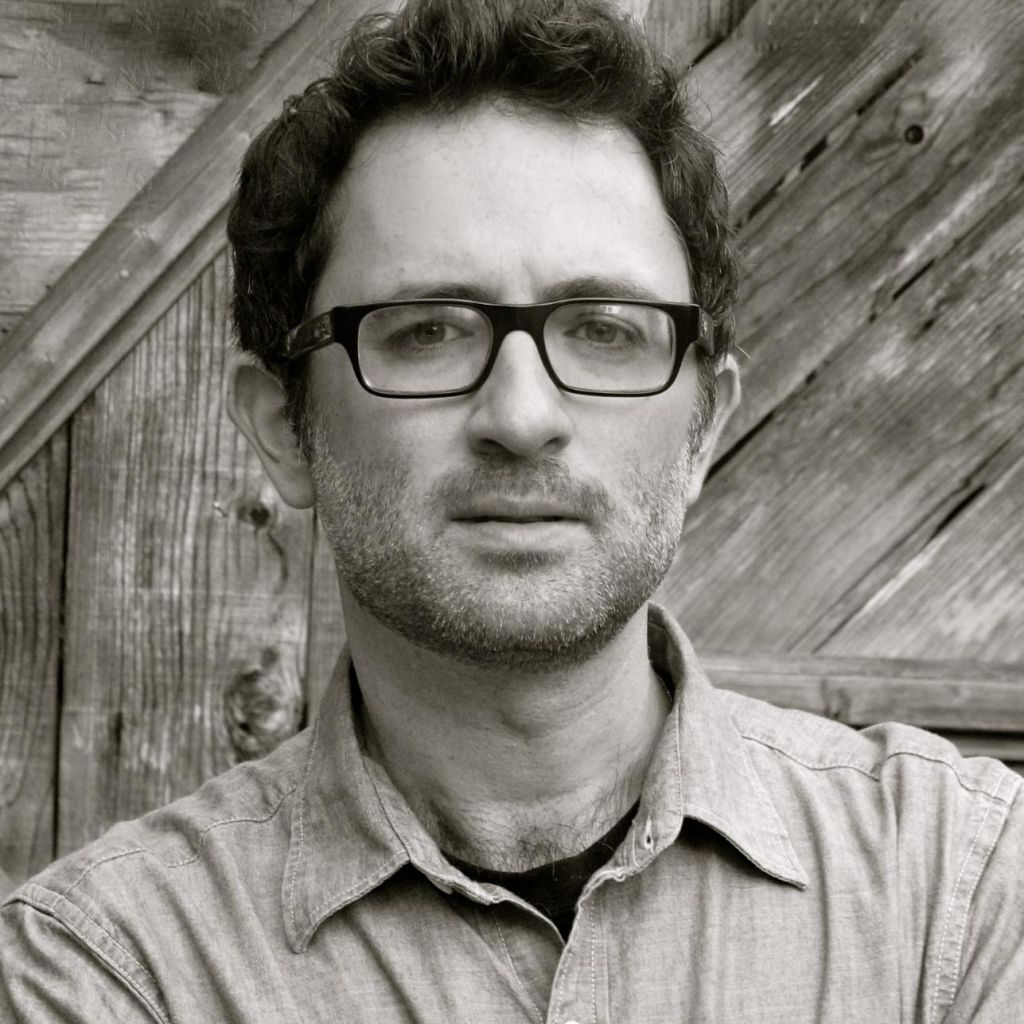
Considering the essay his best work after “The Lost Book,” Tigay was drawn to what some would consider a conflict of interest — “that these Arabs have thrown their lives so deeply in with the Jewish state,” he said.
“I’m really interested in stories where something seems wrong,” said Tigay. “Incongruities. Surprises that maybe you weren’t expecting. Even many Israelis did not know beyond Bedouin trackers that Israeli Arabs are in the army,” he said.
Driven by a “compulsion to find out what is true,” Tigay’s next project will involve more “talking to living people,” and less sitting alone in ill-lit rooms, where he said most “Lost Book” discoveries were made.
“My next book will have something to do with law enforcement efforts to track down looted archeological artifacts in the Mideast,” said Tigay. “Looting that flourished after the Arab Spring is a huge problem now,” he added.
Referring to both museum artifacts and objects being pulled from the ground by non-experts, Tigay said the trend is “destroying the cultural heritage of those countries.”
As with his “Lost Book” hunt for the facts behind Shapira’s scrolls, the author puts “context” front and center when it comes to the destruction of the region’s material history in recent years.
“So much of what’s important when they pull it out of the ground is the context in which the objects were found,” said Tigay. “Now we don’t know if people are telling the truth about where they found things, much less who likely made it. The context — what is found next to it — helps make that determination,” he said.










The Times of Israel Community.