

Border Police accused of detaining entire Bedouin hamlet for hours in blanket sweep
Residents of West Bank village say officers rounded up all 180 residents, including kids and elderly, during raid to search for weapons, in what would mark highly unusual action

 Add ToI as a Preferred Source on Google
Nurit Yohanan is The Times of Israel's Palestinian and Arab world correspondent
Residents of a small Bedouin village in the West Bank northeast of Jerusalem say Israeli forces rounded up the entire population, including the elderly, women and children, during a raid last week, employing an indiscriminate and seemingly unprecedented tactic that would appear to contravene international law.
Police have not explicitly denied that the incident took place, though a spokesperson described the raid on Kasrat as “targeted” and aimed at finding illegal arms held by community members following reports of shootings in the area.
There were no arrests or seizures, though police beat some men who questioned them and left homes and possessions in disarray, locals charged, leading to allegations that the action had been aimed at intimidation rather than law enforcement. One man claimed that officers also stole several thousand shekels in cash from him and his wife.
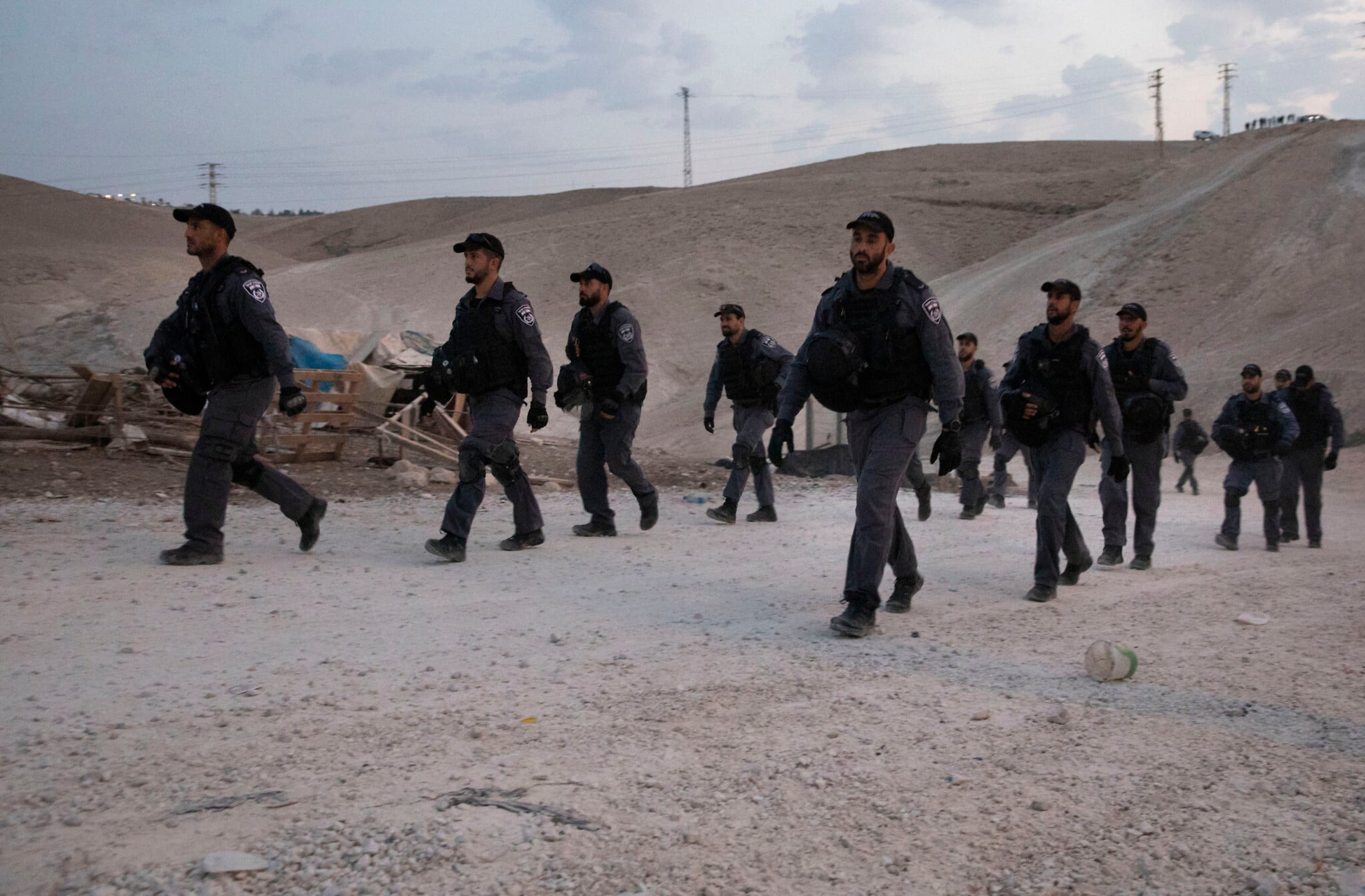
According to residents, a large phalanx of Border Police entered the hamlet early on November 4, ordering all of its approximately 180 residents out of their homes as they carried out sweeping searches.
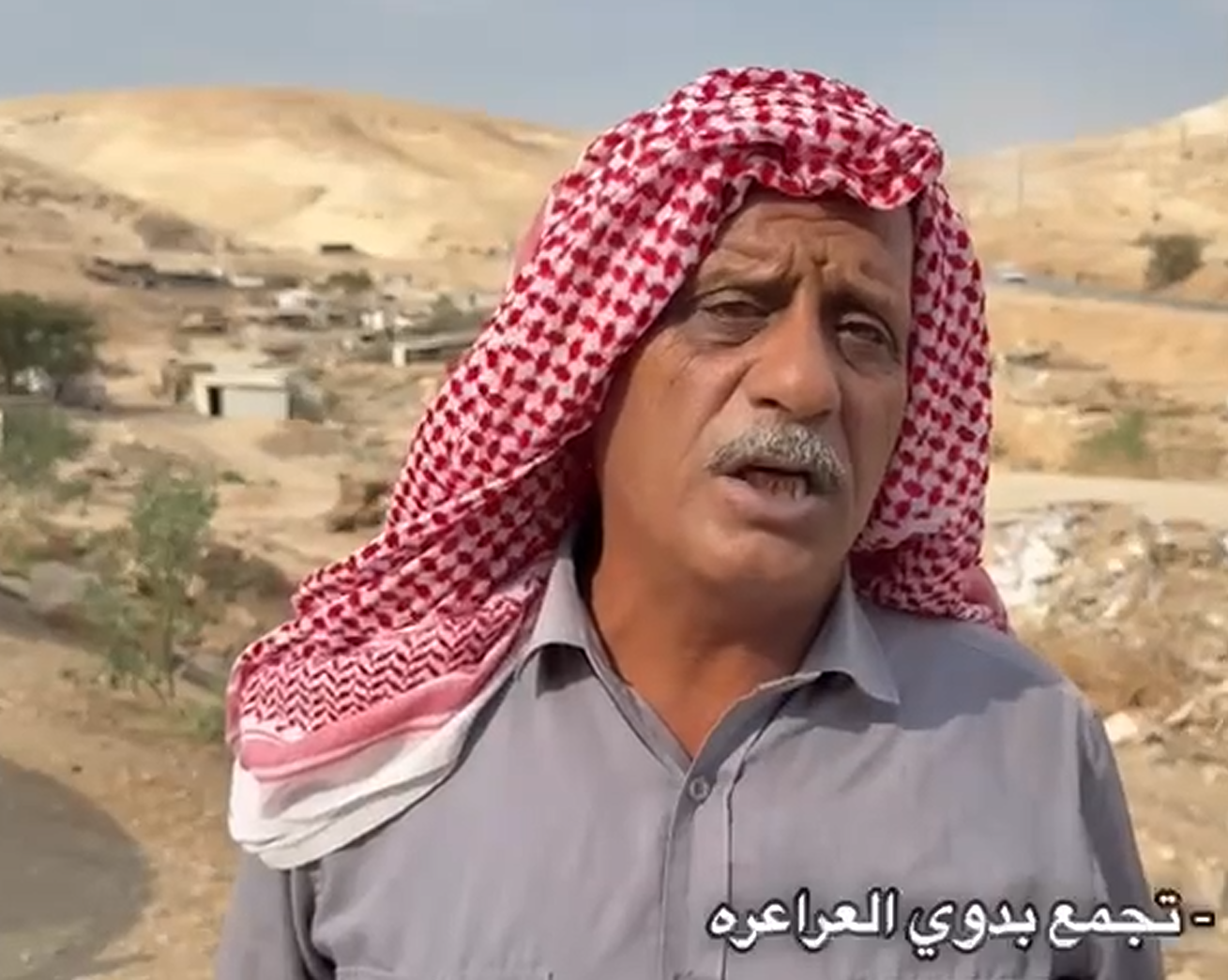
Abdallah Ara‘ara, a man in his 60s who has lived in Kasrat for over four decades, said he was astounded by the size of the force.
“They entered [the community] with 150 soldiers, but there was also a security cordon of more troops around us — all of them in uniform,” he said. Officially part of the police, Border Police act as a paramilitary force in the West Bank and can be largely indistinguishable from Israel Defense Forces soldiers.
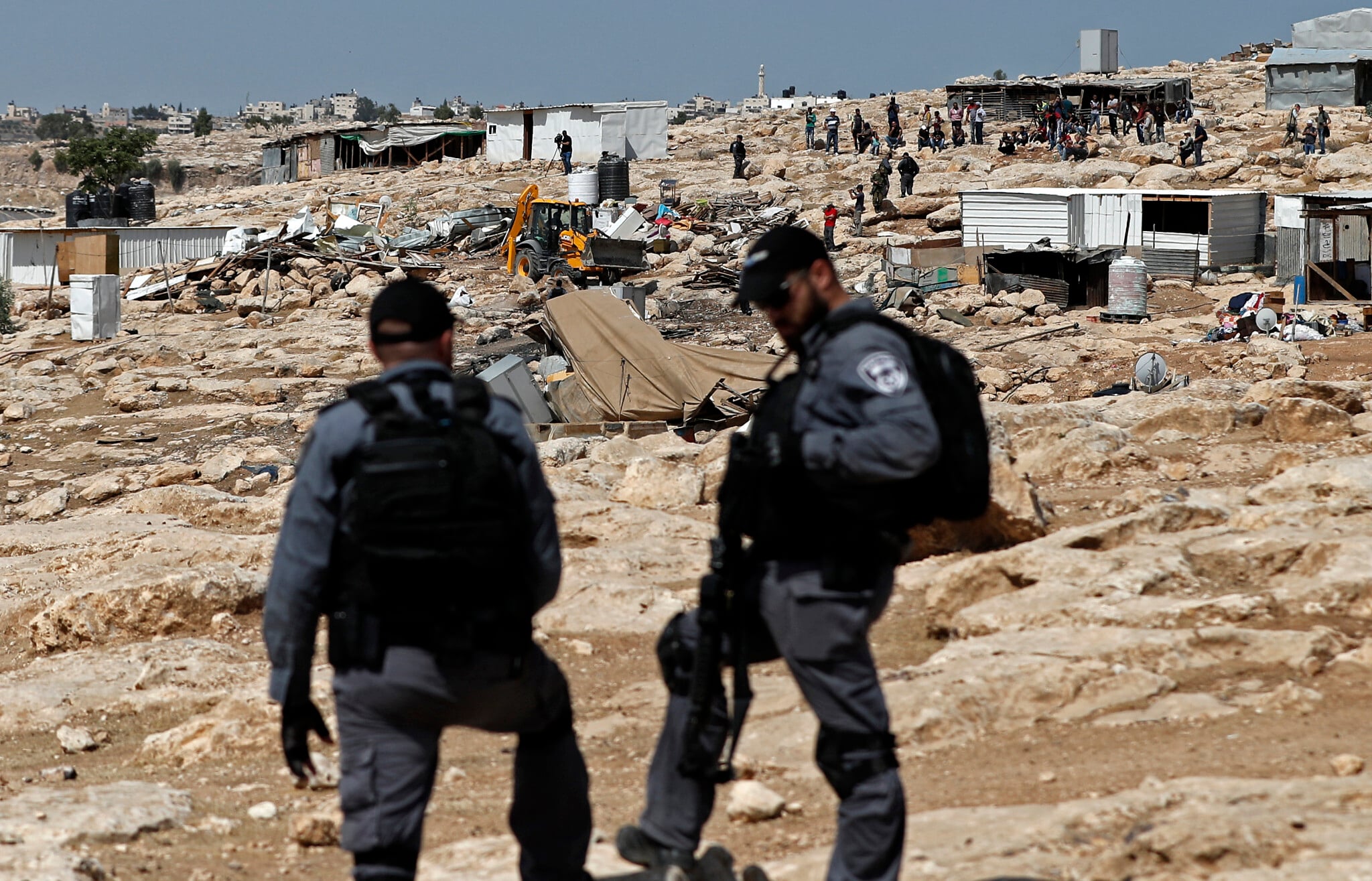
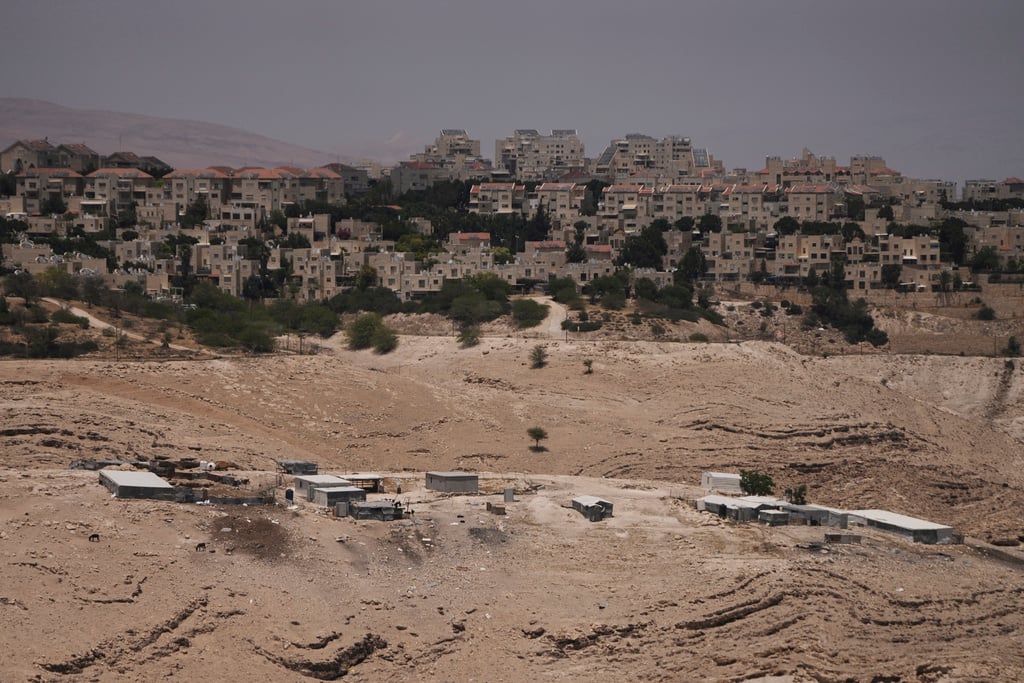
Sandwiched between a highway and a steep hillside near the large Israeli settlement of Maale Adumim, Kasrat is chiefly made up of a series of family homesteads, each with several generations of an extended clan living close together in separate low-slung modular homes alongside tarp-covered sheds and animal pens.
During the raid, police went to each homestead and in each one gathered everyone in confined spaces, with men separated from women, forbidding them from moving.
According to Ara‘ara and other residents, the troops then conducted a sweeping, aggressive search of every home for four hours, causing extensive damage to property throughout the community.
“They gathered all the women and children; no one was allowed to move,” he said. “They didn’t let the children go to school or allow workers to leave for their jobs.”
(Screenshot: Palestine TV, 27a of the copyright law)
While Border Police and other Israeli forces are often accused of using excessive force when dealing with Palestinians, as well as imposing curfews or cordons restricting movement during security operations, what allegedly occurred in Kasrat could mark the use of a tactic rarely, if ever, employed. There have been no known instances in recent decades of police indiscriminately detaining the total populace of an entire village.
Roni Pelli, an attorney with the Israeli human rights organization Yesh Din, which provides legal assistance to Palestinians and Bedouin in the West Bank, told The Times of Israel that collective punishment — such as putting a whole village under detention — is prohibited under international law.
“The Geneva Convention makes clear that only an individual is responsible for their actions, and that punishment is not necessarily only a judicial act, but can also be administrative, such as a curfew or closure,” she said.
Pelli said that if there are suspicions against members of the community that led to the raid, there is a legal way to address it — through arrest and then legal proceedings in court.
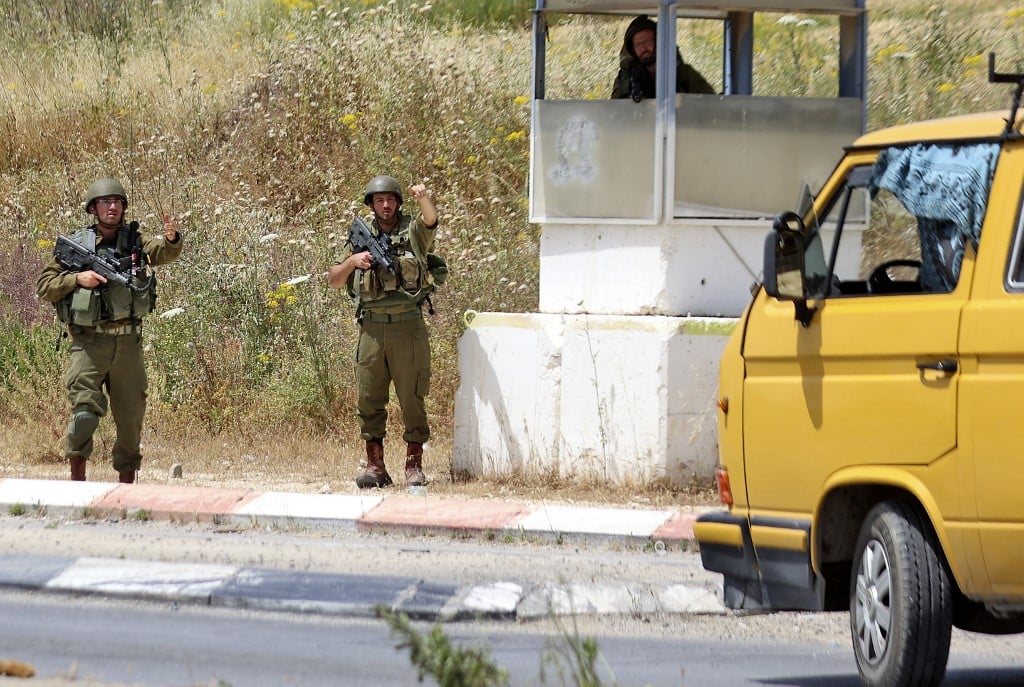
She described many actions taken for years in the West Bank by security forces — such as placing a village under curfew after an attacker came from there, or revoking work permits from family or village members of an attacker — as measures that security officials define as “deterrence,” but which she argues fall under the same category of prohibited collective punishment.
In response to The Times of Israel, a police spokesperson said the operation was carried out following shooting incidents that had occurred in the area.
“Border Police and police forces conducted a targeted operation against individuals involved in the possession of illegal weapons.”
The Times of Israel was unable to independently confirm the villagers’ account of mass detentions.
Ara‘ara said the officers asked no questions and offered no explanation for their presence. According to him, residents were forbidden from making phone calls, holding their phones, or filming what was happening.
Footage filmed by residents at the end of the raid shows several dozen Border Police officers walking out of the area on foot.
In other footage obtained by The Times of Israel, a woman from Kasrat, who asked to remain anonymous, told Israeli activists who arrived at the scene following the raid that “they gathered all the women in a small space, they didn’t let the children [leave to] drink milk. They mocked the women and spoke to them in ugly language.”
Fuad Ara‘ara, another resident of the village, added that soldiers pulled veils off some of the women during the search.
“For hours, they didn’t let us drink water, didn’t let us go to the bathroom, didn’t let us smoke. I work in Anata — they didn’t let me go to work,” he said.
Fuad Ara‘ara said he tried asking the soldiers in Hebrew why they had come and what they were looking for, but was told, “Shut up, just shut up.” Only one soldier spoke Arabic, telling the frightened residents “a little longer, a little longer,” whenever residents pleaded to take the children to the bathroom or bring milk for a baby.
He added that he was beaten by the officers in front of his family.
“When I started talking, the soldier told me to shut up and hit me in the stomach with his weapon. They also hit my father and my brother the same way, in front of our family,” he recalled.
Both he and Abdallah Ara‘ara alleged that three other residents were pulled to the side where they could not be seen and beaten with soldiers’ rifles, according to what the victims told them.
In response to The Times of Israel’s inquiry, police did not address these specific allegations, saying only that “whenever claims arise regarding the conduct of the forces, they should be examined by the authorized bodies.”
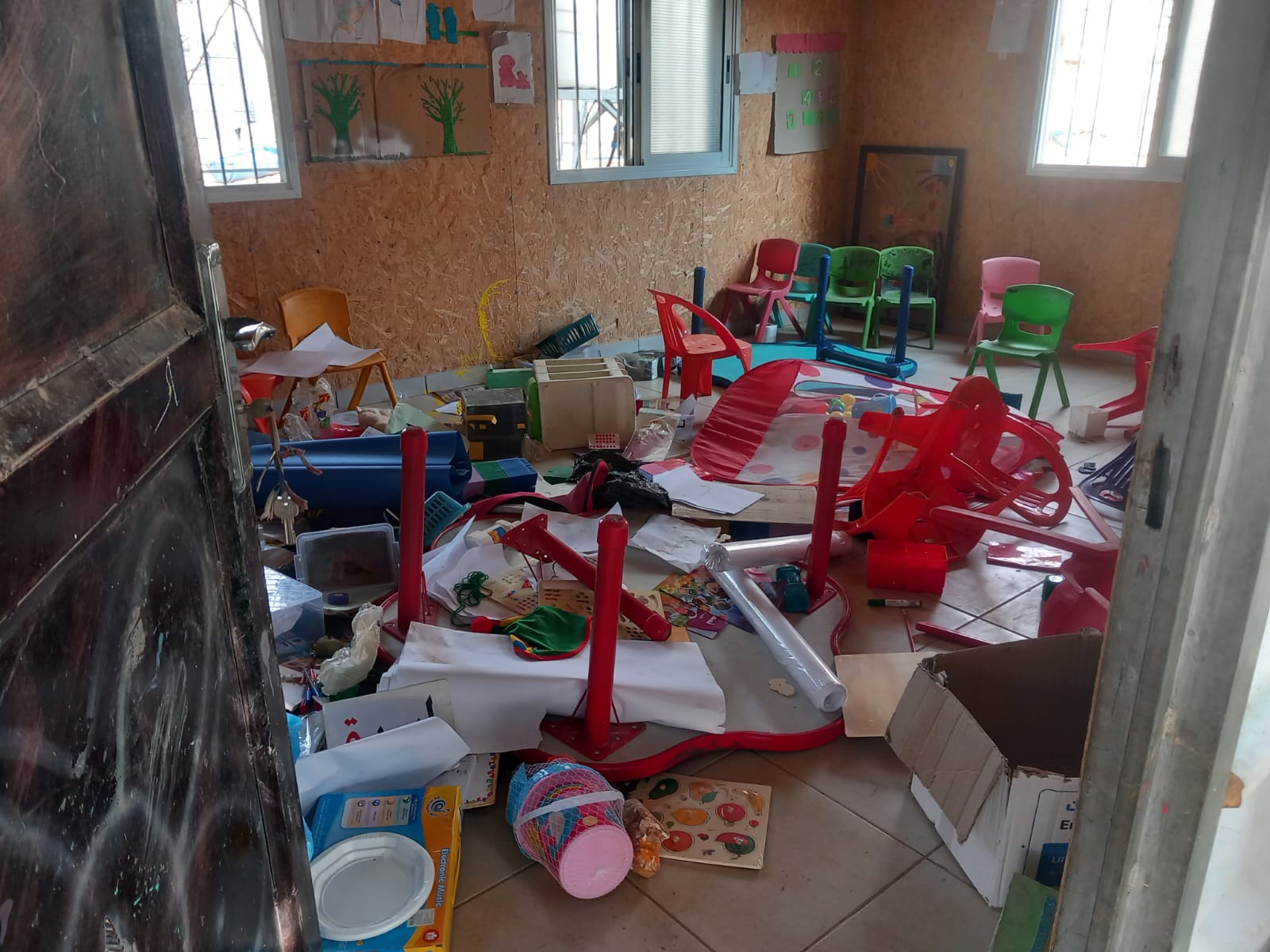
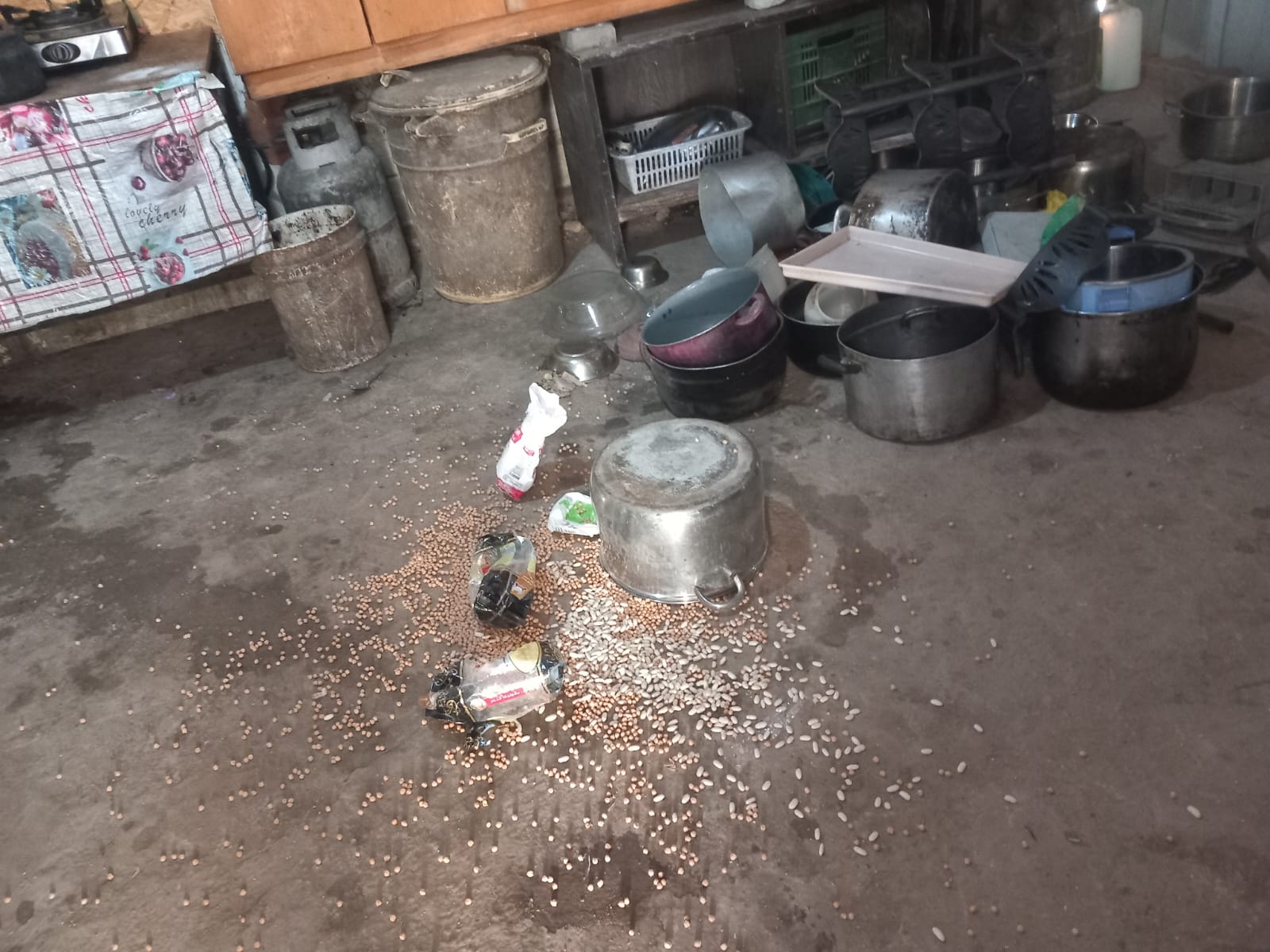
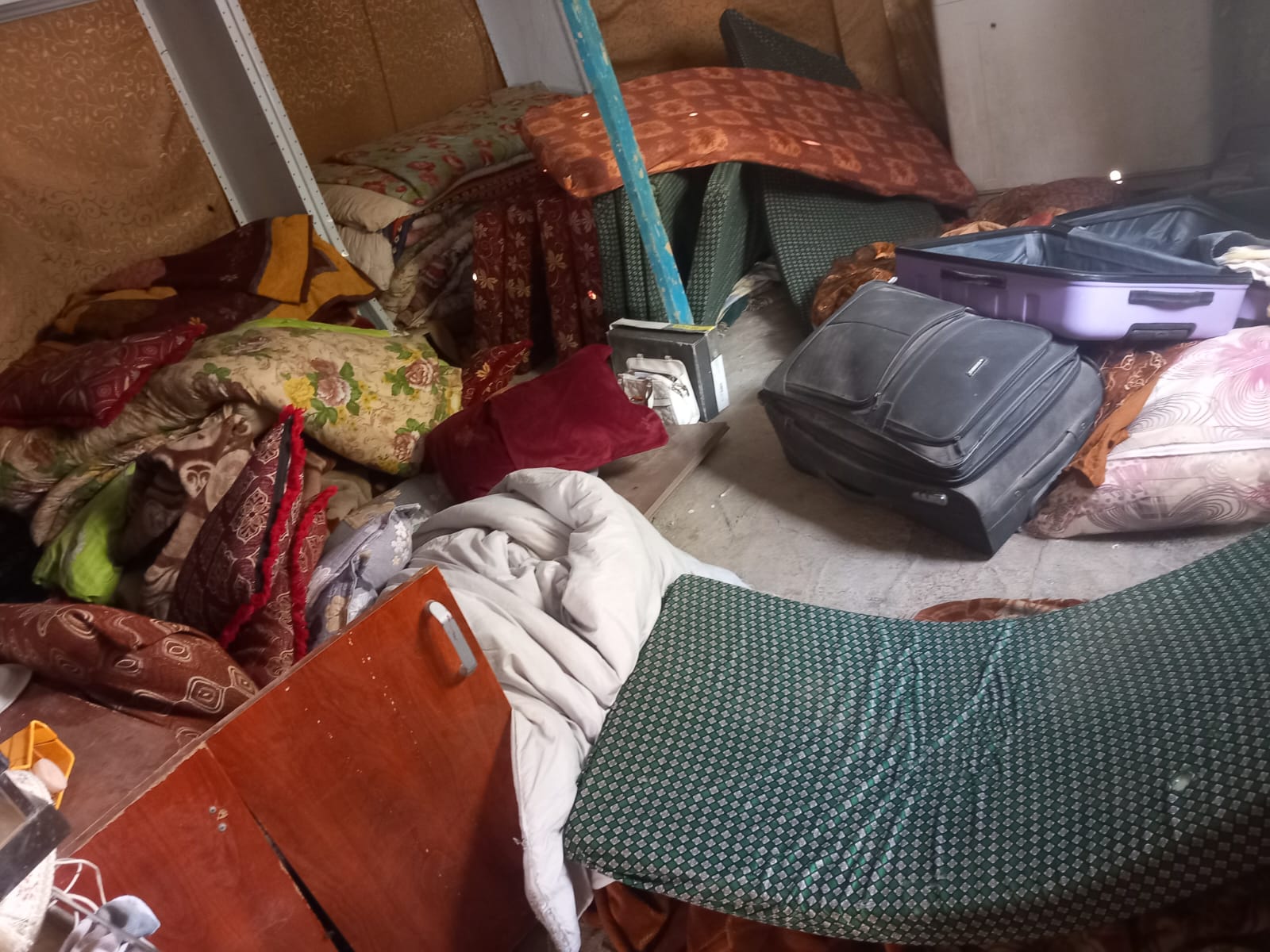
Once the troops left the town, residents returned to their homes to find scenes of significant damage, including food dumped on the floor, clothing tossed around and toys thrown everywhere or broken, according to footage filmed by residents in the immediate aftermath.
“They overturned all the containers of flour, sugar, tea, rice. They spilled the barley [animal feed] onto the ground and sliced open the sacks with knives,” the anonymous woman says in the recording.
Anat Sharel, a Jerusalem resident who has been in contact with the community over the past year, said when she arrived several hours later, much was still in shambles.
“When I got there, the remains of the Border Police rampage were still on the floor. They had opened every clothes cabinet and thrown everything out,” she said. “One woman told me that a machine she uses to make yogurt from milk — they smashed it. Another had prepared dough for morning pitas — they dumped all the dough. Why? Apparently, because they can, deliberately to destroy.”
Fuad Ara‘ara called the police action “an operation of destruction — not a search.”
Abdallah Ara‘ara told The Times of Israel that officers also confiscated the cash equivalent of some $1,600 from him and his wife for no apparent reason.
“I kept 4,500 shekels in cash to take to the dentist for new implants,” he said. “The soldiers took it from me, and they took another 800 shekels from my wife — a total of 5,300 shekels. They also took my ID card and didn’t return it.”
Residents of the community have in recent days filed a complaint with the Police Internal Investigations Department over the officers’ conduct during the raid.
Pelli noted that Israeli officials often justify their use of extreme measures such as curfews following an attack or the revocation of work permits from neighbors of assailants as forms of deterrence, though she argued that they fall under the same category of prohibited collective punishment.
The Yesh Din lawyer, who is not involved in the residents’ legal complaints over police conduct, described the allegations of money theft as especially serious; when money is confiscated for suspicion of being used to fund terror, there is a legal requirement to provide documentation and allow for the charge to be appealed.
That did not happen in this case, Abdallah Ara‘ara said. No reason for the money being confiscated was given.
Residents noted that no arrests were made or weapons found, denying that there was any justification for the search in the first place.
“There’s nothing here — none of the residents has any security issue,” Abdallah Ara‘ara said. Fuad Ara‘ara added that he did not know of any shooting incident in the area.
“This village was completely quiet; there was nothing going on here,” Sharel told The Times of Israel. “People work quietly, raise their goats, the children go to school and come home, that’s it. They were content, living peacefully, and not involved in anything. They’ve never experienced anything like this.”






The Times of Israel Community.