

Coalition said weighing proposal to pick next 2 Supreme Court judges with Hayut’s OK
Report says justice minister intends to leave the seats empty until appointment system is changed if no agreement is reached with outgoing chief justice
 Add ToI as a Preferred Source on Google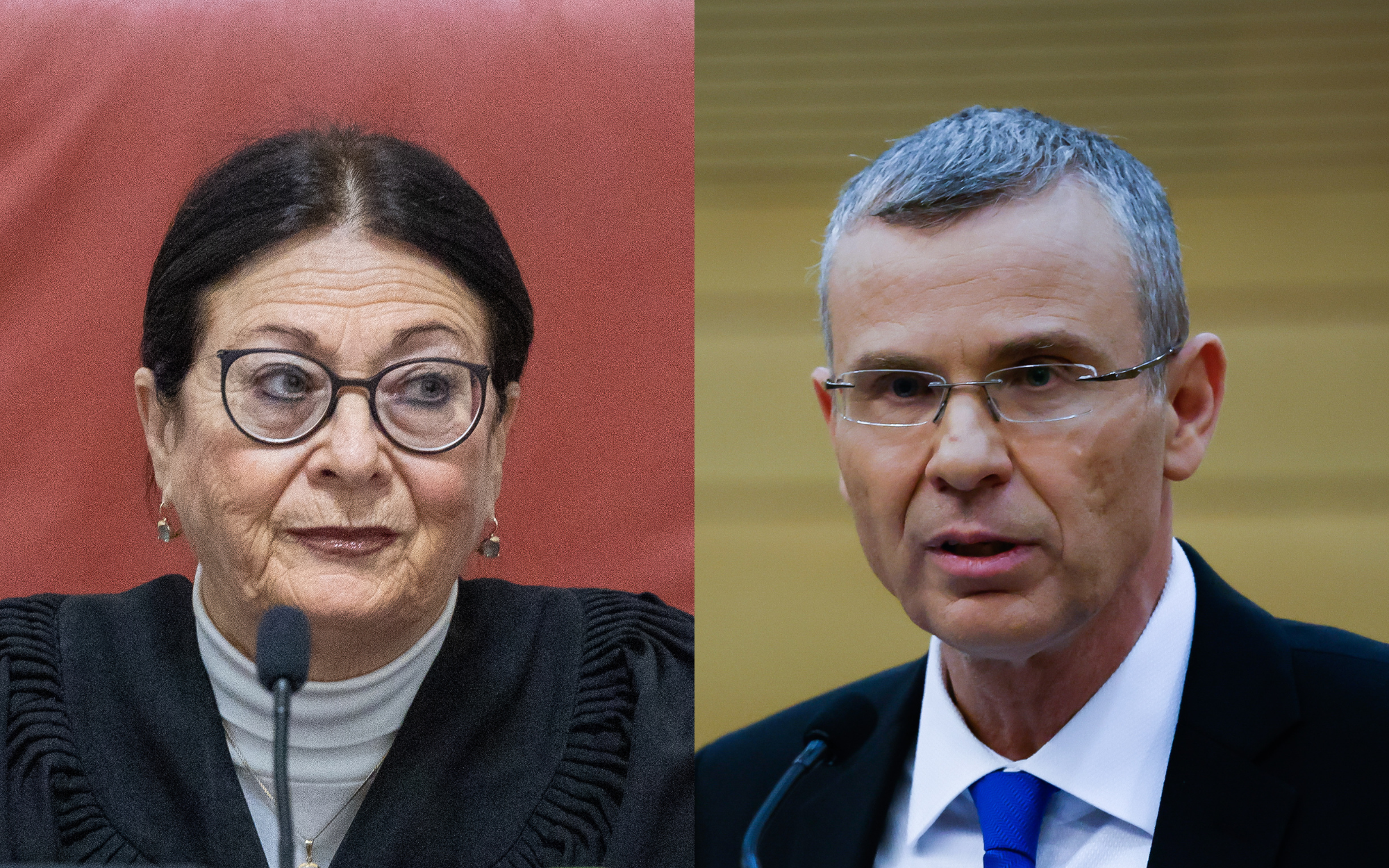
Coalition officials are reportedly considering a proposal whereby they would appoint two judges to the Supreme Court with the approval of the top court’s outgoing president, Esther Hayut, who will retire in October.
The plan has been touted amid the ongoing negotiations on the government’s proposed overhaul of the justice system, with the coalition’s plan to gain control of judicial appointments seen as particularly contentious.
Hayut is set to step down upon reaching age 70, and Justice Anat Baron is also due to retire from the bench at the same time.
In the event that there is no agreement between Justice Minister Yariv Levin and Hayut on the candidates to replace the two justices, the coalition intends to leave the seats on the bench empty, the Haaretz daily reported Tuesday.
Unnamed coalition sources told the newspaper that Levin has expressed willingness to try to reach a consensus with Hayut on the selection of the new judges. It was not clear from the report whether Hayut was aware of the proposal or on board.
But if no deal is struck, the coalition is also reportedly considering that the appointment of Hayut’s replacement as Supreme Court president be delayed until the current system — which is based on seniority — is changed.
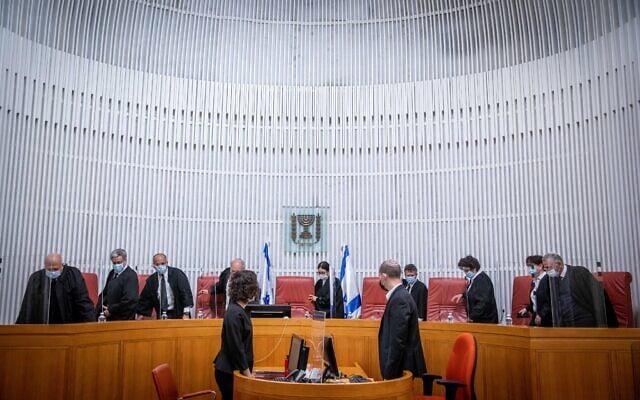
Under current law, the president of the Supreme Court is picked from among its sitting justices by the Judicial Selection Committee — which is made up of three justices in the top court, three coalition politicians, an opposition MK and two Bar Association members — with the decision traditionally based on seniority.
Levin reportedly plans to scrap the current system, opening up the possibility that the office could be held by someone not already sitting on the bench. He is also generally trying to change the makeup of the committee to give politicians control of the panel.
Hayut is currently set to be succeeded as president by Justice Isaac Amit, who is viewed by the coalition as too liberal.
But with the clock ticking, it appears increasingly unlikely that the coalition will be able to make the necessary changes to the Judicial Selection Committee before Hayut’s coming retirement.
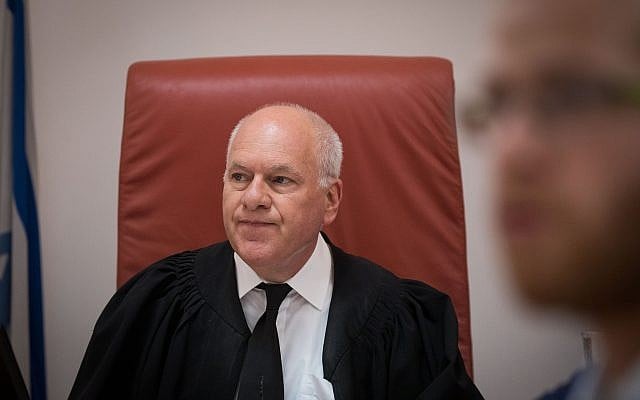
Because the law does not allow for the appointment of an acting president of the Supreme Court, Hayut’s powers would therefore automatically be transferred to the vice president, Justice Uzi Vogelman.
While Vogelman is still not viewed as the ideal candidate by the coalition, Haaretz said, he is preferred as he is due to retire in a year, and also could be replaced if the system were to be changed.
In January, Channel 13 news said Levin had prepared a legal memorandum according to which “a president or vice president of the Supreme Court will be appointed in the same way that justices of the Supreme Court are appointed, whether they first served as justices of the Supreme Court or not.”
It remained unclear if his plan would require the president to even be a judge, potentially opening up the possibility of a lawyer or academic heading the nation’s top court.
Negotiations between the coalition and opposition regarding the now-paused judicial legislation — which are being mediated by President Isaac Herzog — resumed Tuesday, with a shouting match reportedly breaking out between cabinet secretary Yossi Fuchs and opposition National Unity MK Gideon Sa’ar, who is a former justice minister.
According to the Kan public broadcaster, Fuchs told Sa’ar: “You don’t want reform,” leading the latter to call the cabinet secretary and members of Prime Minister Benjamin Netanyahu’s Likud party “crazy,” before briefly leaving the room. Fuchs apologized to Sa’ar when he returned.
The report said Sa’ar shouted at Fuchs earlier in the meeting over the issue of the authority of ministries’ legal counsels, which the government is seeking to greatly weaken as part of the judicial shakeup.

Senior opposition lawmakers have in recent weeks called into question the coalition’s commitment to reaching a broad consensus on judicial reform during the ongoing negotiations.
Coalition figures in turn have accused the opposition of taking an uncompromising stance in the talks, with Netanyahu and opposition leader Yair Lapid trading barbs over the matter as the Knesset reopened for its summer session on Monday.
The end of the parliament’s Passover recess has raised the possibility of a renewed push to pass the far-reaching bills.
A key overhaul bill that would put judicial appointments under political control has passed nearly all legislative stages and is ready to be enacted into law within days, if the coalition so desires.
However, analysts and commentators believe the coalition will not advance any of the legislation before passing the state budget, which the ruling bloc must do by May 29 or face automatic elections.
Critics say the overhaul, which will shift much of the judiciary’s power into the government’s hands, will make Israel a democracy in name only, shielding leaders from accountability while leaving minority rights largely unprotected and subject to the whims of Netanyahu’s hard-right government. Proponents say the changes are needed to rein in what they see as an overly activist court.
Polls have consistently shown that the legislation is broadly unpopular in its current form, and that support for the government has significantly dropped since the election.










The Times of Israel Community.