

Committee prepares to decide identity of prisoners set for release
As Washington sends special Mideast envoy to Jerusalem and Jericho, ministers set to establish identity of Palestinians to be freed
 Add ToI as a Preferred Source on Google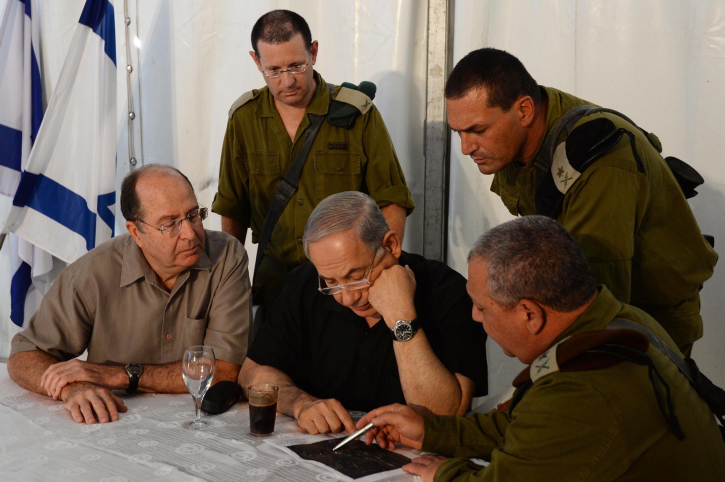
A ministerial committee tasked with overseeing the release of 104 Palestinian prisoners — a confidence-building gesture by Israel to ease the return to peace talks — is set to meet for the first time on Sunday evening.
Prime Minister Benjamin Netanyahu will not attend the meeting due to his recovering from an overnight emergency hernia operation.
The four remaining members of the panel will decide on the identity of the 26 prisoners — to be released Tuesday in the first of four phased releases — all of whom have been imprisoned since before the 1993 Oslo peace accords.
The committee that will handle the prisoner release process is composed of Netanyahu, Defense Minister Moshe Ya’alon, Justice Minister Tzipi Livni, Science Minister Yaakov Peri, and Public Security Minister Yitzhak Aharonovitch. It will decide, based on criteria established by the Shin Bet (Israel Security Agency), which prisoners on the list of 104 will go free at what stage, determine whether they will be allowed to return to their homes or be sent abroad, and oversee the implementation.
Last month the cabinet approved the prisoner releases, which were a Palestinian precondition for peace talks, and while the decision was widely pilloried by politicians on the right and the Israeli public, Netanyahu said it was for the “good of the country.”
On Saturday, Bereaved Families for Peace and Justice, an Israel-based grass-roots group resisting the release of convicted terrorists and murderers, condemned the planned “wholesale” release and announced its decision to hold a rally Sunday in protest of the move. The rally was to start at a monument on Mt. Herzl dedicated to victims of terror attacks and end at the Supreme Court building in Jerusalem, where a hearing of the group’s petition against the decision was to take place. Another protest was planned to take place on Sunday afternoon in front of the Defense Ministry building in Tel Aviv.
“We reject the decision of the government of Israel to surrender to Arab, European and American pressure. We are channeling our opposition via Israel’s Supreme Court and to the Israeli public,” read a statement released by the group on Saturday evening.
Also on Sunday, US peace envoy Martin Indyk and deputy special envoy Frank Lowenstein will travel to the Jerusalem and Jericho to facilitate talks to craft a two-state solution to the Israel-Palestinian conflict.
On Wednesday, sources in Jerusalem told The Times of Israel that Indyk, who was hand-picked by US President Barack Obama to be Washington’s point man at the talks, was scheduled to meet with officials from the Prime Minister’s Office, the Foreign Ministry, and members of Justice Minister Tzipi Livni’s negotiating team.
News of Indyk’s impending arrival came amid harsh criticism, by both Washington and Ramallah, of Israel’s most recent move to support settlements.
In a letter to Secretary of State John Kerry, the chief Palestinian negotiator, Saeb Erekat, said Israel’s latest settlement announcements were an indication of “Israel’s bad faith and lack of seriousness” in the talks.
The letter was sent on Thursday, the same day that Indyk’s visit was announced.
On Thursday, a military official confirmed that the Israeli Defense Ministry had approved construction plans for more than 1,000 new apartments in settlements. This means the plans move forward, but still require final approval before construction can begin.
Earlier this month, the cabinet expanded its list of West Bank settlements eligible for government subsidies, a decision that came just days after the resumption of the long-frozen peace talks. The cabinet approved a range of housing subsidies and loans for more than 600 Israeli communities deemed “national priority areas.” The list includes poor towns in Israel’s outlying areas as well as dozens of settlements.
State Department spokeswoman Jen Psaki said US officials were speaking with the Israeli government to express US concern about these settlements.
“We do not accept the legitimacy of continued settlement activity and oppose any efforts to legitimize settlement outposts,” Psaki said. “The secretary has made clear that he believes both of the negotiating teams are at the table in good faith and are committed to working together to make progress.”







The Times of Israel Community.