

EU pledges to safeguard democracy by fighting Russia’s ‘information war’ in Europe
Defending ban on news outlets Russia Today, Sputnik, top diplomat Borrell calls them ‘weapons’ wielded by Moscow; Latvian MEP accuses Putin of trying to ‘poison, divide societies’
 Add ToI as a Preferred Source on Google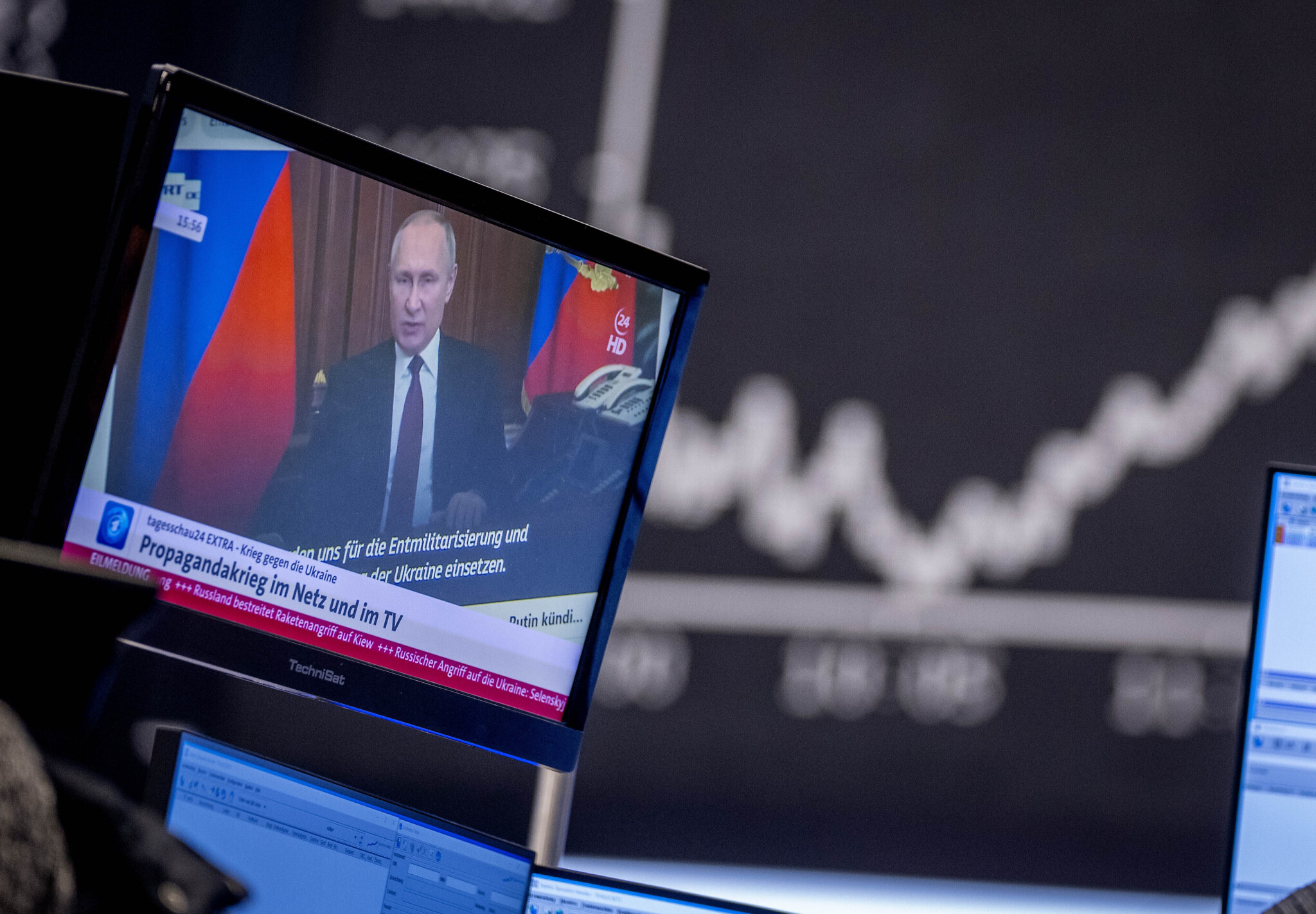
BRUSSELS (AP) — European Union officials on Tuesday defended the 27-nation bloc’s decision to ban Russian state-controlled media outlets from broadcasting in the region as decisive steps to check a Kremlin-led “information war.”
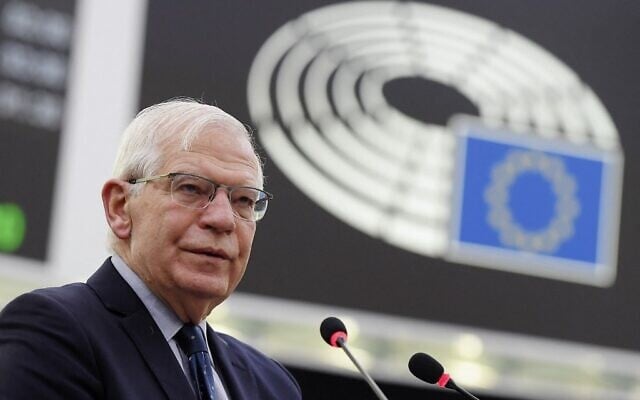
Speaking at the European Parliament during a debate on foreign interference and disinformation, the EU’s top diplomat Josep Borrell brushed off critics who say the EU is threatening freedom of information with the ban on Sputnik and RT/Russia Today.
“They are not independent media, they are assets, they are weapons, in the Kremlin’s manipulation ecosystem,” Borrell told lawmakers. “We are not trying to decide what is true and what is false. We don’t have ministers of the Truth. But we have to focus on foreign actors who intentionally, in a coordinated manner, try to manipulate our information environment.”
The EU has decided to suspend the broadcasting activities of Sputnik and RT/Russia Today in the bloc until Russia ends its war in Ukraine and stops disinformation campaigns in member states.
Borrell said Moscow-controlled outlets are part of a well-oiled propaganda machine providing biased news about Vladimir Putin’s true intentions.
“If the information is bad, democracy is bad,” he said, adding that information should be a protected good.
“If the information is systematically contaminated by lies and twisted, citizens can’t have a clear understanding of reality and their political judgment is similarly twisted.”
Borrell insisted that Sputnik was created by a presidential decree with the aim of reporting on Russia’s state policies abroad, and said that Russia Today is capable of conducting an “information war” against the Western world.
Borrell said he will soon propose a new mechanism that will allow the EU to sanction disinformation actors. Lawmakers from the special committee on foreign interference and disinformation are also proposing to establish a sanctions regime to deal with foreign meddling.
Latvian MEP Sandra Kalniete, who authored a draft report last year on foreign interference in all democratic processes in the European Union, said it’s crucial for the EU to counter foreign threats in a bid to prevent third countries damaging democracies.
“Let’s call a spade a spade. Russia, China and other authoritarian regimes have funneled more than $300 million into 33 countries to interfere in democratic processes,” she said. “Putin’s propaganda machinery wasn’t just switched on on 24 February. It has already been working in Europe for decades, attempting to poison and divide our societies.”
Kaniete said online platforms and tech companies need to suspend all social accounts engaged in “denying, glorifying and justifying Putin’s aggression, war crimes and crimes against humanity.”
She also proposed reinforcing content in Russian and Ukrainian to resist the pressure from Russia’s disinformation.
“In short, any tech platform giving space to Putin’s propaganda or complying with his censorship request is an accomplice to Putin’s aggression,” she said.
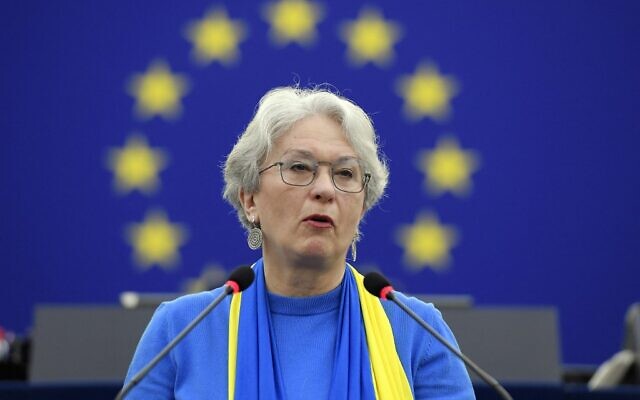
European Commission Vera Jourova said Putin wants his people to be “apathetic” and praised streaming platform Netflix’s decision to suspend its Russian services.
“Because president Putin wants the people to be entertained, not to pay attention to what is happening,” she said. “It would not be right to see Russians being entertained, and next door Ukrainians being killed.”
Both Borrell and Jourova expressed deep concerns about the imposed censorship in Russia that threatens independent journalists with jail terms and deprives citizens access to verified information about what their government is doing in Ukraine.
“It is more important than ever to reach the Russian people, and provide them with information,” Jourova said. “Every possible channel should be used.”







The Times of Israel Community.