

Fruit fly study, almost wrecked by Iran, claims to uncover key to radiation-defying cells
Rescuing larvae from missile-damaged lab, Weizmann team finds cells that not only beat back death, but also multiply and spur regrowth, raising hopes for new therapies to keep cancer from recurring
 Add ToI as a Preferred Source on Google
Reporter at The Times of Israel
For years, scientists have struggled to understand why some cells die off when exposed to radiation while others not only survive, but come back stronger than before.
Now, Weizmann Institute of Science researchers say they have finally solved the mystery, pinpointing two elusive types of cells in fruit flies that stare death in the face but simply shrug it off and then go on to help regenerate damaged tissue.
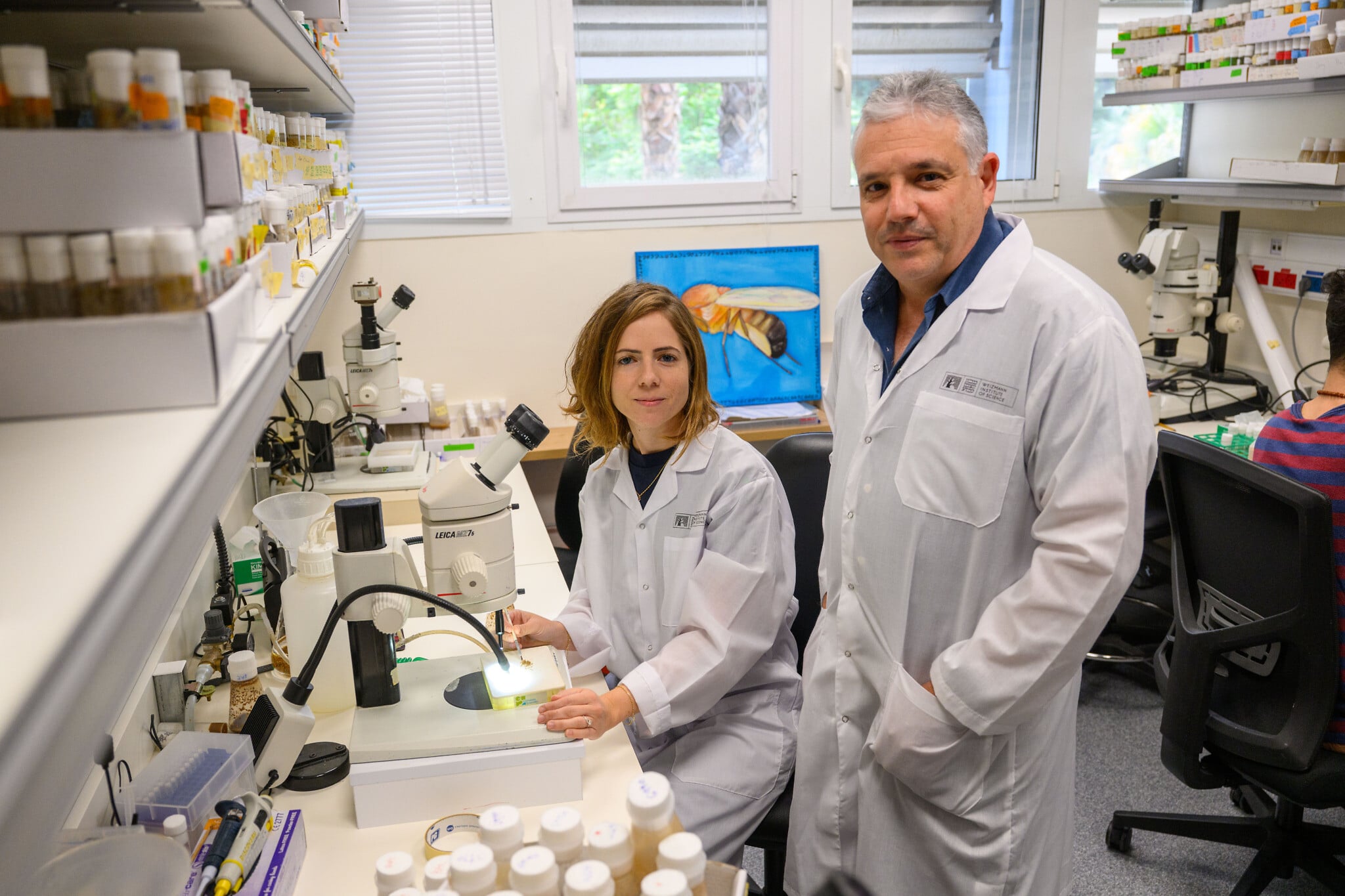
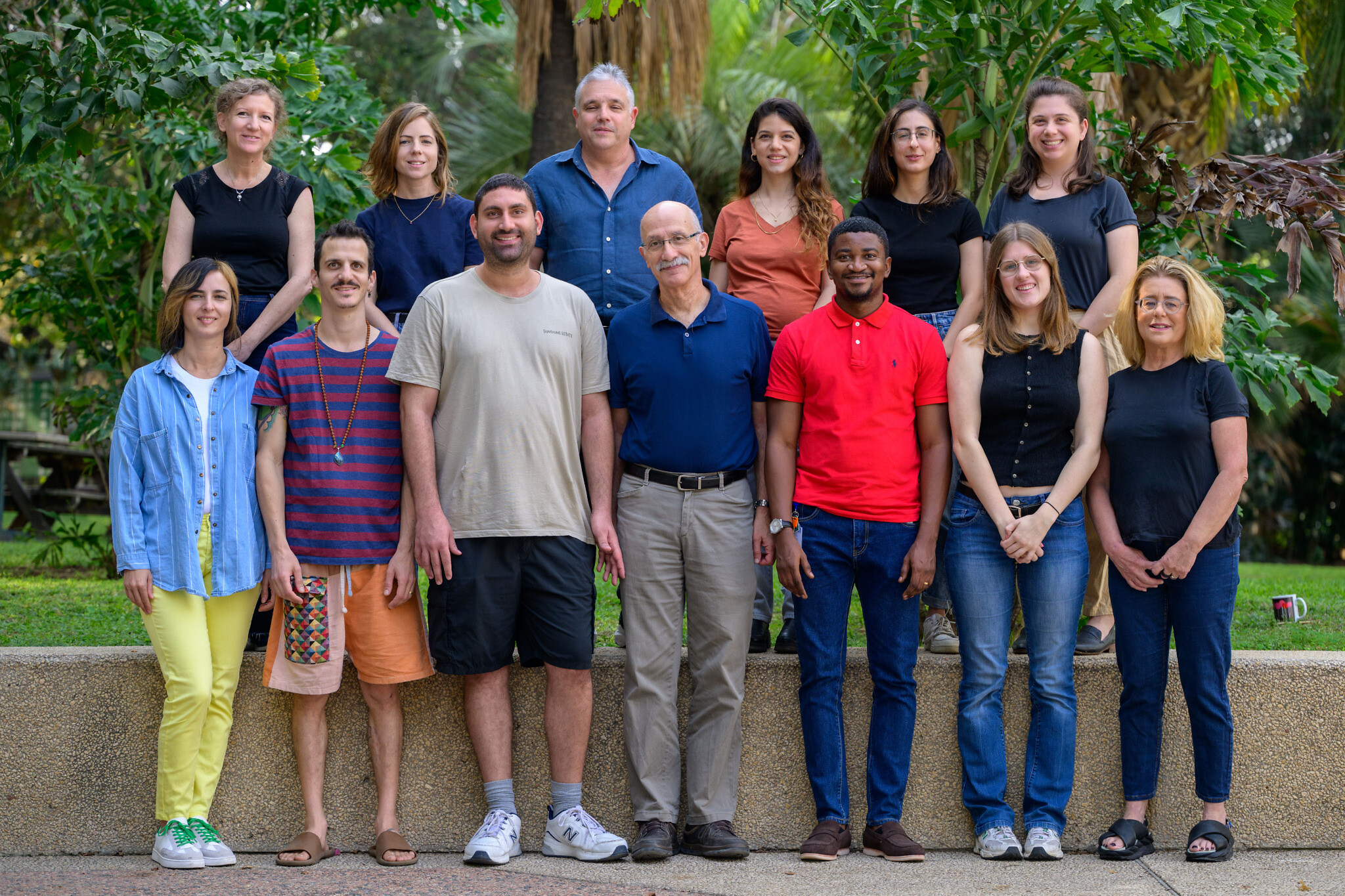
“These are elusive cells that everyone was looking for, and now we have a way to detect and label them,” said Prof. Eli Arama, speaking to The Times of Israel on a video call with lead researcher Tslil Braun, PhD.
The peer-reviewed study, which survived a devastating Iranian missile attack that hit the institute in June, may unlock why some cancer cells seem to not only defy chemotherapy radiation but also return in more aggressive forms.
The research is in its infancy and far from resolved, but scientists say the potential breakthrough could eventually open up new avenues for treating cancer and preventing relapses, as well as advancing therapies that could speed up wound repair of healthy cells.
“Although this work was performed in fruit flies, these findings have important implications for humans,” said Prof. Hermann Steller, head of the Laboratory of Apoptosis and Cancer Biology at Rockefeller University, who was not involved in the study.
The research can “guide development of new therapies to promote wound healing on the one hand, and on the other hand to overcome resistance of tumors to radiation therapy,” he added.
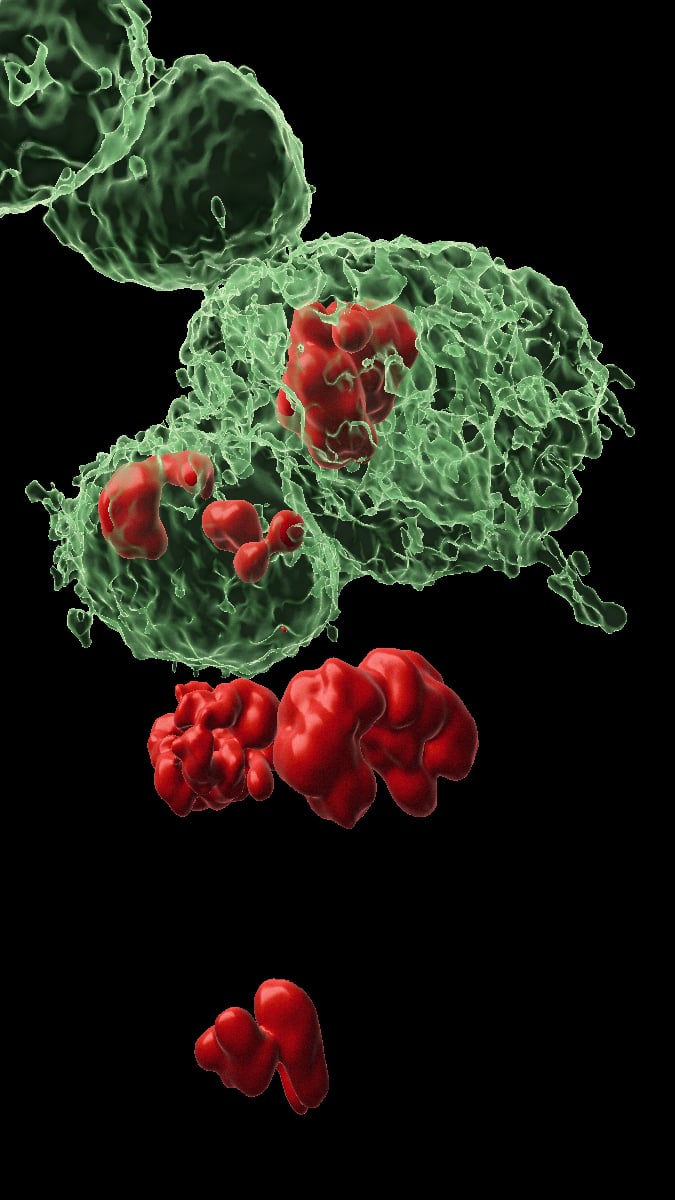
The study, published last month in the scientific journal Nature Communications, found that one type of cell entered the same death throes as its neighbors, a process known as apoptosis or programmed cell death, but halted before finishing itself off.
The second type never starts the death process at all and goes on to play a key role in rebuilding damaged tissue.
The team named the cell types DARE and NARE, respectively, short for unwieldy scientific descriptions that refer to whether or not they show an enzyme known as Dronc (itself an acronym), which triggers the apoptosis that would normally lead to death.
“One scientific reviewer wanted us to change the names we chose,” Arama said. “But we kept them because the acronyms are both memorable and accurately reflect their biological properties.”
‘Like an apocalypse’
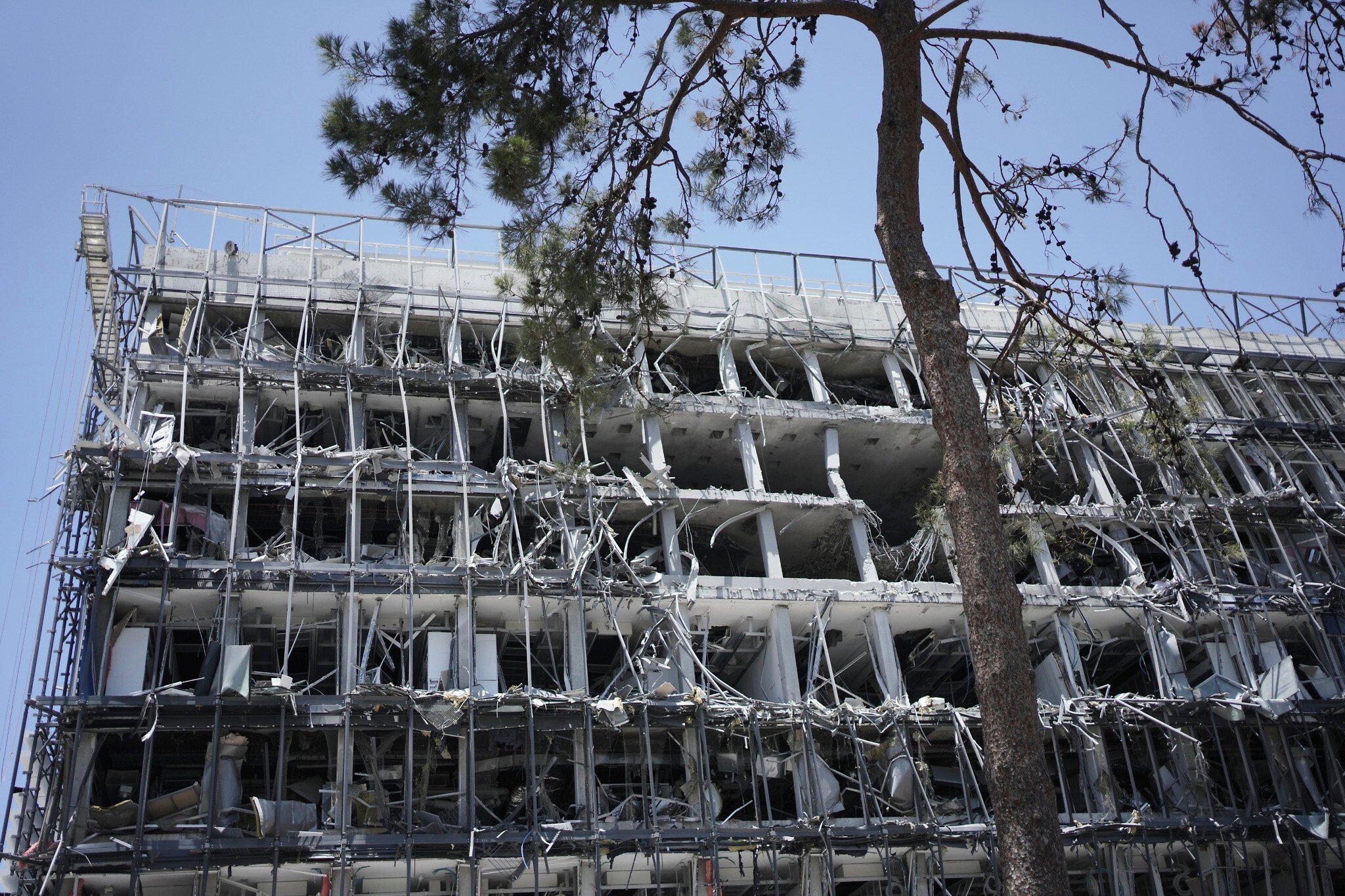
Names, though, were almost the least of their worries. On June 15, two days into what would be a 12-day war with Iran, a ballistic missile packed with explosives slammed into the Weizmann Institute’s Rehovot campus, destroying a building adjacent to Arama’s lab and causing widespread damage.
“Our lab wasn’t hit directly, but windows were broken, and everything was a mess, with water on the floor, like an apocalypse,” Arama said. “But really, we were lucky, much, much luckier than people in the next building.”
The strike came as the research was well underway and threatened to destroy months of painstaking work. Inside the lab were hundreds of tubes of fruit flies, each representing a specific genetic line that the scientists had created through lengthy breeding programs to express a diverse set of genetic elements specifically for the study. If they were killed, the research would have taken months to redo.
“We were afraid these fly lines would die,” Braun said. “We were scared there would be another missile. You cannot store them in a freezer. We know they are ‘only’ flies, but to make one line with so many crosses and injections and transgenes and mutants takes months and months of very hard work. Every fly line, in particular in this study, has between six and eight different elements that are inserted inside or mutated.”
Within hours of the attack, the researchers managed to climb their way into the damaged lab to retrieve the precious flies and bring them somewhere safer.
“So I took the flies home and kept them in our safe room where I stayed during other attacks with my family,” Braun said.
Nobody was killed by Iran’s missile strike on the world-leading research institute in Rehovot. But the strike destroyed around 45 labs, some containing researchers’ entire life’s work, with the worst hit expected to take years and tens of millions of shekels to rebuild.

Iran is believed to have targeted the institute in response to Israel’s elimination of several nuclear scientists as part of its effort to prevent Tehran from obtaining a nuclear bomb.
For the 12 days of Israel’s Operation Rising Lion, Iran fired over 500 missiles and 1,000 drones at Israeli population centers, killing 32 people, wounding thousands, and leaving thousands more homeless.
“Maybe 20 years from now, we’ll talk about missiles to our grandkids, and how we needed to take flies home,” Arama added. “No one will believe us. It will seem surrealistic and crazy, but we managed, because science comes first.”
Cell death and new life
In their experiments, the researchers used Drosophila flies, also known as fruit flies, which have the same basic repair and cell death systems as humans. The flies are also easy to control genetically, so that the scientists can damage the tissue by radiation and then watch how the cells respond.
Arama said that in previous studies, scientists had noticed that when fruit fly larva was exposed to radiation, even though many cells died, the flies still developed normal wings.
“The cells that survived the radiation damage divided quickly to replace the lost tissue, but the emergence of these surviving cells and their subsequent expansion could not be directly observed,” Arama said.
To try and see what was going on, the scientists sought to examine how radiation affected wing growth during the fly’s larval stage, when the primordium, or the initial stage of wing development, occurs.
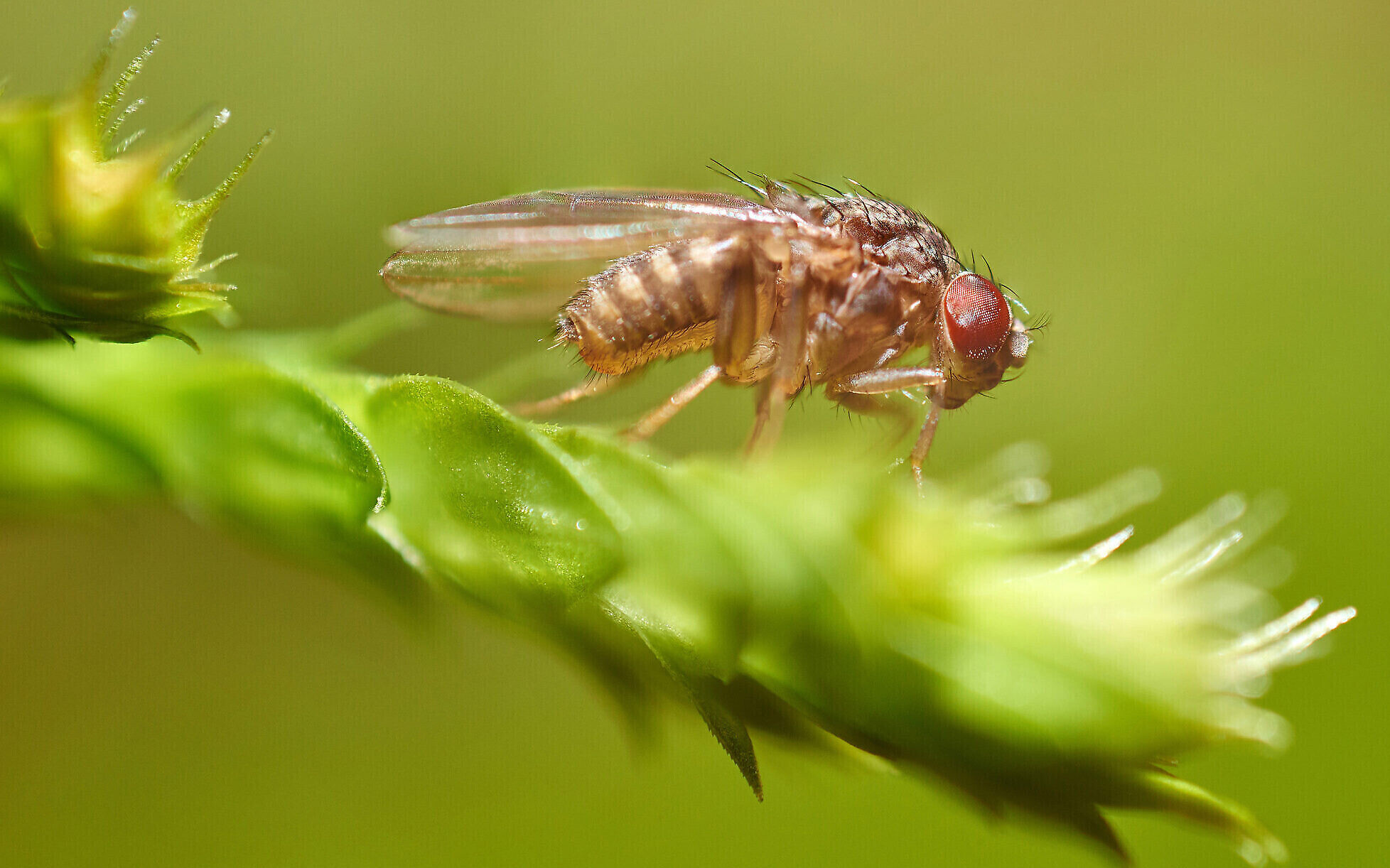
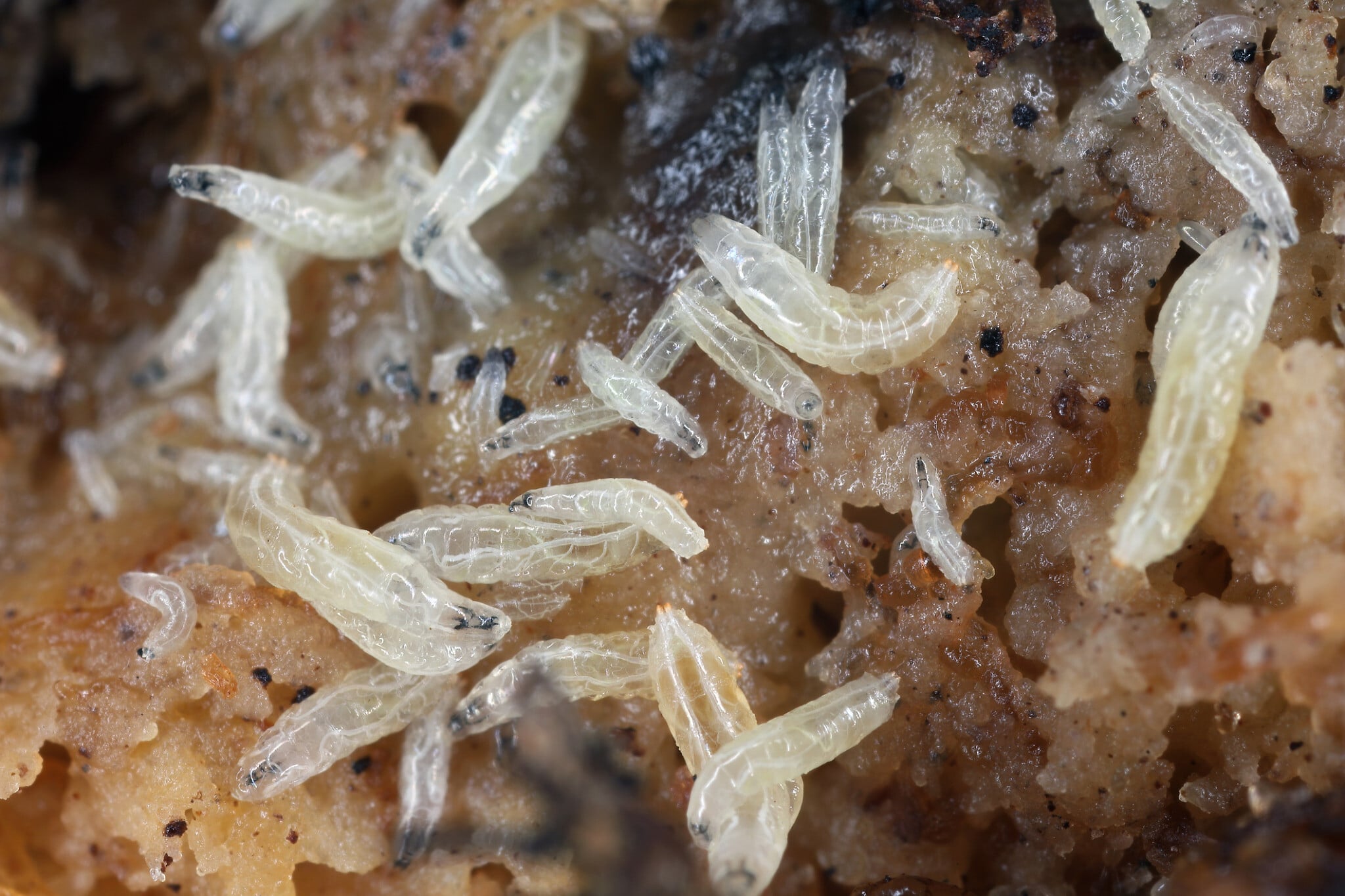
Collecting hatched fly larvae in tubes, the scientists exposed them to radiation the same way that cancer patients are exposed to radiation during their treatment.
They then opened them up either four hours, 24 hours, or 48 hours later to peek at tiny patches of cells called wing imaginal discs that would later grow into wings and see how they reacted.
“The larvae are very small, about four to five millimeters [.15 to .19 inches], and I pick them at the right developmental stage with tweezers, and I dissect them on the slide under the microscope,” Braun said.
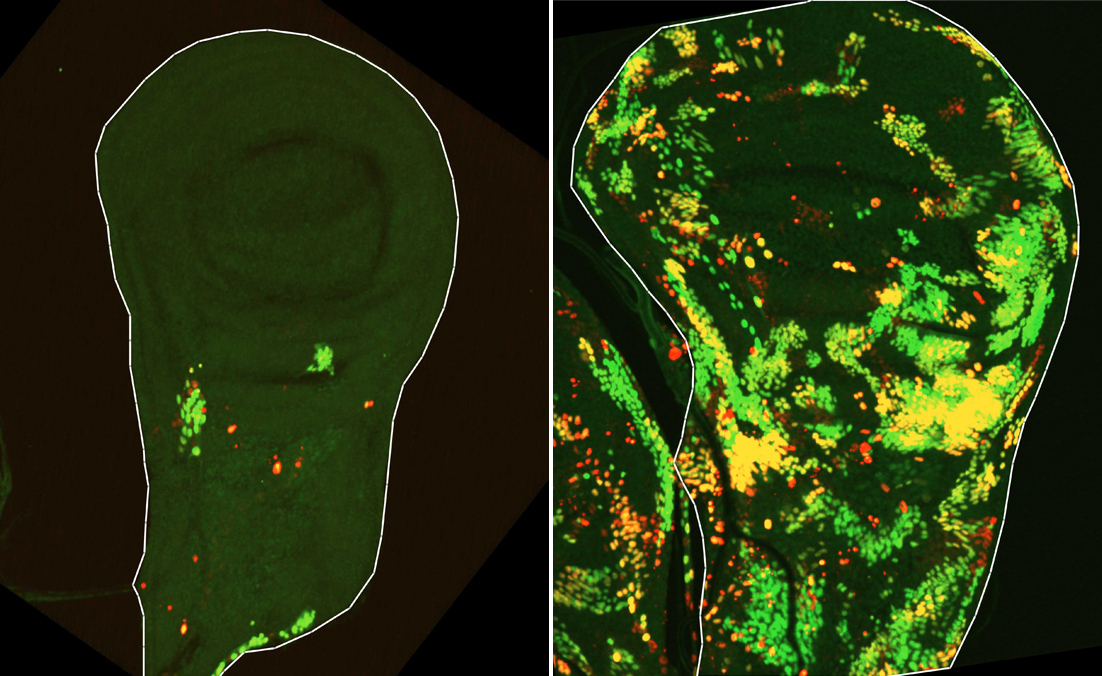
Using advanced genetic tools, the scientists tracked the cells with a special sensor that marked cells to study the activity of caspases, the enzymes inside cells that help carry out the cell’s death. Caspases act like molecular scissors, precisely cutting specific proteins so the cell can safely break itself down.
In fruit flies, the Dronc caspase’s usual job is to help a cell destroy itself when it is old or badly damaged.
Arama said that for many years, scientists believed that once caspases were activated, a cell would definitely die. But the Weizmann team found that was not always the case.
Instead, they identified cells where the caspases were turning on, but the death process was stopping before the cell was destroyed, naming them DARE cells. Because the progression stops before the execution phase, these cells survive instead of dying.
“We found that in DARE cells, the caspase had activated the first step of the death program, prepared to kill the cells, but the cells did not die,” Arama said.
The scientists found that this happens because a special motor protein inside DARE cells grabs onto the caspase and prevents it from completing the death process. This is what allows cancerous cells to stay alive even during radiation or chemotherapy, they concluded.
“Many of the tumor cells died by radiation, but some of them were protected by this motor protein,” Arama said. “So maybe you need to inhibit this protein.”
Some cells survived without caspases ever having been activated, which they call NARE cells.
Even though DARE and NARE cells use different strategies to survive, both are important for tissue regeneration. When they dissected the larvae a day after irradiation, DARE cells had multiplied and were repairing the tissue.
By 48 hours, NARE cells had joined in, and the tissue was nearly whole again.
“We noticed that DARE cells emerge at 24 hours after irradiation and that in the next 24 hours, they completely regenerated the tissue,” Arama said. “We were the first to see them, to label them, and also to label their progeny and follow them.”
The scientists also noticed that the NARE cells only took action in the presence of the DARE cells, indicating that the Dronc caspase may not only have a role in triggering programmed cell death, but may also contain a key to regeneration.

“This is a very elegant and important study that greatly advances our understanding of how tissues can heal after injury,” said Steller.
Beyond the team from Weizmann, the research was also conducted by Prof. Andreas Bergmann from the University of Massachusetts Chan Medical School, and Prof. Luis Alberto Baena-Lopez from the Severo Ochoa Molecular Biology Center in Spain.
The researchers are now isolating DARE and NARE cells and analyzing them “one cell at a time,” Arama said. They will compare cells, some that were exposed to radiation and others that were not.
They hope to understand how NARE cells survive radiation stress, what signals cause DARE and NARE cells to multiply so much, and how these cells know when to stop dividing.
“There’s obviously a lot to learn,” Arama said. “It’s still quite a leap from Drosophila flies to mammals, but you can see the homology, the same biological idea in different species. This makes us very excited.”









The Times of Israel Community.