

Gay liberal Canadian writer takes fellow non-Jews to task, one acerbic essay at a time
Furious about antisemitism and unfair targeting of Israel, journalist Pat Johnson says Jews today need increasingly more support. His Substack paves the way
 Add ToI as a Preferred Source on Google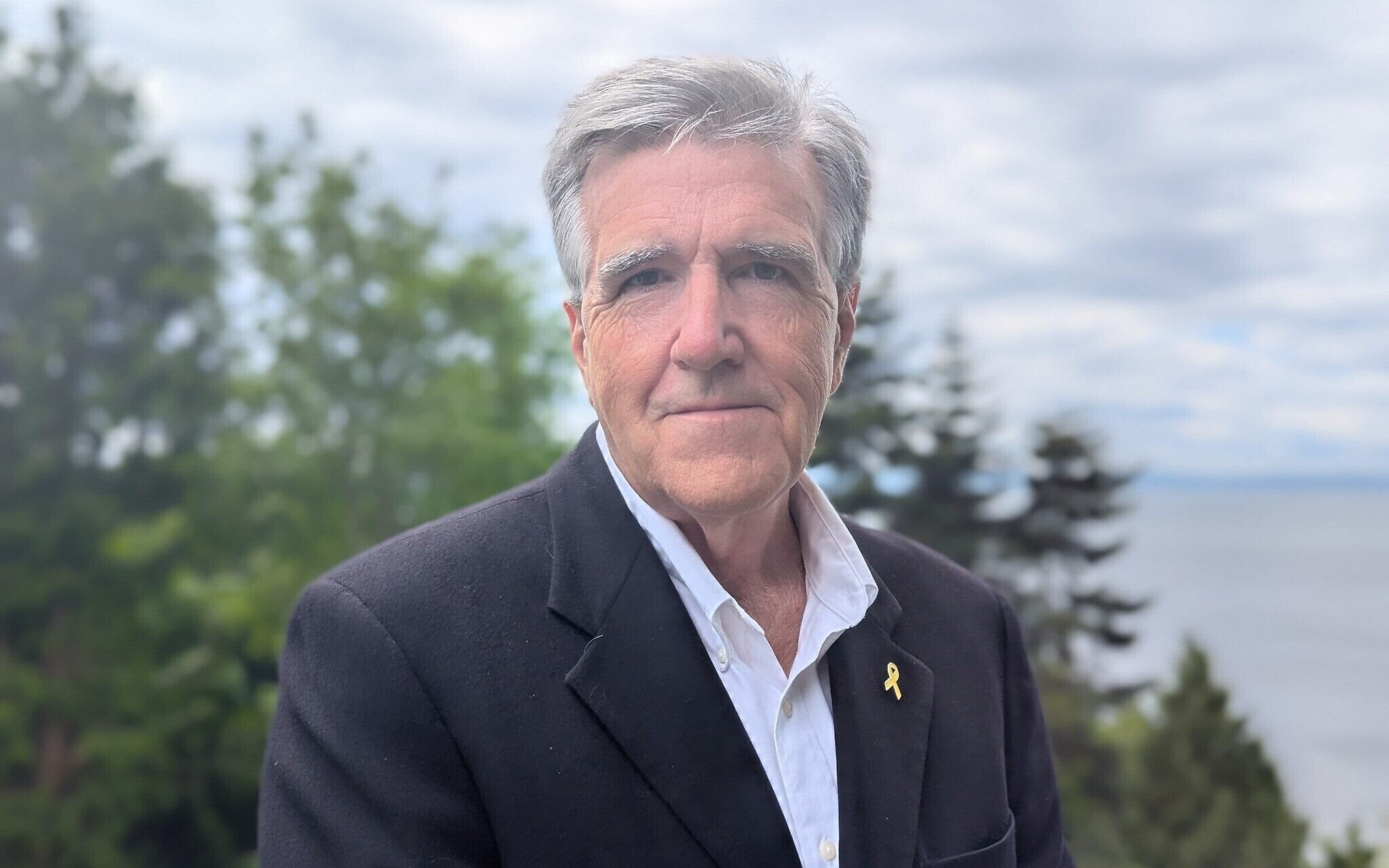
TORONTO — As one of Canada’s most prolific online commentators supporting Israel and denouncing antisemitism, Pat Johnson is accustomed to readers presuming he’s Jewish. On learning he’s not, many are surprised that Johnson — a proud progressive — would take such a pro-Israel stance.
Every two or three days, without fail, Johnson’s column appears on the Substack media platform. He refers to his mini-essays as “snappy smackdowns of antisemitism and anti-Zionism that call out the hypocrisy, duplicity and treachery of my erstwhile ideological allies in progressive spaces.” Since creating his Substack page in March 2024, Johnson has posted more than 200 such op-ed pieces, each around 1,200 words in length, typically prefaced with a caustic title and subhead.
Based in his hometown of Vancouver, Johnson, 61, has written for numerous regional and national publications and has worked as a communications consultant to businesses and nonprofits. He doesn’t do his Substack columns for financial gain, but rather, out of conviction and for how writing them makes him feel.
“It’s really therapeutic for me,” Johnson told The Times of Israel during a recent Zoom interview. “All I need to get inspired is some coffee and a look at the news and social media. My outrage level is easily provoked. Instead of just fuming, I unload on my computer and then upload it to Substack. I’ll run out of things to write about when the world runs out of antisemitism, anti-Zionism, hypocrisy, gaslighting and demagoguery. So far, so good.”
Johnson weighs in on a wide range of issues pertaining to Israel and Jews. His trenchant writings might parse the intersection between antisemitism and anti-Zionism, argue that the Palestinian keffiyehs worn by anti-Israel student activists are the new blackface, or mock the political discourse of the anti-Israel camp. A recent column, titled “Blood Libel — Now New and Improved,” takes aim at the false, often repeated accusation that Israel is deliberately killing Palestinian children.
“Incendiary allegations like ‘baby-killer’ (along with the litany of lies like settler-colonialism, ethnic cleansing, apartheid and genocide) do nothing to free Palestinians or save their lives,” he writes. “These slanders polarize us into our corners, destroying the already remote chance for a negotiated resolution and lasting peace. Those who employ this jargon don’t care about dead kids. Certainly, they demonstrate no grief over dead Jewish children – or for that matter dead kids in Syria, Sudan, Myanmar or anywhere else where Israelis can’t be blamed. They just like accusing Jews of killing babies.”
Ironically, for someone who writes so much about Jews, they were largely absent from Johnson’s early life in Vancouver, where he was born into a Christian family. Johnson’s first interactions with Jews came only after he moved to Montreal to study history at McGill University in 1988. In his first year, he worked at a Jewish deli and engaged with the Hillel Jewish student organization when it brought together “affinity groups” on campus to fight discrimination against minorities. Johnson represented gay and lesbian students. He also took several Jewish studies courses, including one with professor and author Ruth Wisse, whose books he’s since read.
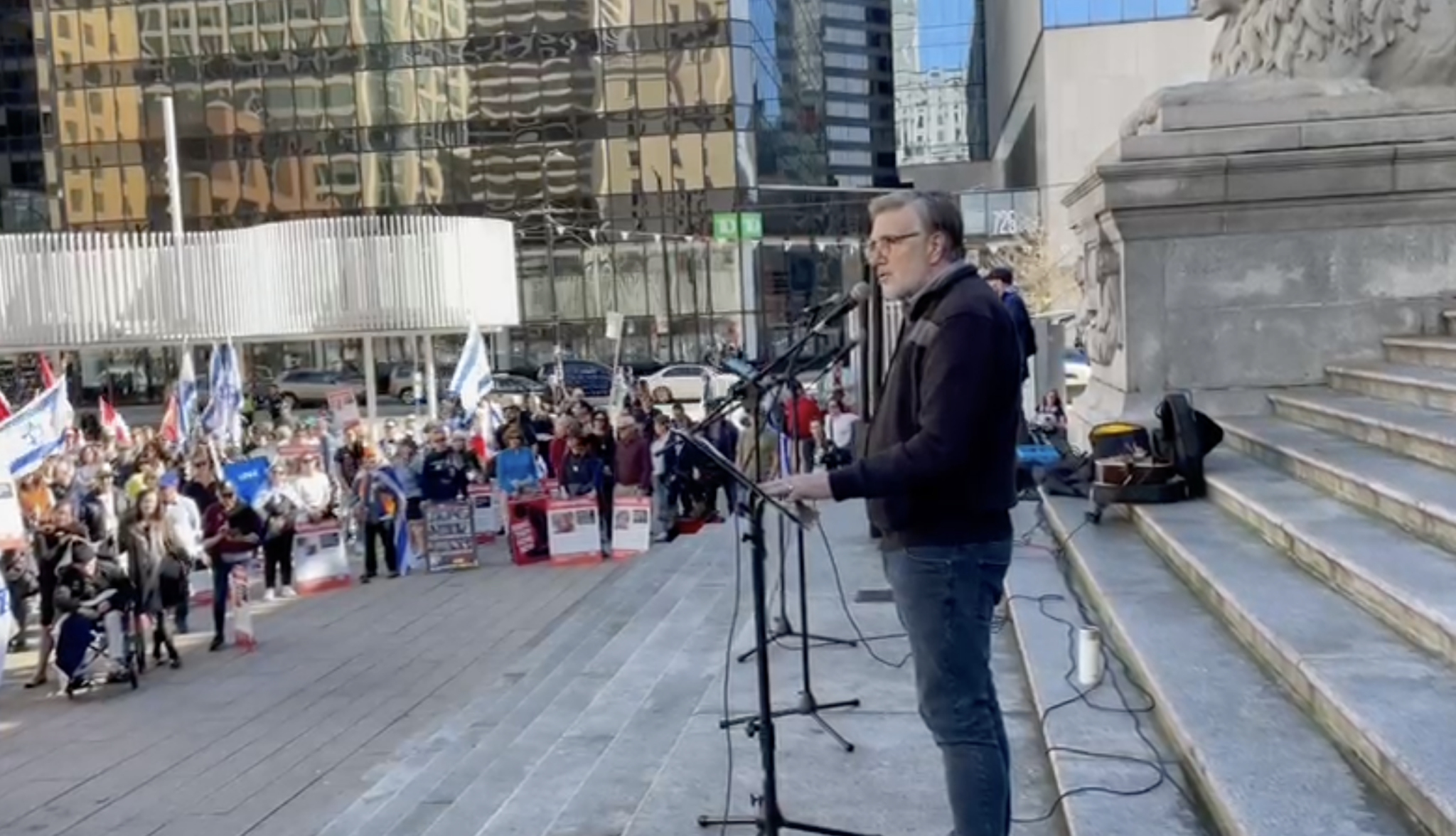
After graduating from McGill, Johnson returned to Vancouver, where he completed his graduate studies in journalism. Early in his career, while he was seeking freelance writing assignments, a friend connected him with an acquaintance, then the publisher of the Jewish Western Bulletin (now The Jewish Independent). It would be the start of a 30-year involvement with the weekly newspaper, for which he continues to write articles and proofread editorial content.
My niche, admittedly a comparatively narrow one, is that of a progressive, gay, agnostic, non-Jewish Canadian that stands with Israel
Johnson’s Substack audience continues to grow without the benefit of marketing. He has more than 3,200 followers, and some of his pieces are read by 5,000-plus people. Unlike many writers on Substack, he doesn’t use a paywall, making his columns free to all — still, about 160 people choose to show support through voluntary paid subscriptions.
“My niche, admittedly a comparatively narrow one, is that of a progressive, gay, agnostic, non-Jewish Canadian that stands with Israel and the Jewish people,” said Johnson, whose soft-spoken manner contrasts with his often feisty, combative columns.
“Antisemitism and anti-Zionism offend every one of my multiple identities,” he said. “Since the beginning of the Second Intifada [in 2000], I’ve been incensed and betrayed by progressives, including LGBTQ+ people and others with whom I’ve worked since I was 15 on campaigns and direct-action activism. They’ve overwhelmingly sided with the most misogynistic, homophobic, violent, hateful, theocratic, regressive, despotic forces on the planet.”
With titles for his pieces such as “What Will it Take for You to Stand With the Jews?” or “Want to Understand Jews? Try Listening” and “Where are the ‘Pro-Palestinian’ Moderates?” Johnson doesn’t pull punches, leaving few readers indifferent.
“Some of the most virulent feedback comes from my former friends in the progressive movement, from whom I’ve received personal attacks, dismissiveness, harassment, abuse, intimidation, even death threats,” said Johnson. “The nasty comments I receive are often inarticulate, illiterate or outright bananas. Antisemites and anti-Zionists don’t have facts or intellect on their side. As a result, they usually communicate in slogans and memes. Confronted with the tsunami of words I produce, they retreat to X.”
The nasty comments I receive are often inarticulate, illiterate or outright bananas
More often, Johnson’s work elicits a positive response, including from faraway readers in Israel.
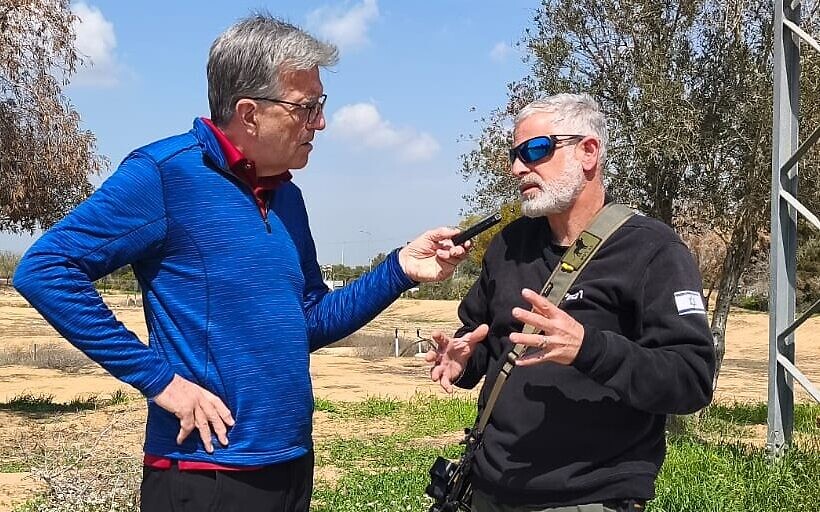
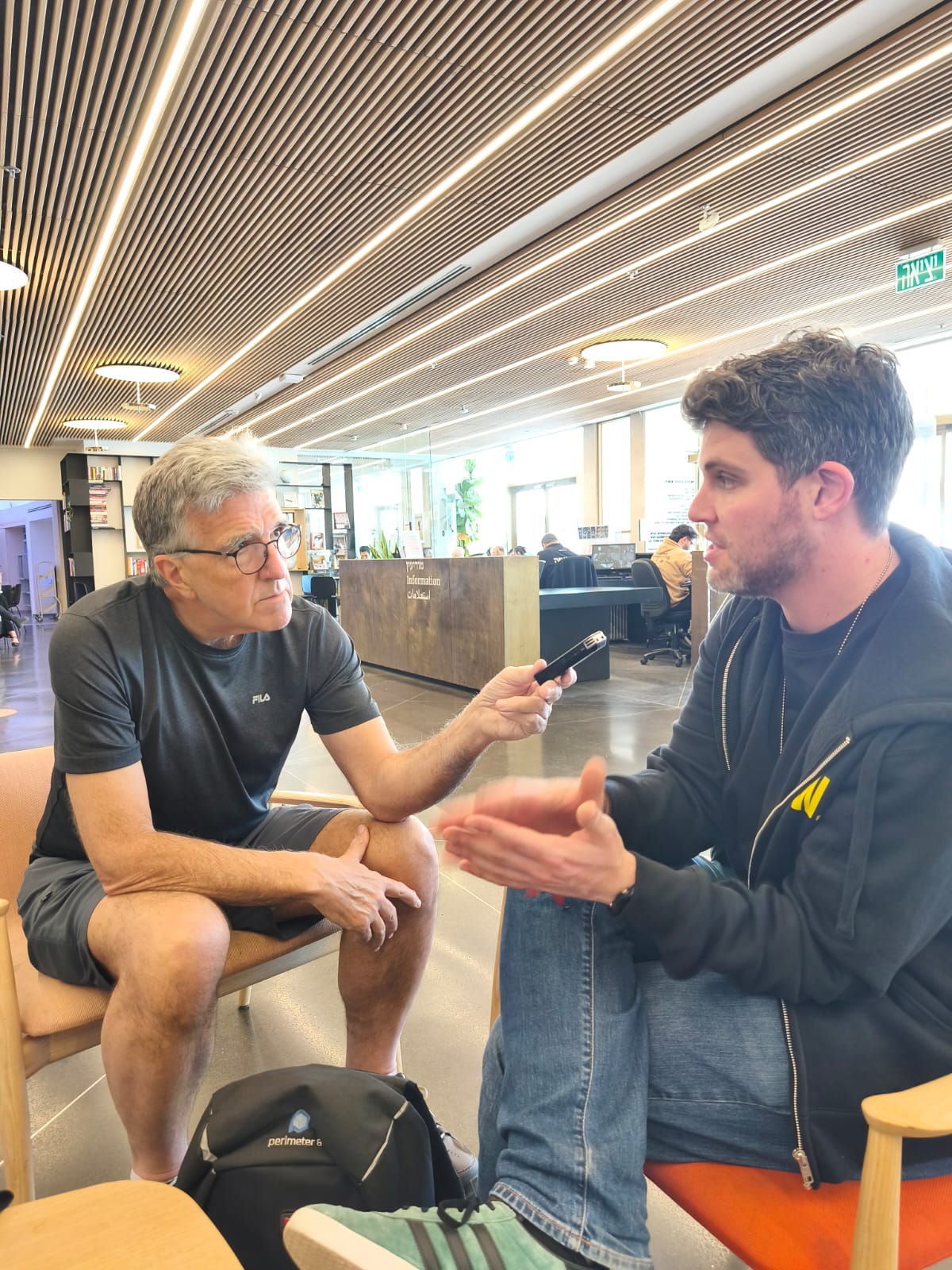
“Like other Jewish readers, Israelis have written to me that they’re uplifted to read that a non-Jewish Canadian is speaking reason to the world,” said Johnson, who traveled to Israel for the fourth time in March.
After mentioning in a post that he was to visit Israel, Johnson was bombarded with invitations.
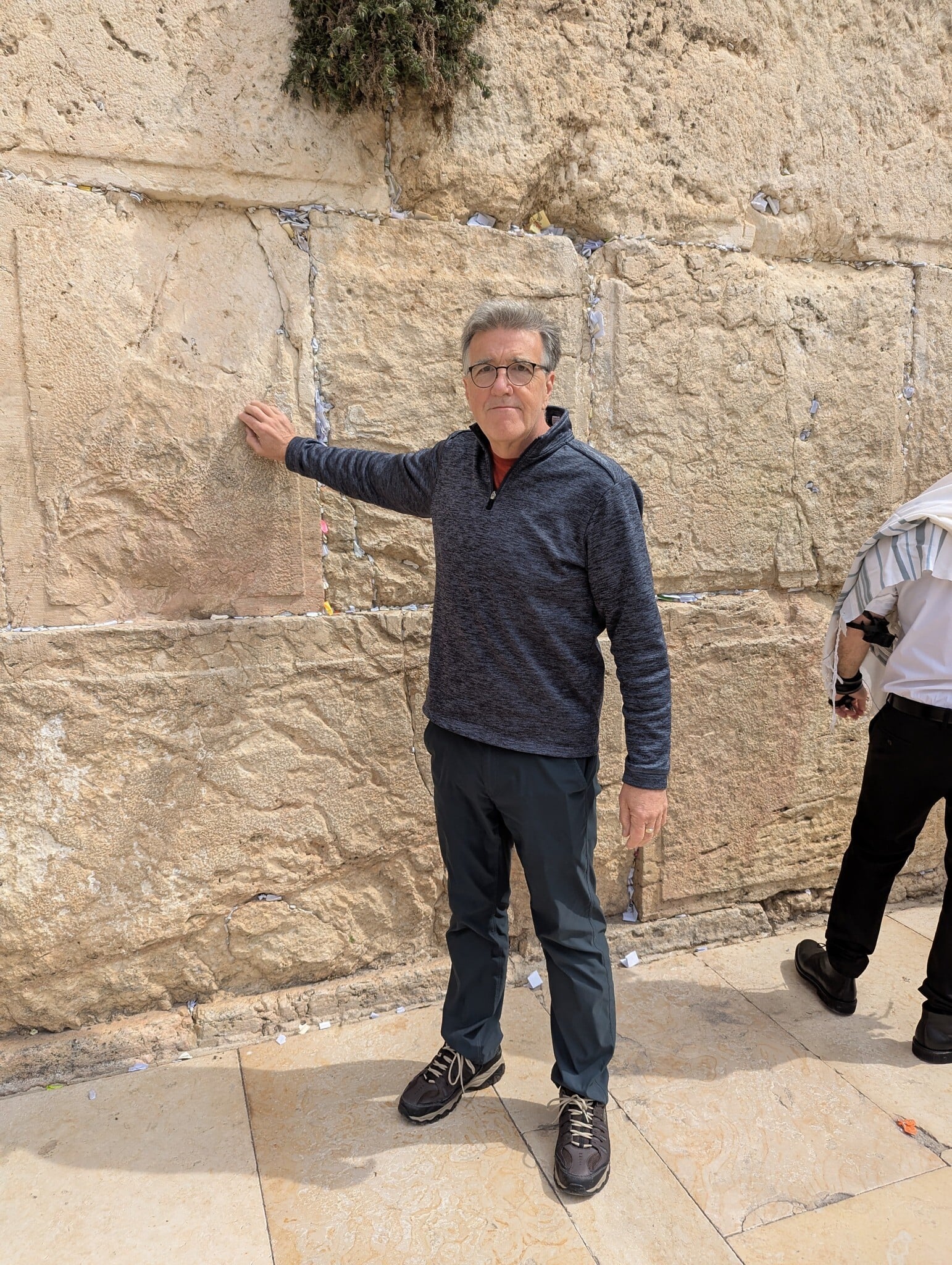
“I was hosted for Shabbat by the family of a brilliant professor in Jerusalem and toured around to lectures and rallies by an activist who immigrated from the US 50 years ago. In Tel Aviv, I had so many invitations, I had to arrange a meet-up in a hotel lobby where a dozen of us shared reflections. I returned to Canada with many new friends.”
Independent of his writing, Johnson is the founding director of Upstanders Canada, a mostly non-Jewish, nonpartisan organization that educates and encourages Canadians to confront antisemitism and stand with Jews and Israel.
To expand his audience on Substack, Johnson intends to add video content. He’s also developing a book of his essays. Last year, he assisted former British Columbia government minister Selina Robinson in writing her memoir after she was forced to resign after being targeted by anti-Israel activists.
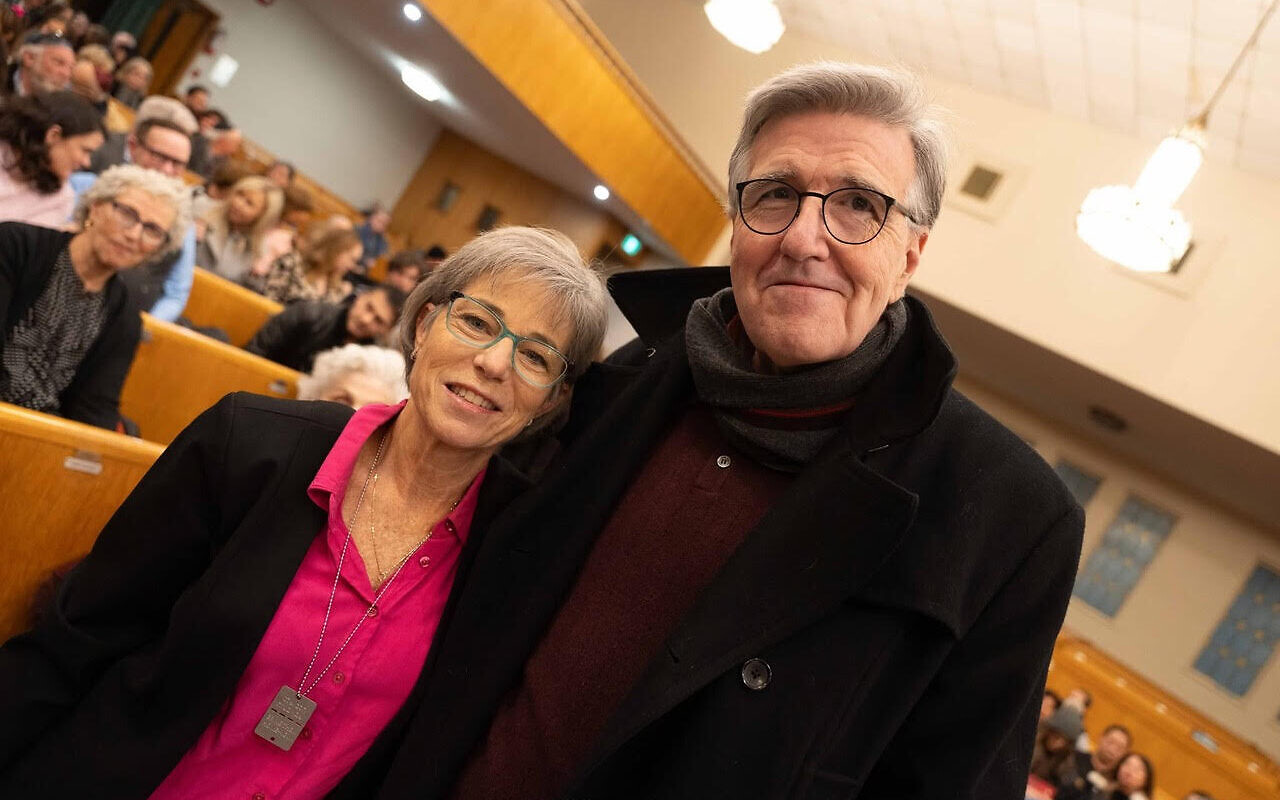
In a recent column titled “Would You Hide Me?” Johnson decried how, despite rampant antisemitism, most non-Jews show little understanding of Jewish anxiety, and even less allyship with Jews.
“Let’s say that Jews today have little or nothing to fear – that the idea of needing friends to hide them in garden sheds or under fake floors is outlandish and paranoid,” he wrote.
“This assumption would come with the parallel certainty that, by definition, standing with Jewish people in this moment is even less of a danger,” he wrote. “And yet, when the stakes are so low for allies and friends, practically no one is standing with Jews.”









The Times of Israel Community.