

Hezbollah drone threat is serious, but blown out of proportion, IDF tells ToI in Lebanon
In Khiam, southern Lebanon, Givati officers say UAV attacks prove that ‘the enemy are cowards,’ take ToI into Hezbollah tunnel found deep under children’s clothing charity
 Add ToI as a Preferred Source on Google
Lazar Berman is The Times of Israel's diplomatic reporter
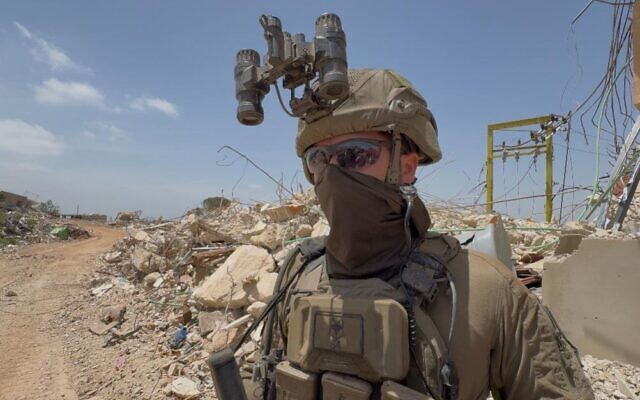
KHIAM, Lebanon — Hezbollah drones are not affecting Israeli operations in southern Lebanon in any meaningful way, IDF officers told The Times of Israel on Wednesday.
“The drone threat is strictly a tactical threat and not a strategic threat,” said a company commander in the Givati Brigade’s Tzabar Battalion, currently fighting under the command of the 769th ‘Hiram’ Brigade.
“I am saying this intentionally, because I also have family back home who are maybe worried about the drone threat, which I have to say has been blown out of proportion,” continued the officer.
The army is certainly paying attention to the threat from Hezbollah drones. “Jackhammer” — the warning code when a hostile drone is detected in the area — was declared on the radio during the drive from Kiryat Shemona to Khiam, a mostly Shiite village three miles (five kilometers) from the Israeli border.
Not long after, another Jackhammer warning was sounded, and the Israeli journalists on the tightly-controlled IDF-arranged tour of Khiam were forced to enter a badly damaged building for cover.
No drone was spotted.
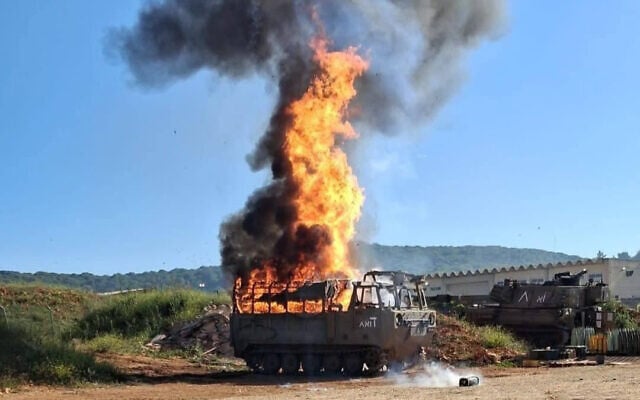
At the same time as the visit, Hezbollah launched several drones that exploded near Israeli troops elsewhere in southern Lebanon, according to the IDF. Additionally, the IDF said two apparent drones were shot down by air defenses.
Hezbollah has had successes with its drone strikes in recent weeks. Since the April 16 ceasefire, Hezbollah has killed 4 IDF soldiers and one civilian through drone attacks, and wounded dozens more.
On Thursday, three Israeli civilians were wounded, two seriously, in a Hezbollah drone attack in the Rosh Hanikra area.
We don’t take it lightly for a second. But it’s a tactical threat and not a strategic one.
“The threat exists,” said the officer. “We don’t have any right after October 7 to dismiss any threat. We don’t take it lightly for a second. But it’s a tactical threat and not a strategic one.”
“The fighting continues as planned,” he noted, “with the appropriate adjustments for the drone threat to protect the lives of our soldiers and bring them home safely, with the central mission of protecting the residents of the north.”
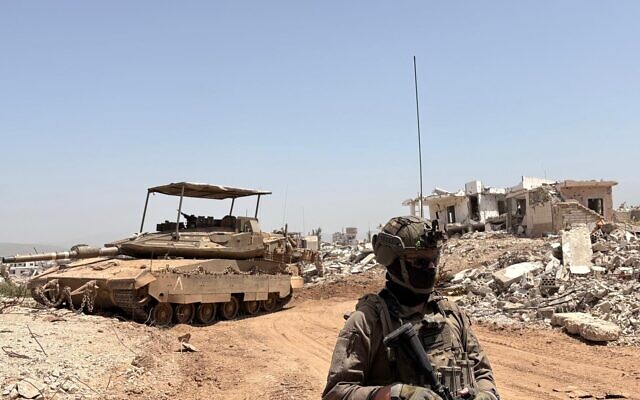
Soldiers from the IDF Tzabar Battalion in the Givati Brigade operate in Al-Khiam, Lebanon, May 13, 2026 (Lazar Berman/The Times of Israel)
“We got this,” said another company commander, adding that Hezbollah’s reliance on drones launched from many miles away shows “that the enemy are cowards.”
Drones are “our main threat,” said Capt. L. “I think that’s good. It only underscores how far away the enemy is from us.”
The troops “absolutely” have the tools to deal with it, said the first officer. “There are many capabilities — whether they are technological or whether they are older — and they all help us deal with the threat.”
Closing the circle
Though more than half of Kiryat Shemona’s 24,000 residents are internally displaced across Israel in the face of Hezbollah drone and rocket attacks, the fields along the border with Lebanon are green and well-tended.
Surprisingly, the same goes for the fields on the Lebanese side of the border.
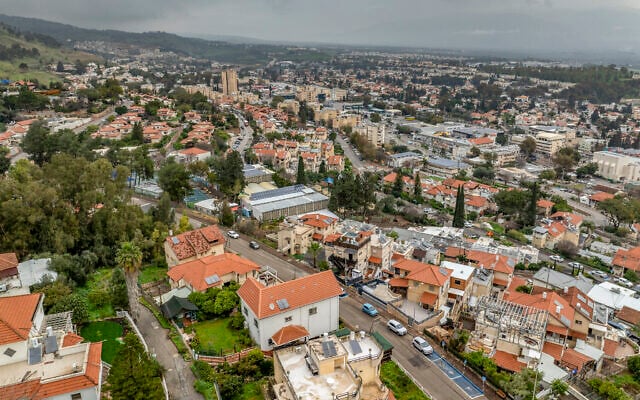
The houses in the Christian Tel Hamamis village are not destroyed either. The hamlet’s vineyards, a sure sign of a Christian area, undulate in neat rows over the hills below Khiam.
As the vineyards give way to the Shiite Muslims’ olive trees, the destruction takes hold. Some stone homes lie in jagged piles, while others stand drunkenly with gaping holes in their walls.
The red-roofed houses in the majority-Christian Marjayoun across a valley also remain standing, further evidence of how differently Israel is treating its historical allies in Lebanon than its enemy of four decades, the Shiites.
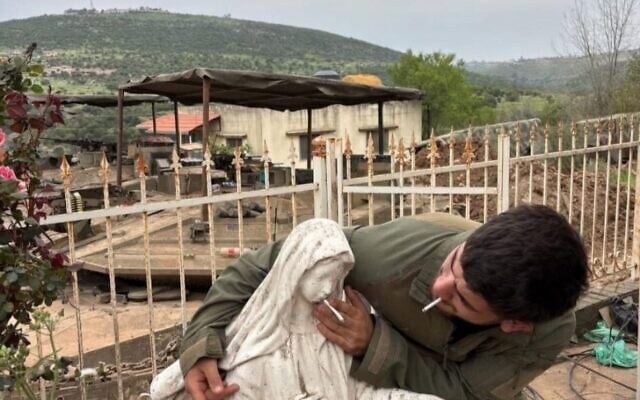
But soldiers have been caught mistreating Christian shrines and property in a series of embarrassing incidents.
On Monday, the IDF sentenced two soldiers to jail for placing a cigarette in the mouth of a statue of the Virgin Mary in Debel, a Christian village in southern Lebanon, a picture of which was shared widely online last week.
Debel was the village where a soldier smashed a statue of Jesus last month, as well as the place where soldiers were seen in footage showing military excavators damaging solar panels.
“In every war, there are outlier incidents,” insisted the first officer. “Our soldiers are ethical, they understand what we are doing here. These incidents are not widespread.”
“I know it doesn’t happen in my battalion,” he continued. “We don’t loot. We don’t use things that we find here in the field.”
“I heard about the incidents. We reject them,” said Capt. L. He said that the battalion conducts briefings and conversations with the soldiers to make sure there are no violations of orders or law.
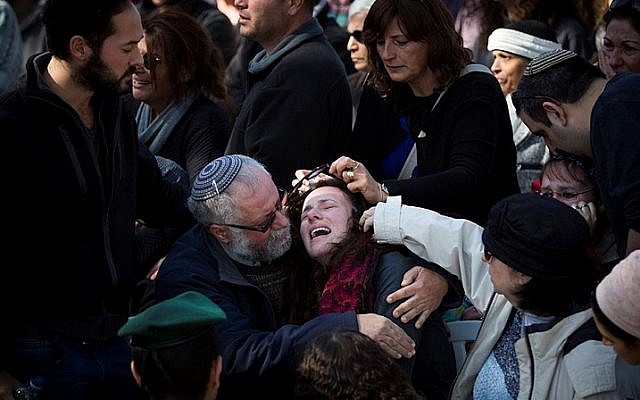
The officers from the Tzabar Battalion repeatedly told The Times of Israel that their conquering of Khiam in March was “the closing of a circle.”
In 2015, Hezbollah fired an anti-tank missile from the town at IDF troops on Mount Dov, killing Major Yochai Kalangel and Staff Sergeant Dor Chaim Nini from the battalion.
Tunnels under children’s clothes
At the beginning of the US-Israel campaign against Iran, the Tzabar Battalion was deployed just over the border.
Hezbollah began firing rockets and missiles at Israel on March 2, and Israel responded by pushing north, retaking territory that it held until the November 2024 ceasefire, and moving beyond to the Litani River.
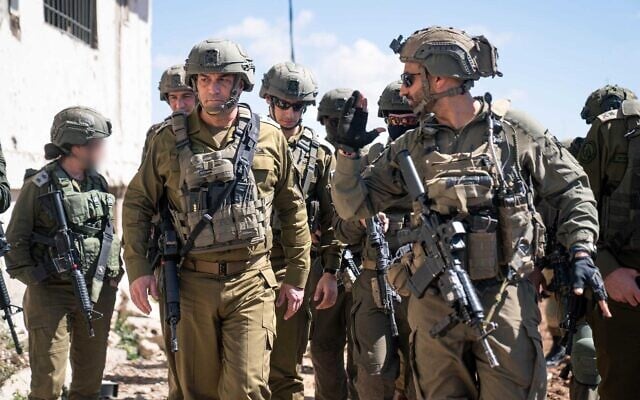
Within 10 hours of receiving orders during the first week of March, one of Tzabar’s companies had already captured the infamous prison in Khiam.
In subsequent raids further north in the town, the battalion noticed that it kept encountering and spotting Hezbollah gunmen around certain buildings on the town’s main strip, according to IDF officers.
They concluded that Hezbollah was protecting some military asset, and moved to capture the area. The IDF soldiers killed 6 Hezbollah operatives, and searched a building where an Islamic charity was distributing children’s clothing.
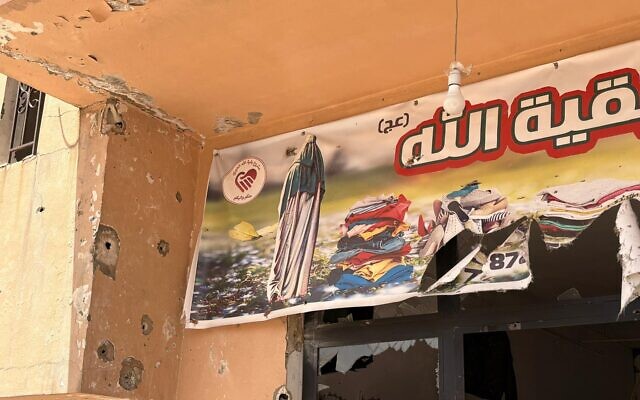
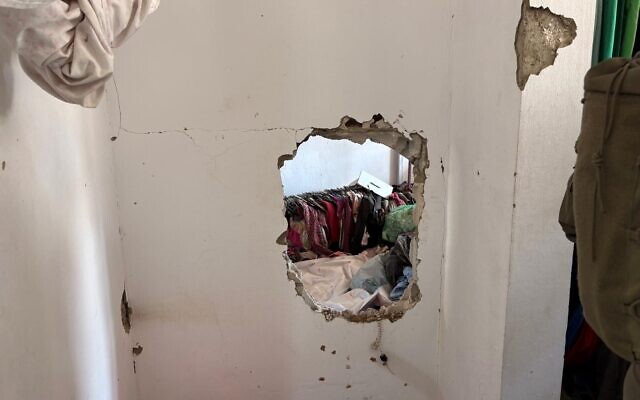
They found that Hezbollah had turned it into a fighting complex. Its fighters had broken holes through internal walls, allowing them to move unseen between buildings.
Soldiers found a radio, RPGs, and Kalashnikov rifles.
Most significantly, they found a well-built tunnel complex 25 meters underground.
The tunnel, which The Times of Israel entered, is far more elaborate than Hamas tunnels in Gaza. A metal ladder descends onto a spiral staircase, which reaches a small landing before another spiral staircase descends into the main tunnel. Gaza’s tunnels are low and sandy, topped by concrete arches.
Built into bedrock, the Hezbollah tunnel has a high ceiling, supported by sturdy metal frames. Hallways run for dozens of meters, with electric generators and water systems in small side rooms. Hezbollah fighters’ prayer rugs, clothing, and even Nutella cocoa spread sit on shelves along the tunnel.
The tunnel under the children’s clothing charity would allow Hezbollah fighters to avoid being struck by Israeli shells, while moving undetected between firing positions and buildings.
The soldiers now understand what Hezbollah was trying to protect in Khiam.
An emptied town
The Tzabar Battalion continued to push northward after the fighting in central Khiam.
Before the ceasefire took effect in Lebanon last month, the battalion raided the village of Dibbine, killing over 20 terror operatives.
Dibbine is located nearly 12 kilometers (nearly 7.5 miles) north of Israel’s border.
Hezbollah does not try to fight Israel face-to-face anymore, said L.
“We don’t feel the enemy,” he said. “The enemy is totally shattered in this area.”
So is Khiam. Every building in sight was destroyed or damaged, and the town, which once had almost 30,000 residents, is totally empty now.
It might stay that way for a long time.
“I don’t see a situation in which we leave and residents return,” said the first officer. “After October 7, we understand that it doesn’t work, and everywhere they return they rebuild infrastructure and threaten the residents of the north.”
“We don’t have the privilege of leaving the area until there is a solution that totally removes the threat.”








The Times of Israel Community.