

In India, a Jewish home becomes a place for traumatized Israelis and others to breathe
After traveling the world, Maayan and Ashriel Ashush opened Bet Halev in the beach town of Varkala, welcoming thousands of Jews, non-Jews and those bearing scars from October 7
 Add ToI as a Preferred Source on Google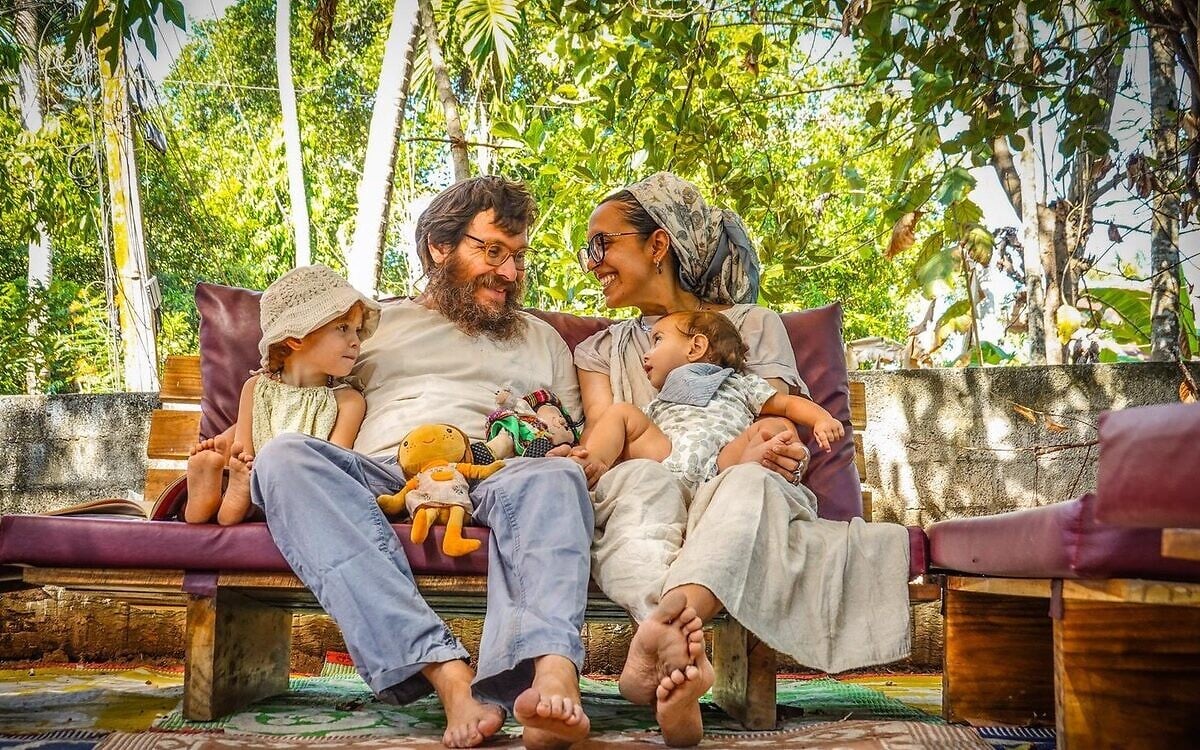
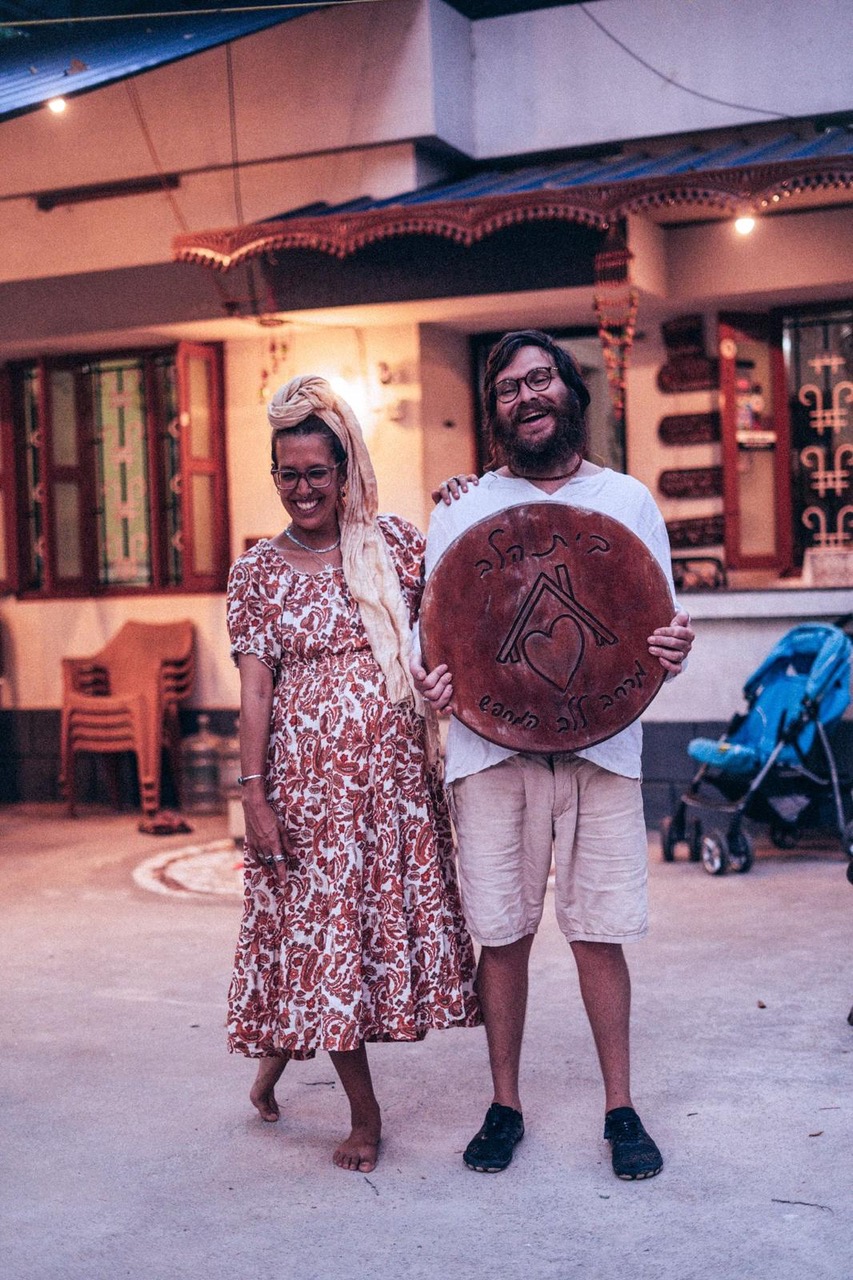
In 2017, newlyweds Ashriel and Maayan Ashush set out with backpacks and big dreams to travel the world. But instead of sandy beaches and mountaintop ashrams, their journey led them to volunteering and outreach — and eventually to opening up their own center, Bet Halev, Hebrew for “House of the Heart,” in Varkala, India.
Now, the Ashush family — which has grown to include daughters Odeh, 3, and Naya, 1 — lives six months each year in Varkala, where they’ve created something deeply personal. More than just a Jewish center, Bet Halev is an open, welcoming Jewish home for travelers from around the world, regardless of their religious background or affiliation.
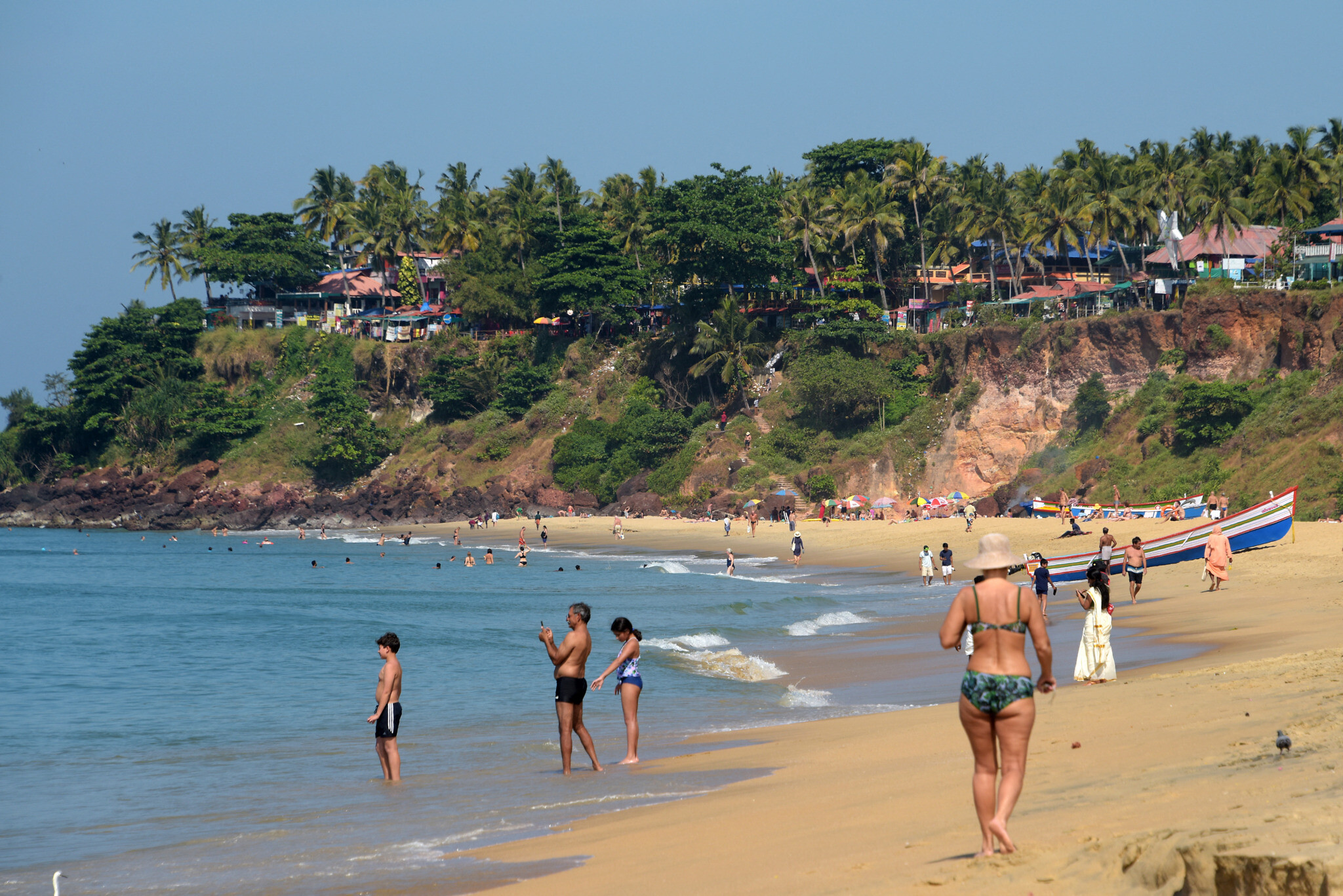
Varkala, a beach town in the southwestern state of Kerala, is located in a region rich in Jewish history centered on Cochin, a city whose active Jewish community claimed to have emigrated to there during the rule of the biblical King Solomon. While some Jews remain in the region, none are thought to live in Varkala, home to some 40,000 people.
But plenty pass through each year, drawn to the city’s cliff-lined beaches and, more recently, for the hospitality, sense of community, spiritual teachings and Jewish atmopshere created by the Ashushes’ project.
“I’ve been in many places in the world and really feel there is no place like Bet Halev,” said Nitza Roskin, a professor and mother of five on her sixth trip to India. “We decided to come to Varkala because of them. People are coming to Bet Halev day after day, and they don’t leave. Varkala is not a place to be in for months — people stay because of them. There is something in their home that makes you feel at home. It’s a safe place where you will get what you need, and no one will judge you.”
Bet Halev hosted more than 2,000 people over the course of its last season, which usually runs from the holiday of Sukkot in the fall through the Purim holiday in the early spring.
“We are very excited to start the fourth season of Bet Halev,” Maayan Ashush said by phone from Israel as she prepared to return to Varkala.
“It’s our third year going into the war,” she said, just days before a US-brokered ceasefire facilitated the long-awaited return to Israel of the living hostages held by Hamas in Gaza, and ushered in a tentative end to hostilities that began with the Hamas-led October 7, 2023, atrocities in southern Israel.
“On the one hand, Israel is very broken from the war, and we all are brokenhearted. But, there is no fuller heart than a broken heart, and we really hope that together, we’ll be able to mend our hearts,” Maayan said. “We are very much looking forward to going to India — not that we’re looking forward to leaving Israel, but we really believe that wherever we are, we bring Israel with us.”
The project has been so successful that Maayan and Ashriel, also known as Ash, now hope to also bring the spirit of Bet Halev back to Israel, with plans to open a similar space there for two to three months each year.
When they set out to travel through Asia, North and Central America, Europe, and beyond, Maayan and Ashriel documented their journey and growing family through their popular social media account, The Jewish Nomads — and they continue to do so today.
“We had a vision to travel the world for five years,” Maayan told The Times of Israel in an earlier interview. “The first two years we spent in Asia, traveling and getting to know each other as a couple. Thailand, Laos, Myanmar, Cambodia, Vietnam, Singapore, Nepal and India. Then we went to Australia and the US, got a van, and started traveling the country.”
Maayan says that it was around that time that the couple realized they were searching for something deeper in their travels — a sense of purpose — which they found by volunteering and doing Jewish outreach work.
“We went on to Central America, Mexico and El Salvador, working with communities of converts,” Maayan said. “That’s when we really felt we were being guided toward this path, toward service. We realized our entire journey had been leading us here. We weren’t very religious at the beginning, and we were going through our own spiritual growth.”
While on the Thai island of Koh Phangan, Maayan and Ashriel volunteered at a Jewish center; it was then that they realized it was time to create something of their own. On the island, they worked mostly with Israeli travelers, which was a new experience for them.
“We were only working with converts and Americans before,” said Maayan. “This was our first time working with Israelis, and we said, ‘These are our people. We know the language, we understand what they’re going through. We’ve been on the same journey.’”
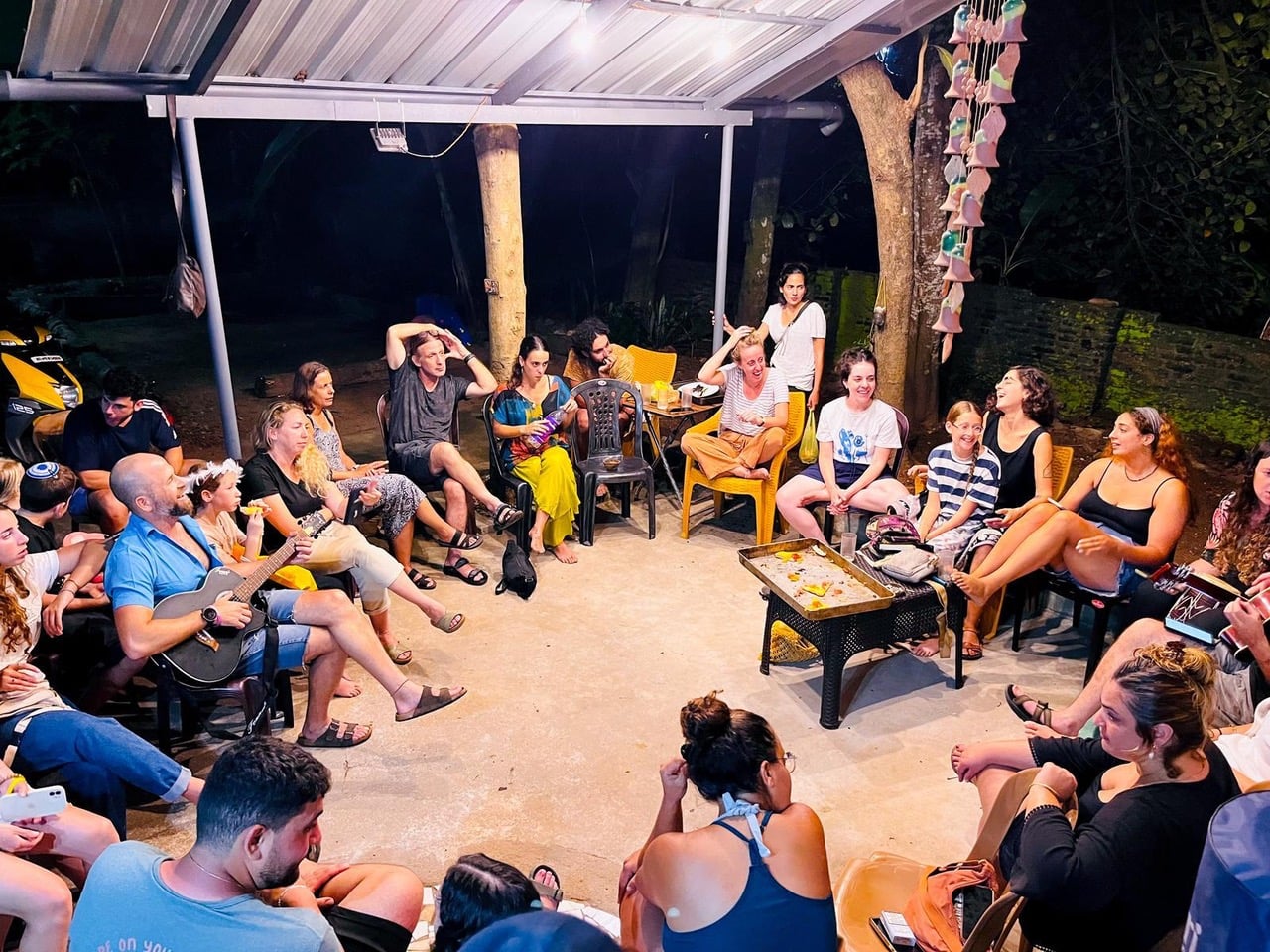
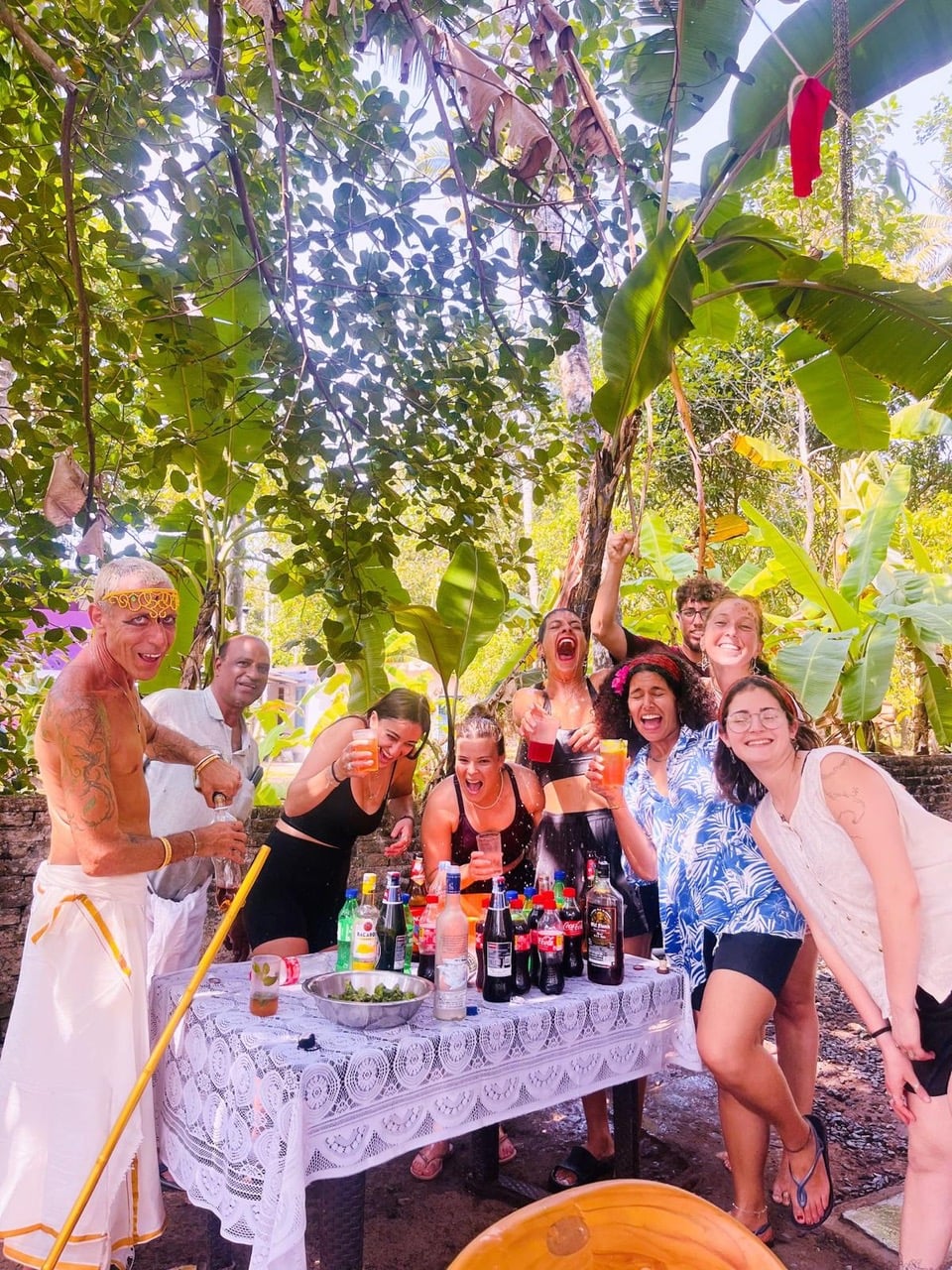
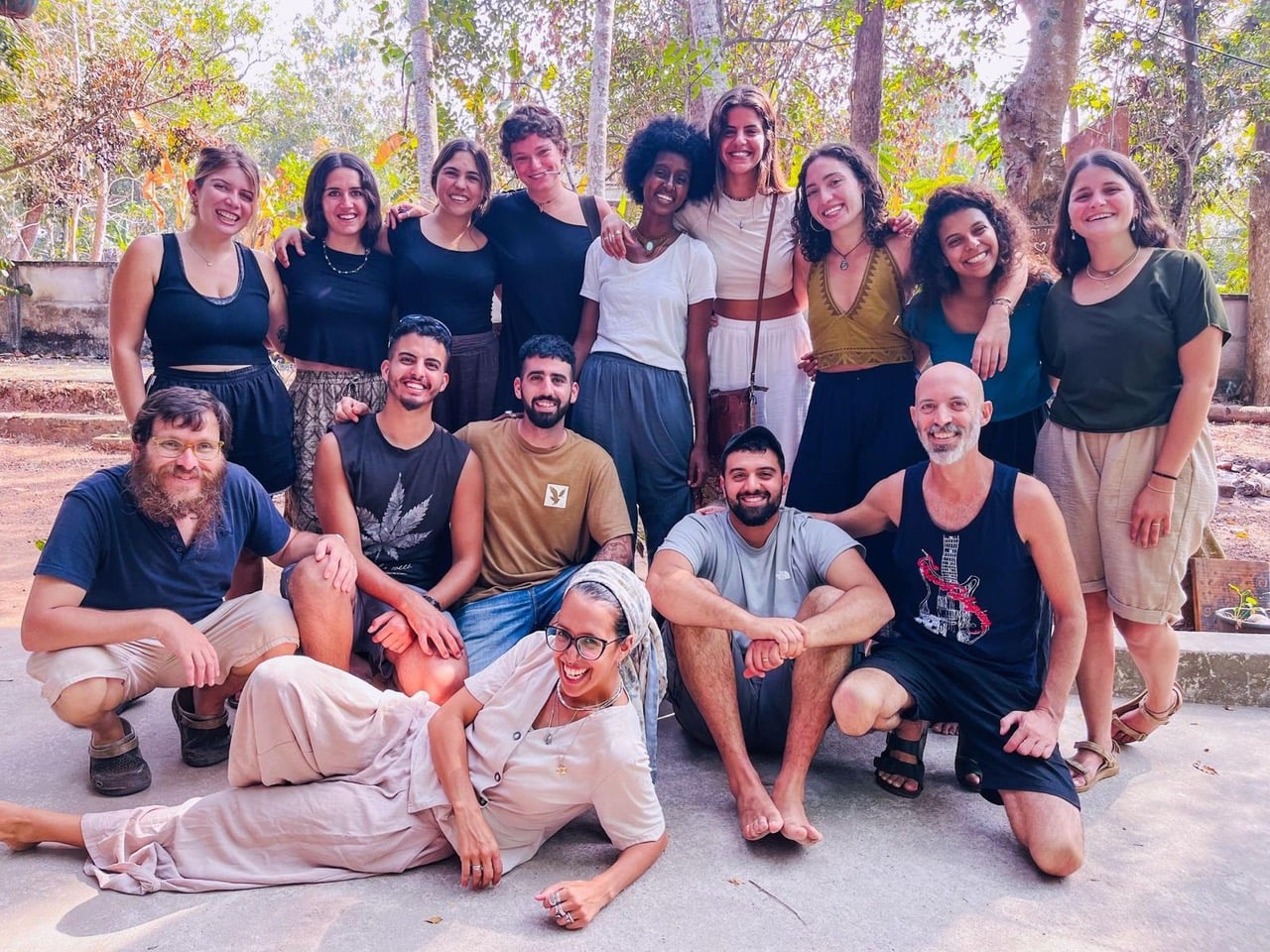
At Bet Halev, they typically host 100 guests or more for Shabbat dinner on Friday night during the on-season, though the house is open to visitors around the clock. As Maayan and Ash like to say, “It’s not our house, it belongs to everyone.”
There are always fresh cookies on the table, coffee brewing and travelers lounging on the sofa deep in conversation. Home-cooked meals are served for lunch and dinner, and the house acts as a warm base for travelers staying in nearby guesthouses around Varkala.
Each day, Maayan leads a class in Yemima, a Jewish psychological spiritual system, before lunch, and in the evenings, Ash teaches kabbalah, or Jewish mysticism. Both also conduct various workshops. Travelers often offer up their own talents with contributions such as yoga sessions, breathwork and live music. The energy of the house is contagious.
Though guests are generally just passing through, people quickly feel that Bet Halev is a community, and many travelers end up staying longer than they’d planned, drawn in by its unique spirit.
In many ways, Bet Halev appears to parallel outreach efforts by the Chabad Lubavitch movement, whose emissaries provide Jewish services to travelers and locals in far-flung outposts, including in India, becoming hubs for globetrotting Israelis and Jews.
“Someone came in today and asked me, ‘You’re not Chabad, so what are you?’” said Maayan. “I told her, we are also Chabad. We’re Jews with an open heart.”
After war broke out on October 7, 2023, with the bloody Hamas-led invasion of Israel, things changed quickly for the Ashush family and Bet Halev.
“We were here in India,” said Maayan about the day of the attack. “We arrived the day before [the] Sukkot [holiday], had a beautiful Simhat Torah. And then, like all Jews, we woke up to a really black day, and suddenly the whole reason for us being here shifted. People were sleeping on our couch because they were too scared to sleep in a guesthouse by themselves. We became this center for people to go; finding flights, raising money for soldiers.”
Then, with Israel mired in war, amid the largest call-up of its military reserves in its history and with nearly all non-Israeli-operated flights to and from the country canceled, the makeup of the guests at Bet Halev underwent a visible change.
“About one month later, we became a place for families. We were doing a preschool and had a time where more non-Jews were coming to us than Jews,” Maayan said.
More recently, Bet Halev has welcomed survivors of the Nova music festival — where over 360 people were massacred on October 7, among the some 1,200 total murdered in the Hamas-led assault on southern Israel — as well as a group from the hard-hit Kibbutz Be’eri, families from across Israel’s south, IDF reservists looking for a place to rest and recharge, and Israelis simply in need of a break from the war. Maayan and Ashriel have opened their doors to families with children of all ages, from teenagers to toddlers, as well as couples on their honeymoon.
“Every night we have this custom where we stop everything, say our name and say something that we are grateful for that happened today. It’s beautiful. People say they take it with them afterward. We were doing that, and then these booms happened,” said Maayan.
The booms were just celebratory fireworks set off in honor of an Indian holiday — but for several guests traumatized by the October 7 atrocities and subsequent war, they were severely triggering.
“We were just sitting having dinner, and you see this one girl starting to have a huge panic attack out of nowhere,” said Maayan. “Then another girl started having an attack. We stopped everything, and then one of the girls told us — we didn’t know — that she lived in Kibbutz Nahal Oz for years and moved a few months before the war.”
“People are walking around with intense trauma,” she said. “We did a beautiful workshop yesterday; one of the girls said she was a Supernova survivor, and nobody knew. She’s just walking around the world with this thing. She left right after the war, started to travel, and hadn’t been back because she said she couldn’t deal with being in Israel, and now she’s going back.”
“This season, we traveled all over Israel trying to connect with organizations that could help us bring professional support for healing and different projects,” said Maayan. “We were really pushing for it. In the end, nothing materialized, but we realized that maybe it wasn’t needed in the way we had imagined.”
While there had been hopes of bringing more professional staff to Bet Halev, Roskin, who has a PhD in organizational and narrative psychology, said this may not be necessary — that perhaps the space is already therapeutic enough just as it is.
“I can really rest here,” she said, calling Bet Halev a home away from home since October 7. “It’s really a vacation in my mind. And I think it’s the same for the younger [guests]… For all of them, it’s the simplicity of the place. A lot of them are very curious about Hinduism and Buddhism, going to ashrams — it’s always connected to searching and to spirituality. Not every one of them says it, but I think it’s connected. To be free, to be curious about yourself through other religions.”
“Everybody needs a break,” said Maayan. “People come here because they need a place to breathe, it’s something we hear again and again — ‘I came to India to learn how to breathe again.’ People of all ages tell us this.”






The Times of Israel Community.