

In novel ‘Cyclorama,’ production of ‘Diary of Anne Frank’ conceals a cycle of abuse
In Forward journalist Adam Langer’s new book, a slippery high school drama teacher plays elaborate cat-and-mouse games with his unsuspecting young actors
 Add ToI as a Preferred Source on Google
Reporter at The Times of Israel
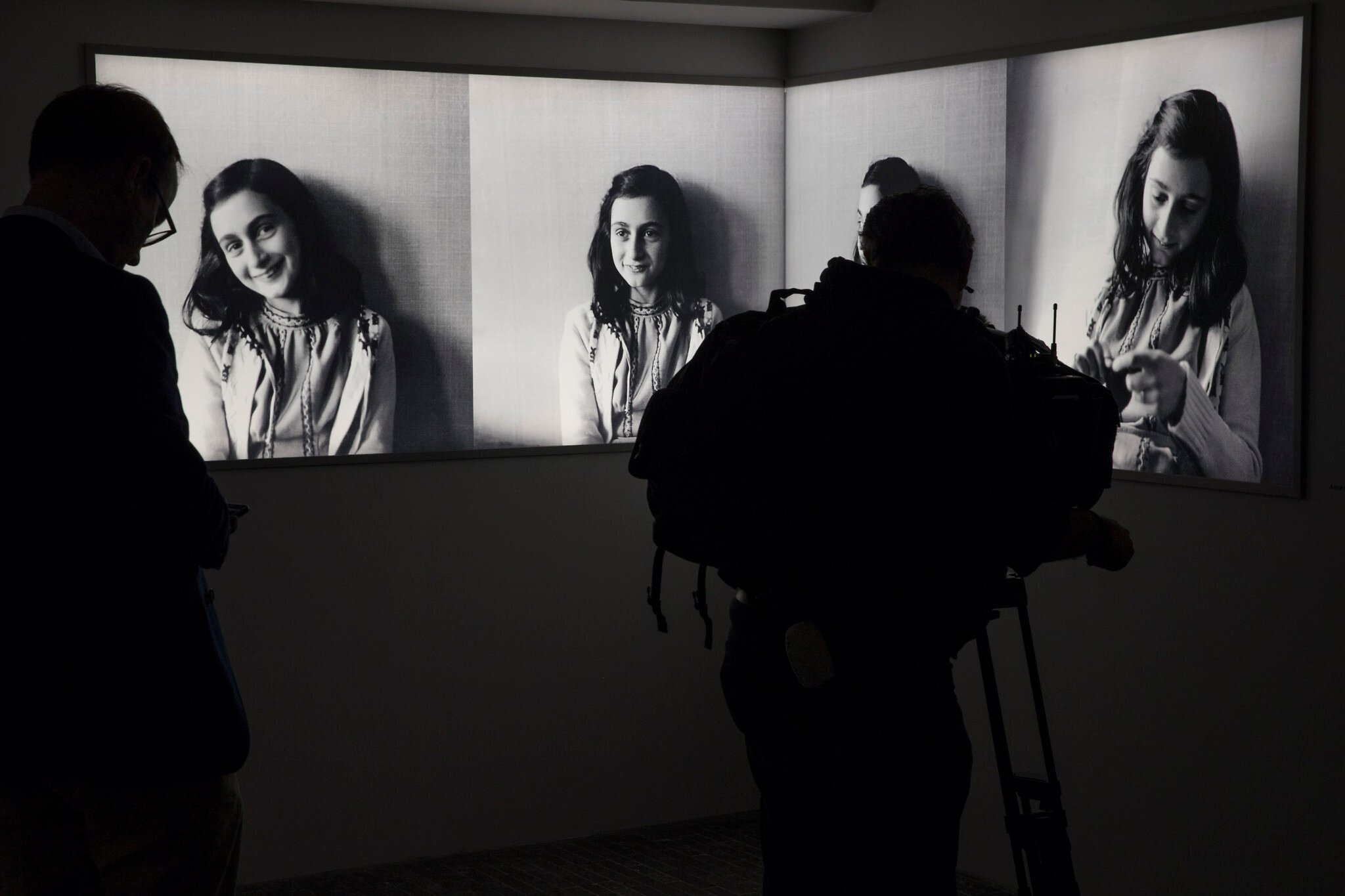
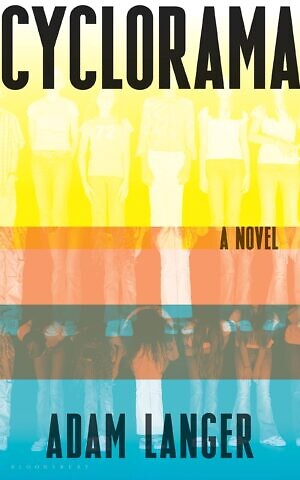
In journalist Adam Langer’s new novel “Cyclorama,” a drama teacher’s machinations inflict enduring trauma on students against the backdrop of Anne Frank on stage.
Told in two acts, “Cyclorama” is framed by two productions of “The Diary of Anne Frank,” which premiered on Broadway in 1955. The first staging takes place in 1982, the heyday of teacher-director Tyrus Densmore’s grooming of male cast members with at-home costume fittings and “exotic” annual trips to New York.
The novel’s second act flashes forward to the same Evanston, Illinois, high school theater in 2016, on the eve of Donald Trump’s election. A woke new theater director reinterprets “The Diary of Anne Frank” with contemporary examples of racism and xenophobia, including skirmishes at the United States-Mexican border.
Set apart by more than 30 years, the novel’s two Anne Frank productions frame the trauma inflicted on generations of students by a supposed mentor. In the novel’s closing section, the intergenerational nature of this trauma spills into the lives of people who never even met Densmore.
“The story of young people whose trust in elders and belief in their own maturity is abused and exploited is one that has played out and continues to play out, not only in America and not only in the arts,” Langer, 54, told The Times of Israel.
Like the rotating scenery panel — or cyclorama — used at the back of a stage, the insidious Densmore boasts an array of personas to manipulate his charges. To bolster their performances, Densmore hurls bigoted slurs at students and demands they “role-play” Anne Frank by sleeping at the theater with chamber pots for toilets.
“There are versions of this story that play out in the world of athletics and religion, and readers have been telling me these stories, all of which are very particular and yet they share certain themes,” said Langer.
The author of a memoir and five novels, Langer regularly contributes to The New York Times and is currently executive editor of The Forward. He recently spoke with The Times of Israel about Anne Frank — the icon — and why his book is resonating with members of Generation X.
The Times of Israel: A common theme among Jewish Gen X members I know is that we were taught the Holocaust by being “overwhelmed” with graphic images, a method that had a lasting impact on many people’s ability to process what took place. You touched on this in your book, and I wanted to ask you to describe your own experiences as an adolescent learning about the Holocaust.
Adam Langer: It’s hard for me to remember a time when I didn’t know about the Holocaust, so memories of how I learned about it are a little bit vague. In my memory, it was a topic that teachers had difficulty communicating, which is probably why my memories of learning about the Holocaust are associated with movies. I may have first learned about the Holocaust when I saw “The Great Dictator” at the Carnegie Theater in Chicago.
The first time I remember it coming up in formal schooling was in sixth grade when our teachers, Ms. Schneider and Ms. Mandell, instructed us to watch the “Holocaust” miniseries on NBC. The one thing I remember from that is feeling singled out as one of the only, if not the only, Jewish kid in my class as someone who was supposed to convey my personal feelings and impressions about a TV show that, quite honestly, I would have preferred not to watch.
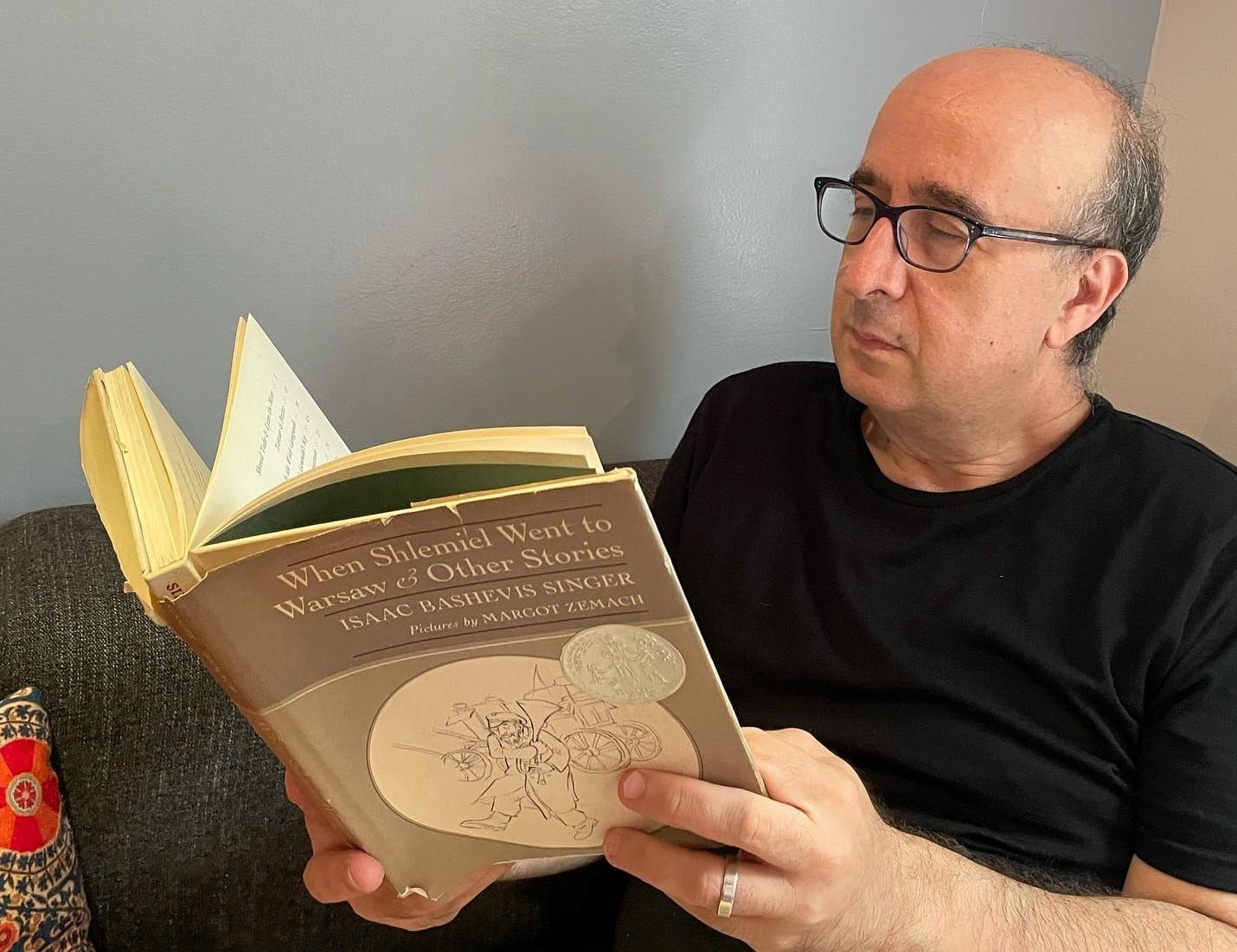
In high school, I don’t remember reading about the Shoah, but I do remember an assembly that featured Robert Clary, a Holocaust survivor who went on to star in the TV show “Hogan’s Heroes.”
Oddly, I don’t remember learning anything about the Holocaust in Hebrew school, which may be my faulty memory or may be a leeriness on the part of the Jewish community at that time to dwell on this history. Like how my parents told me that we did not have any relatives who died in the Holocaust, which was, of course, untrue.
From my observations as a parent, I do think that the Holocaust is taught differently now — Anne Frank and Elie Wiesel were not required reading when I was in school — though I do wonder at the wisdom of exposing children at a very young age to some of the most graphic and disturbing visual images, something that I actually think is more common now than it used to be.
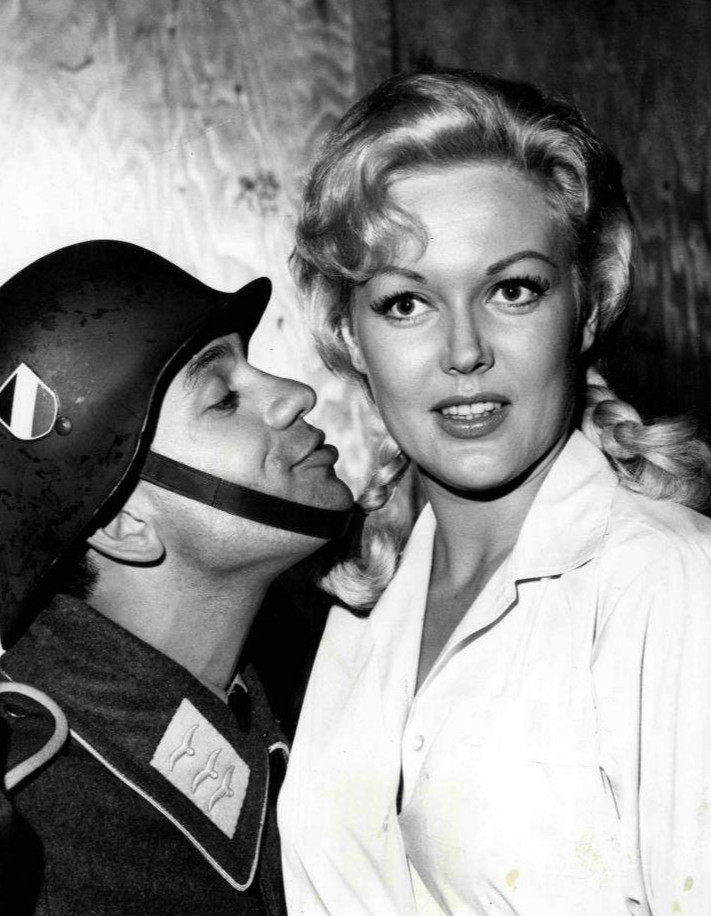
Anne Frank’s name and image have been heavily exploited in recent years, including to make points about “white privilege,” Israel’s control of the West Bank, and any multitude of issues not related to the Holocaust. How did this atmosphere regarding Anne Frank — the exploited icon — contribute to your decision to write “Cyclorama”?
For me, writing is a very organic process, one that’s very much about improvisation and discovery. Which is to say that it’s not the sort of thing I do a lot of planning for. So, when you ask about “deciding” to write “Cyclorama,” that’s not something I actually recall doing as opposed to something that just began happening.
I start out with a moment or a character or a situation and I build from it by asking questions: A kid is walking into a theater. Where is that theater? What’s the show they’re putting on? Who else is there? What are their stories? So, when I started writing “Cyclorama,” I didn’t know where the story was taking place or who was in it and I certainly didn’t know that the show in question was “The Diary of Anne Frank.” I figured that all out later.
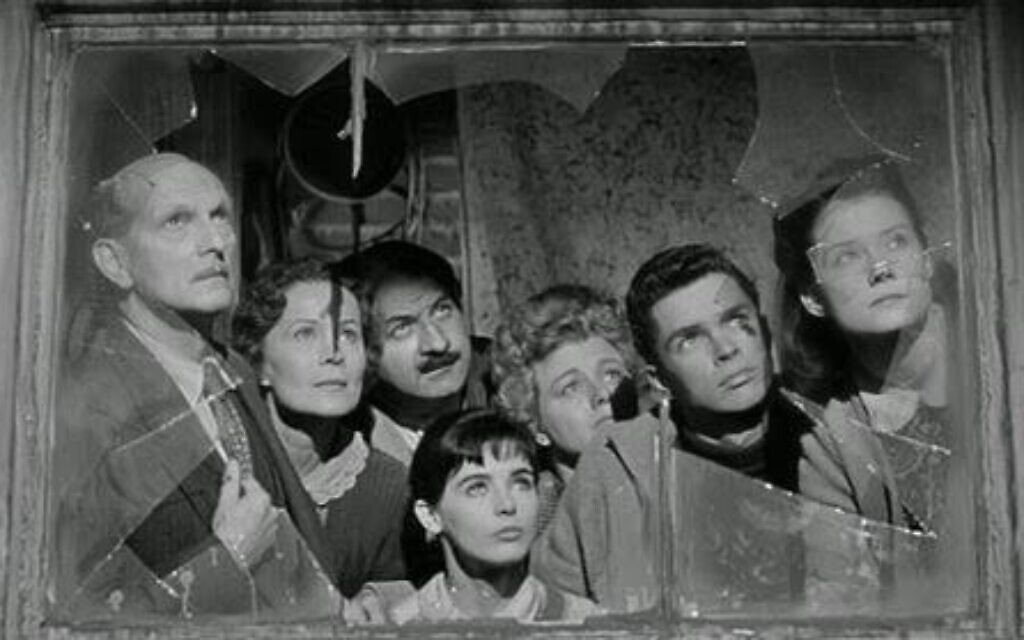
That said, in my position as executive editor of The Forward, the discourse on Anne Frank — Anne Frank as colonizer; Anne Frank as symbol of Jewish suffering; Anne Frank even as symbol of Christian redemption and God knows what else — is something I’m very aware of and that discourse certainly filtered into the writing of the second half of the book, which is set more or less in the present day. And, as someone immersed in the culture of the time, I’m certainly aware of the many, many, many different interpretations that writers and directors have imposed upon Anne Frank’s story and those, too, became part of the world in which I was writing.
Have you been hearing from a lot of Gen X readers who can relate closely to the school and travails of the students in your novel? From what people tell you of their own high school experiences, is there a tendency for people to minimize abuse they experienced or normalize it, such as took place with some of your characters?
What’s been distressing to me, but admittedly not entirely surprising, is that I set “Cyclorama” in a very specific place in a very specific time — 1982 in Chicago’s northern suburbs — and yet the story I tell is one that has seemed to resonate for people who grew up in very different eras and locations.
One of the things that I think was very common among my peer group was to use humor as a method of coping with the blatant abuse we saw happening all around us. Humor, for us, was a form of self-protection, which is totally understandable but at the same time that approach allowed the perpetrators to minimize their own abuses; if you could joke about it, then it seemed as if maybe it wasn’t that bad. A lot of films of the period do the same sort of thing — cloak exploitative behavior in the guise of humor to minimize it.
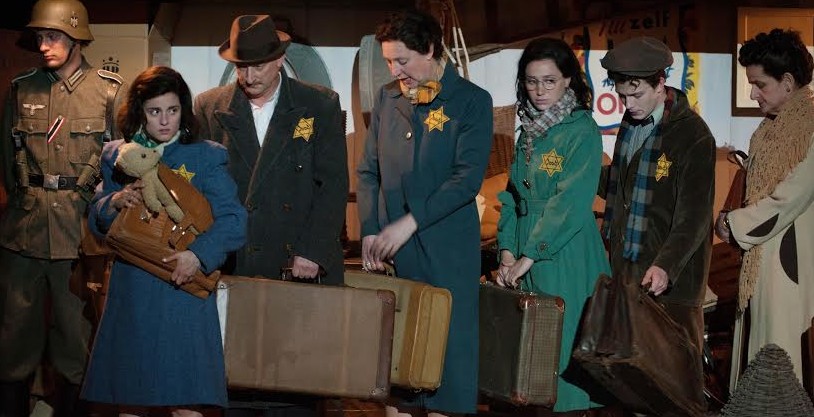
Most of us agree that the main point of the diary is not that people are truly good at heart. What would you choose as another alternative quote from Anne, if you had to pick one to distill the “point” of the diary?
I wouldn’t want to reduce the diary or even the dramatization of the diary to a single quote or passage. To me, perhaps the most profound aspect of the diary is that it exists, that it survived. It’s a vital document — it lives, it breathes, it contradicts itself.
I thought about that quote a lot, and many others, while I was writing the novel because it informed my approach to writing the story — to always see the world through the perspective of the character I’m writing and understand that, with rare exception, everyone is almost always the hero of their own story.
The original working title of “Cyclorama” was “In Spite of Everything, I Still Believe,” but I stopped the title before I got to the “good at heart” part. I wanted readers to question the world around them after they’d read about the experiences the characters in the novel had had — in spite of everything they’d read, what did they still believe? I’m not sure I have a clear answer to that question either, which is why I ultimately decided that I needed a different title.
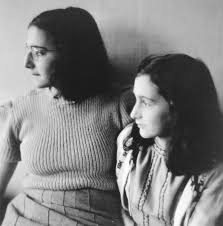
If someone were to find Margot Frank’s diary, what do you think it would say? How would it be different from her sister’s diary?
One thing I’d like to emphasize is that “Cyclorama” is not a novel about Anne Frank and her family, nor is it about the diary per se. I see it as very much a novel about our present cultural and political moment and how we got here. That story is told through the actors in a production of “The Diary of Anne Frank,” which is, in itself, a dramatized and, some would say, sanitized version of the diary.
I would find it very difficult to speculate about what a diary written by one of Anne Frank’s family members might or might not say because it seems to me the point is that this document did not exist and Margot or whoever else did not survive to tell their story. This is why I’m somewhat leery of other fictionalized takes on Anne Frank’s story, which presume to speculate on what might have happened if Anne or her mother or sister had survived. The characters in my novel engage in this sort of speculation because this is what teenagers, who often see the world refracted in their own experience, tend to do. For me personally, though, I couldn’t begin to imagine.
Have you received feedback from people angry you “updated” Anne Frank with the fictional production, “Anne Frank AF”? Has anyone said you did something negative to her legacy, or contributed to the misuse of her name?
Not yet, but it’s early. To be honest, compared to what other writers and artists have done with Anne Frank and her name, I think what I’ve done in “Cyclorama” is fairly benign. I’m sure some people will disagree with that and I’ll be happy to hear from them when the time comes.







The Times of Israel Community.