

In rare cross-aisle cooperation, MKs back bill to penalize ministers who snub oversight
‘As of today, ministers have not answered 900 queries submitted by MKs,’ harming parliament’s capacity to watch over government, says Yesh Atid’s Lahav-Hertzanu
 Add ToI as a Preferred Source on Google
Sam Sokol is a former political correspondent at The Times of Israel. He was previously a reporter for the Jerusalem Post, Jewish Telegraphic Agency and Haaretz. He is the author of "Putin’s Hybrid War and the Jews"
National politics in the Jewish state has become increasingly polarized in recent years, with a majority of Israelis expressing pessimism about the future of democratic governance and many viewing friction between right and left to be by far the “most acute social tension” in the country today.
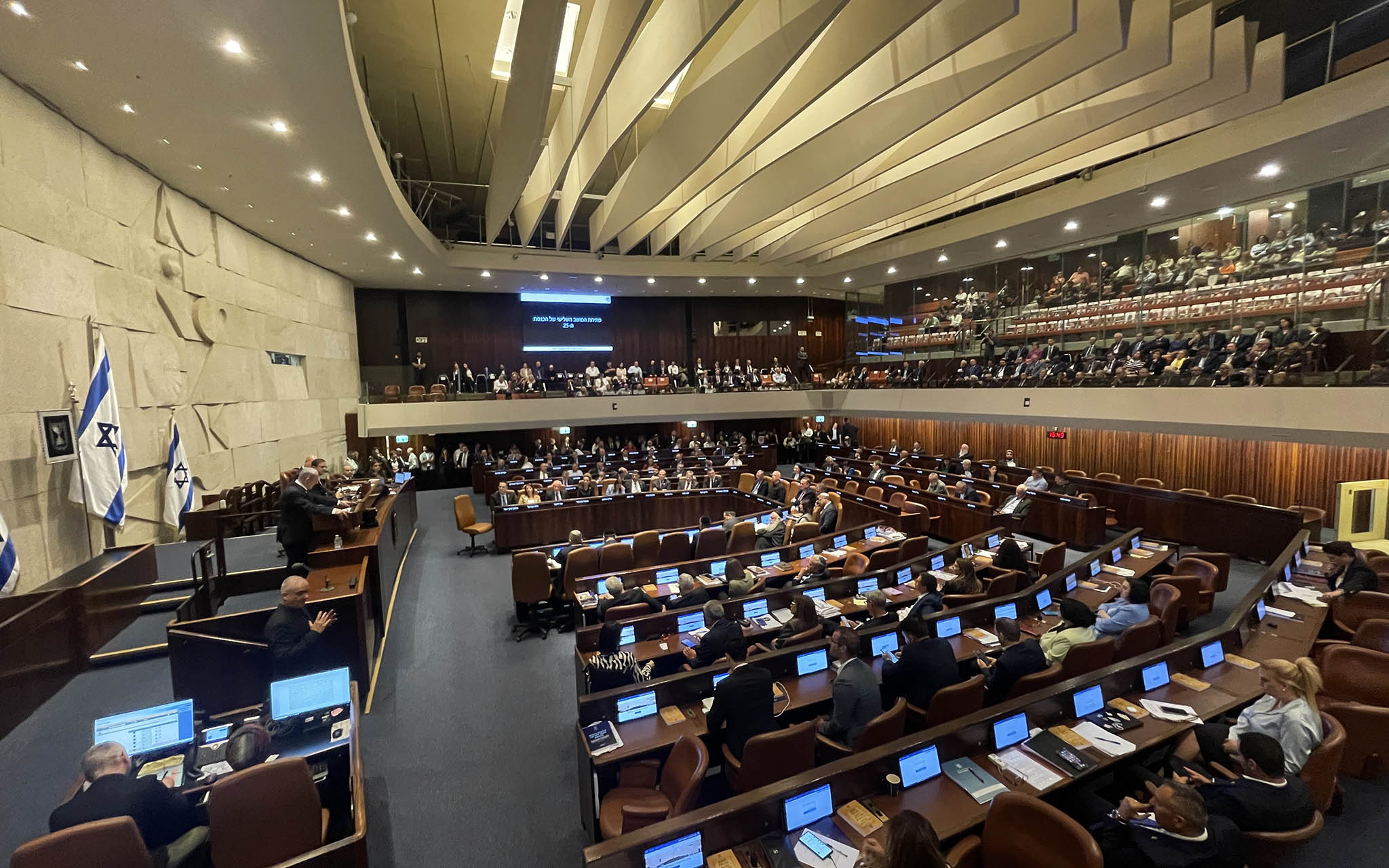
But despite increasingly harsh political rhetoric and rising antagonism between coalition and opposition, Israel’s lawmakers can still occasionally meet each other across the aisle in order to advance legislation considered to be of mutual interest. On Sunday, more than half of the Knesset’s 120 MKs signed on as co-sponsors to a bill intended to strengthen parliament’s ability to exercise oversight over the government.
The bill, which seeks to impose penalties on cabinet ministers for failing to comply with requests for information from individual lawmakers, Knesset committees, and the Knesset Research and Information Center, won the support of 61 MKs from both the coalition and opposition, ranging from hard-right lawmakers like Religious Zionism’s Tzvi Sukkot to far-left Hadash-Ta’al lawmaker Ofer Cassif.
If it is passed into law, the Knesset Ethics Committee would be empowered to penalize cabinet ministers who fail to respond to queries within 30 days with reprimands or even financial penalties not less than 0.5 percent of their monthly salary.
“In practice, ministers often do not meet the requirements of the rules,” by which they must provide the Knesset with information necessary “for promoting policy and overseeing the executive branch,” the bill’s explanatory notes read — adding that, in the 23rd Knesset, less than half of lawmakers’ 522 inquiries were answered.
Asked why he initiated the legislation, Yesh Atid MK Yorai Lahav-Hertzanu, its primary sponsor, said that it was necessary “because, as of today, government ministers have not answered 900 queries submitted by Knesset members.”

“This severely harms our ability to oversee the work of the government and serve the public. The proposal gives the Ethics Committee tools to address this phenomenon — to ensure that ministers do their job and provide answers to MKs and the Israeli public,” he said.
Knesset oversight can also occasionally run into issues, with officials declining to testify before committees, as in the case of representatives of the police and National Security Ministry who earlier this month failed to show up at a hearing at the Knesset Constitution, Law and Justice Committee about the far-right mob attacks on the Sde Teiman and Beit Lid military bases.
According to Avital Friedman, a researcher in the political reforms program at the Israel Democracy Institute, “collaboration across both sides of the aisle is rarer than it used to be, so the wide support for this bill is definitely significant.”
“There is a real problem with maintaining information, which is a basic necessity for the legislature to exercise its oversight function over the government. During the 23rd Knesset, around 60 percent of regular questions were answered. In the 24th Knesset, it was about 70%, and in the current Knesset term, this number stands at 55%,” she said.
But while the problem is real, it is unclear if Lahav-Hertzanu’s bill will be enough to fix it, she said, explaining that it was “a bit vague on how the sanctions mechanism will operate” and that the issue was largely one of “political culture.”

Friedman also questioned if the Knesset Ethics Committee would actually be able to legally sanction ministers who are not themselves lawmakers.
“In practice, the Ethics Committee has power over members of the Knesset, but many ministers do not serve in the Knesset due to the Norwegian Law,” she said — referring to a law allowing a number of cabinet members and deputy ministers from each government party to resign their Knesset seats while they hold their ministerial posts.
“It will be interesting to see whether this bill will pass the ministerial committee on legislation, and if so, how it will evolve during the legislative process,” she said.








The Times of Israel Community.