

Iran sanctions snap back, but where Trump hopes they will lead is unclear
The administration has sent mixed signals about whether its end-game is new talks, regime change or if it sees pressure as a goal in and of itself
 Add ToI as a Preferred Source on Google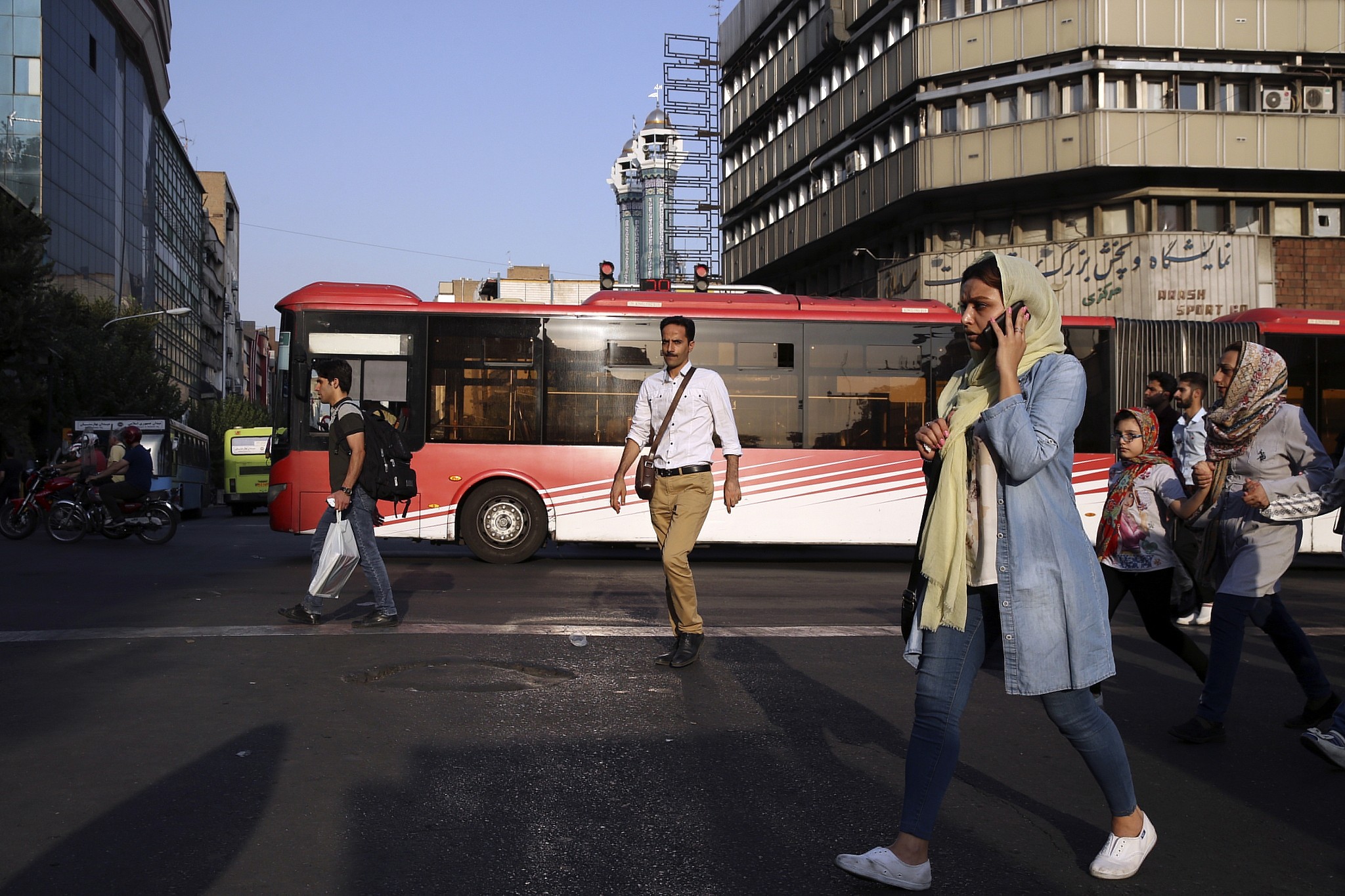
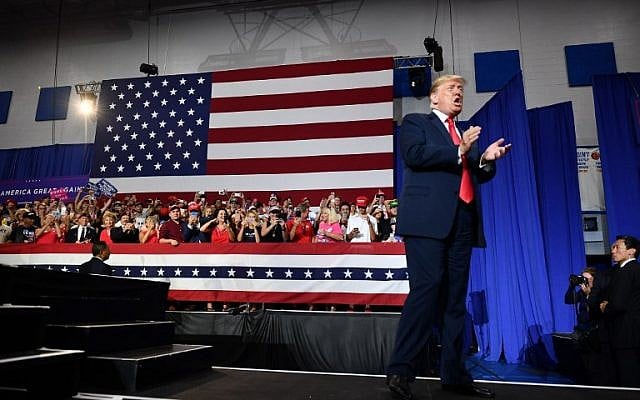
WASHINGTON (AFP) — A wave of US sanctions kicks in against Iran on Tuesday, cementing Washington’s hard line against Tehran after President Donald Trump pulled out of the 2015 nuclear pact.
Already facing broad economic fallout as their currency implodes, Iranians are wondering how the next phase of the crisis in US relations will play out — and what, exactly, America’s long-term strategy is toward their country.
At least for now, the US is fixated on bringing as much diplomatic and economic pressure to Iran as possible — though it is not clear where things are headed, or if there is an increased risk of conflict.
The US walked out of the 2015 nuclear deal in May and is bringing back “maximum pressure” sanctions for most sectors on August 6, and the energy sector on November 4.
As of 12:01 a.m. Tuesday, the Iran government can no longer buy US banknotes and broad sanctions will be slapped on Iranian industries, including its rug exports.
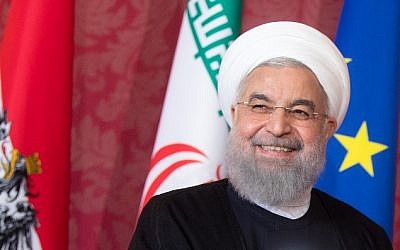
After months of fierce rhetoric, Trump surprised observers last week when he offered to meet with Iranian President Hassan Rouhani “any time” — and without preconditions.
The dramatic about-face, which Secretary of State Mike Pompeo quickly tamped down, came just days after the enigmatic US president and Rouhani traded barbs.
Trump at one point unleashed a Twitter tirade in which he blasted, using all caps, Rouhani’s “DEMENTED WORDS OF VIOLENCE.”
To Iranian President Rouhani: NEVER, EVER THREATEN THE UNITED STATES AGAIN OR YOU WILL SUFFER CONSEQUENCES THE LIKES OF WHICH FEW THROUGHOUT HISTORY HAVE EVER SUFFERED BEFORE. WE ARE NO LONGER A COUNTRY THAT WILL STAND FOR YOUR DEMENTED WORDS OF VIOLENCE & DEATH. BE CAUTIOUS!
— Donald J. Trump (@realDonaldTrump) July 23, 2018
He was responding to a July 22 warning from Rouhani that the US should not “play with the lion’s tail” and warned that any conflict with Iran would be the “mother of all wars.”
Trump’s offer for dialogue came after Pompeo seemed to suggest support for a change in Iran leadership, telling an audience of Iranian expats in California that the regime had been a “nightmare.”
And John Bolton, the president’s national security adviser, is a well-known Iran hawk who has advocated for regime change.
“For Bolton and others, pressure is an end in and of itself,” Suzanne Maloney, deputy director of the foreign policy program at the Brookings Institution, told AFP.
For the administration, “if it leads to a wholesale capitulation fine, if it leads to regime change, even better,” she added.
Under pressure
Trump’s pressure campaign appears to have had some results.
For instance, US officials in recent years have accused both the regular Iranian navy and the Iranian Revolutionary Guards Corps of routinely harassing American warships in the Gulf.
But this year, to the surprise of some military officials, there have been no such incidents.
If Iran senses “American steel they back down, if they perceive American mush they push forward — and right now they perceive steel,” said Mark Dubowitz, chief executive of the Foundation for Defense of Democracies, a Washington think tank that lobbied for a renegotiation of the Iran nuclear deal.

Dubowitz, who noted that Iran has tested fewer missiles of late, said Trump’s rhetoric and position on Iran actually lowers the risk of escalation toward conflict.
“He’s assuming that if he talks tough, that will bolster the credibility of American military power,” Dubowitz told AFP.
Both Trump and Rouhani are due to address the United Nations General Assembly in New York next month.
It’s not inconceivable a meeting on the sidelines could occur then — Tehran will be looking anxiously to a November deadline for oil buyers to stop purchasing Iranian crude.
Over the weekend Trump once again floated the idea of meeting, tweeting “I will meet, or not meet, it doesn’t matter — it is up to them!”
“Iran, and its economy, is going very bad, and fast!” he said in the same missive.
Iran, and it’s economy, is going very bad, and fast! I will meet, or not meet, it doesn’t matter – it is up to them!
— Donald J. Trump (@realDonaldTrump) August 4, 2018
US Defense Secretary Jim Mattis said on July 27 there was no policy that had been put in place with the goal of collapsing or changing the Iranian regime.
“We need them to change their behavior on a number of threats they can pose with their military, with their secret services, with their surrogates and with their proxies,” Mattis told Pentagon reporters.
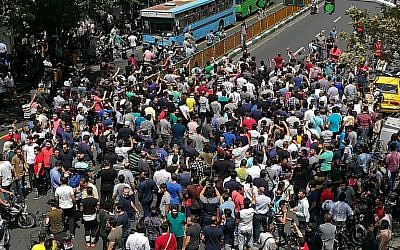
Experts see a number of possible outcomes for the current US policy toward Iran.
Sanctions and diplomatic pressure could pile enough pressure on the regime that it comes to the negotiating table — something Trump has advocated for.
The financial crisis in Iran could worsen to the point that mass protests make it impossible for the regime to hold on to power — though economic pressures risk galvanizing growing anti-American sentiment and support for hardliners.

Or the regime could start to address what America calls its “malign influence” in the region, including its support to Syrian President Bashar Assad, Lebanese terror group Hezbollah, and threats to shut down the strategic Strait of Hormuz, a vital shipping lane for international oil supplies.
“I think (the Trump administration) would be pleased with any one of those end states,” Dubowitz said.







The Times of Israel Community.