

Kahlon backs proposal to expel families of terrorists
Finance minister says controversial move will deter terror, vows to oppose de-funding artists who are ‘disloyal’ to the state
 Add ToI as a Preferred Source on Google
Marissa Newman is The Times of Israel political correspondent.

Finance Minister Moshe Kahlon on Monday reiterated his support for an initiative to expel terrorists’ families from Israel, while maintaining that he would block a contested bill to allow the Culture Ministry to de-fund institutions deemed “not loyal” to the state.
In a briefing to reporters in the Knesset marking a year since elections, the minister and Kulanu party head also said he was still set on encouraging other parties to join the coalition, noting that 61-member coalition was not as “smooth” as it appeared. At the same time, Kahlon maintained that he was in “a very comfortable position, politically,” and said that when he opposed controversial bills in the Knesset “everything we insisted on, we got.”
“I believe in expulsion,” the leader of the center-right party said in response to a question on Israel’s security and the nearly six-month wave of Palestinian terror. “I was convinced by the security forces that expulsion is a deterrent.”
The finance minister, who would not elaborate on where the deportees would be sent, was referring to a bill submitted last week by Transportation and Intelligence Minister Yisrael Katz, which would allow the government to expel the families of Palestinian attackers if they were aware of or supported their activities.
The bill garnered support from Kulanu MKs, as well as from Yesh Atid leader Yair Lapid and fellow party member Yaacov Peri, a former Shin Bet security agency chief. Prime Minister Benjamin Netanyahu is also in favor of the bill, and has directed Attorney General Amichai Mandelblit to examine its legality. Mandelblit has in the past said the bill could contravene international law. Kahlon, who sits on the high-level security cabinet, late last week announced he would back the controversial measure to deport the families of Palestinian terrorists.
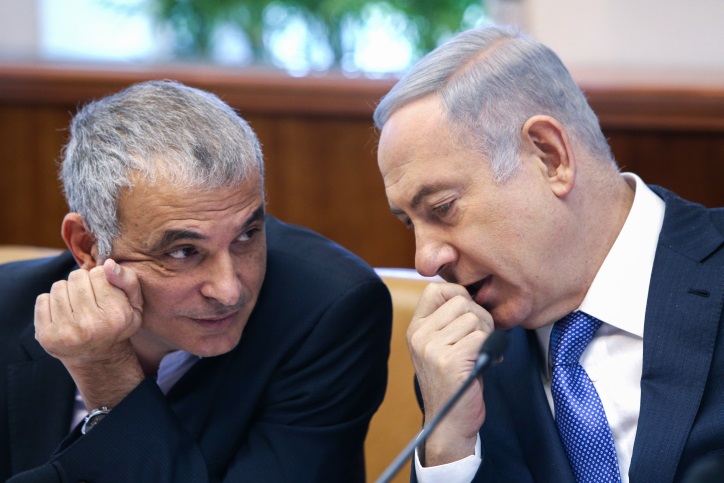
Kahlon said he was still pushing for other parties to join the razor-thin coalition. Without specifying, he said he was open to any of the “Zionist parties” joining.
“I haven’t given up on expanding the coalition. I think it’s essential,” he said. “It’s very difficult to function with 61 [MKs in the coalition]. Whoever says that it’s going smoothly – that’s incorrect.”
He also attributed the coalition’s stability to his party.
“The Kulanu party is the most stable element in the coalition,” he said.
With recent polls indicating that a center-left bloc could knock out the Likud party in a future election, Kahlon denied he would run on a list with other centrist parties, maintaining that his party would run alone.
He said recent polls that marked a sharp decline in the number of seats his party would get did not trouble him, though he added with a smile that he was pleased elections were not imminent. “I am calm, satisfied, think we are going in the right direction. I am in a very comfortable position, politically.”
At the same time, he expressed his opposition to several bills in the pipeline, including Culture Minister Miri Regev’s “loyalty in culture” bill, which would strip the treasury of the authority to de-fund artists who are deemed “disloyal” to the state – an authority that the Finance Ministry has, but does not exercise — and reserve it for her own ministry.
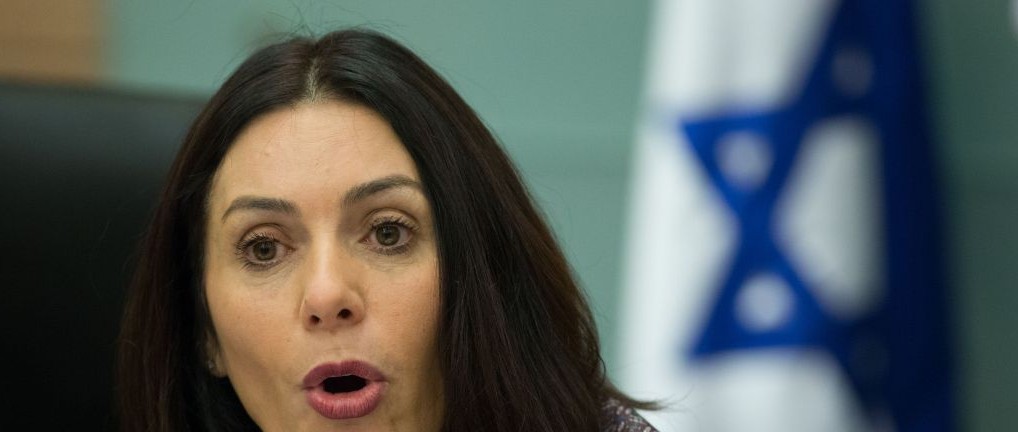
“I am not willing to give up on this authority,” he said. “No one will take away this authority – whether to give money, or to take it away. “
Kahlon said the ability to de-fund cultural institutions is contingent on a three-member committee that must approve it, but the committee is not active and he indicated that he would keep it that way.
On other bills, such as a proposal approved on Sunday in the Ministerial Committee for Legislation for the rabbinate to control ritual baths, he said he appointed members of his party to outline their reservations for the proposal. Brushing off criticism that his party was voting in favor of bills that its members opposed, bowing to coalition demands, he said that when his party expressed opposition, such as to certain clauses of the controversial NGO bill, “everything we insisted on, we got.”
The NGO bill is aimed at compelling Israeli nonprofits who receive most of their funding from foreign governments — which is true for many left-wing groups but not for NGOs from the right side of the political spectrum — to disclose their income in every meeting and in all public communications.
Kahlon characterized his relationship with the prime minister as “very good” but conceded there were disagreements, such as on whether Israel should pass a two-year budget or an annual one. While Kahlon favors the latter, he said his disagreement with the prime minister did not reflect any coalition instability.
On the housing crisis, one of the main issues on his platform, Kahlon conceded that the prices have not gone down in the year since elections, but focused on his efforts to increase the number of weekly bids for lower-cost housing for newlywed Israeli couples. He said the ministry aspires to have 500 weekly bids by June for young couples, adding that it was a goal, but not “a promise.”

At several points during the briefing, Kahlon addressed his party’s reluctance to overstep coalition discipline. “When I was a young MK, I wanted to change the world,” he said, explaining why he would not advance an inheritance tax that he strongly favored, but Netanyahu opposed. At the time, he said then-prime minister Ariel Sharon instructed him not to advance any bills, unless they have political support, advice that he said he sticks to until today. At another point, addressing financial issues and accusations his ministry was “capitulating,” he also let on his worldview on the subject. “It’s better to capitulate and stay alive than not to capitulate and be dead,” he said.







The Times of Israel Community.