

 From
Knesset to begin advancing bills repealing judicial overhaul laws
 Add ToI as a Preferred Source on Google
Ariela Karmel is a political correspondent at The Times of Israel. She previously reported for Calcalist and Haaretz. She holds an MA in Middle Eastern and African History from Tel Aviv University and a BA in Political Science from the University of British Columbia.
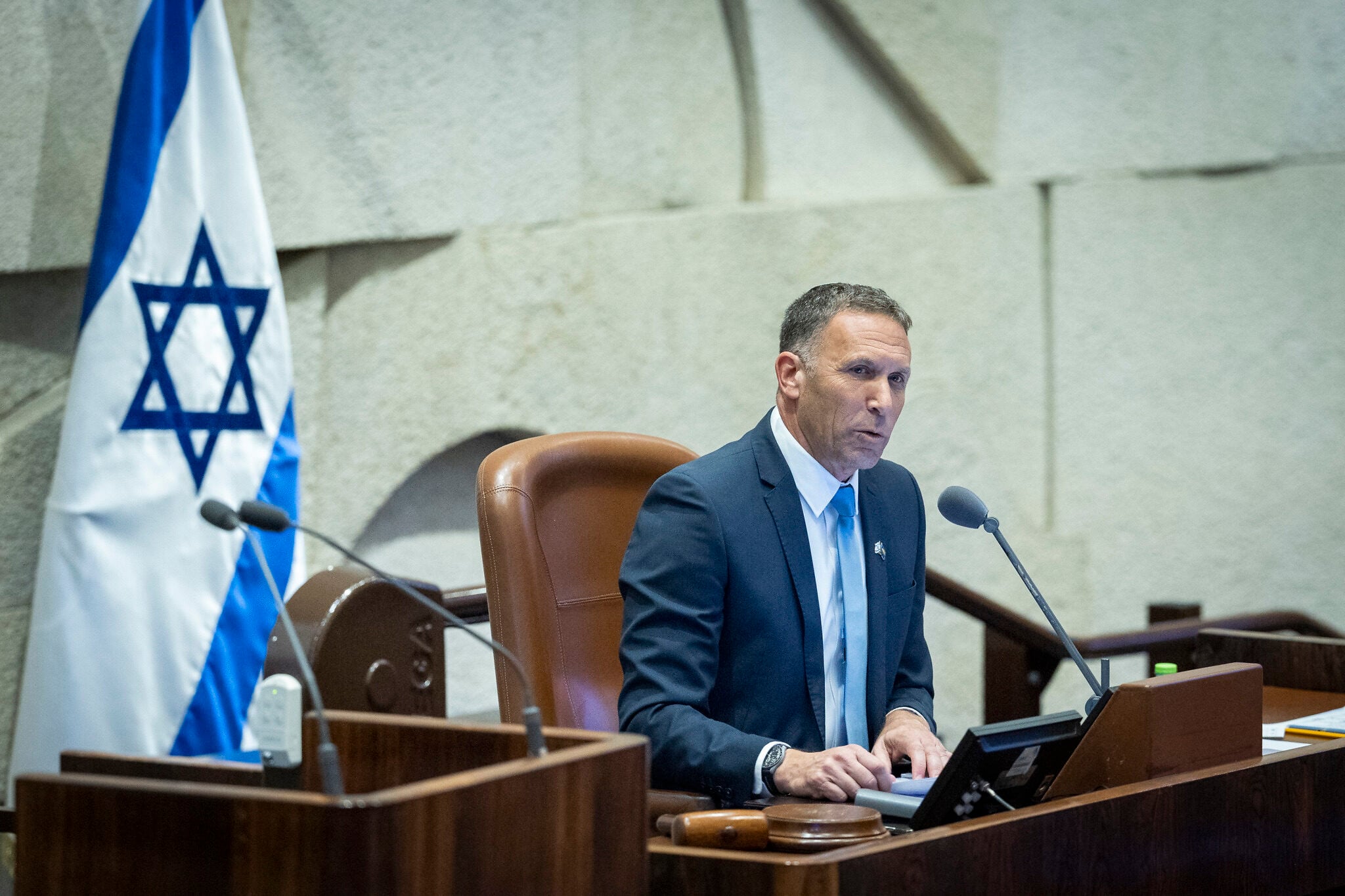
The Knesset is set to hold preliminary votes today on bills that would repeal laws passed by Prime Minister Benjamin Netanyahu’s outgoing government that increased political power over the judiciary and media, following Yashar MK Matan Kahana’s election as speaker yesterday.
The bills would reverse changes that increased political influence over judicial appointments, weakened the attorney general’s authority — including by allowing the government to disregard the attorney general’s legal opinions — and expanded government control over Israel’s broadcast media.
Repealing the laws was a campaign pledge of parties in Yashar leader Gadi Eisenkot’s bloc. Commanding a majority along with Arab parties and with Kahana as speaker, the bloc now controls the plenum’s agenda and is expected to secure preliminary approval for the bills.
The Knesset Arrangements Committee will also meet today to discuss exempting the bills from the usual 45-day waiting period for private members’ legislation, a move expected to pass. It will also establish special committees, to be chaired primarily by Democrats party lawmakers, to prepare the bills for further readings. To become law, they must pass three additional readings, with committee deliberations in between.
The timetable is tight as Eisenkot’s mandate to form a government runs until the end of December. If he fails, the mandate could go to Netanyahu, whose bloc would then control the legislative agenda despite lacking a majority in the Knesset.








The Times of Israel Community.