

 From the Liveblog of
Tuesday, August 26, 2025
From the Liveblog of
Tuesday, August 26, 2025
Paintings by former captives displayed at Hostages Square as part of day of protests
 Add ToI as a Preferred Source on Google
Ariela Karmel is a political correspondent at The Times of Israel. She previously reported for Calcalist and Haaretz. She holds an MA in Middle Eastern and African History from Tel Aviv University and a BA in Political Science from the University of British Columbia.
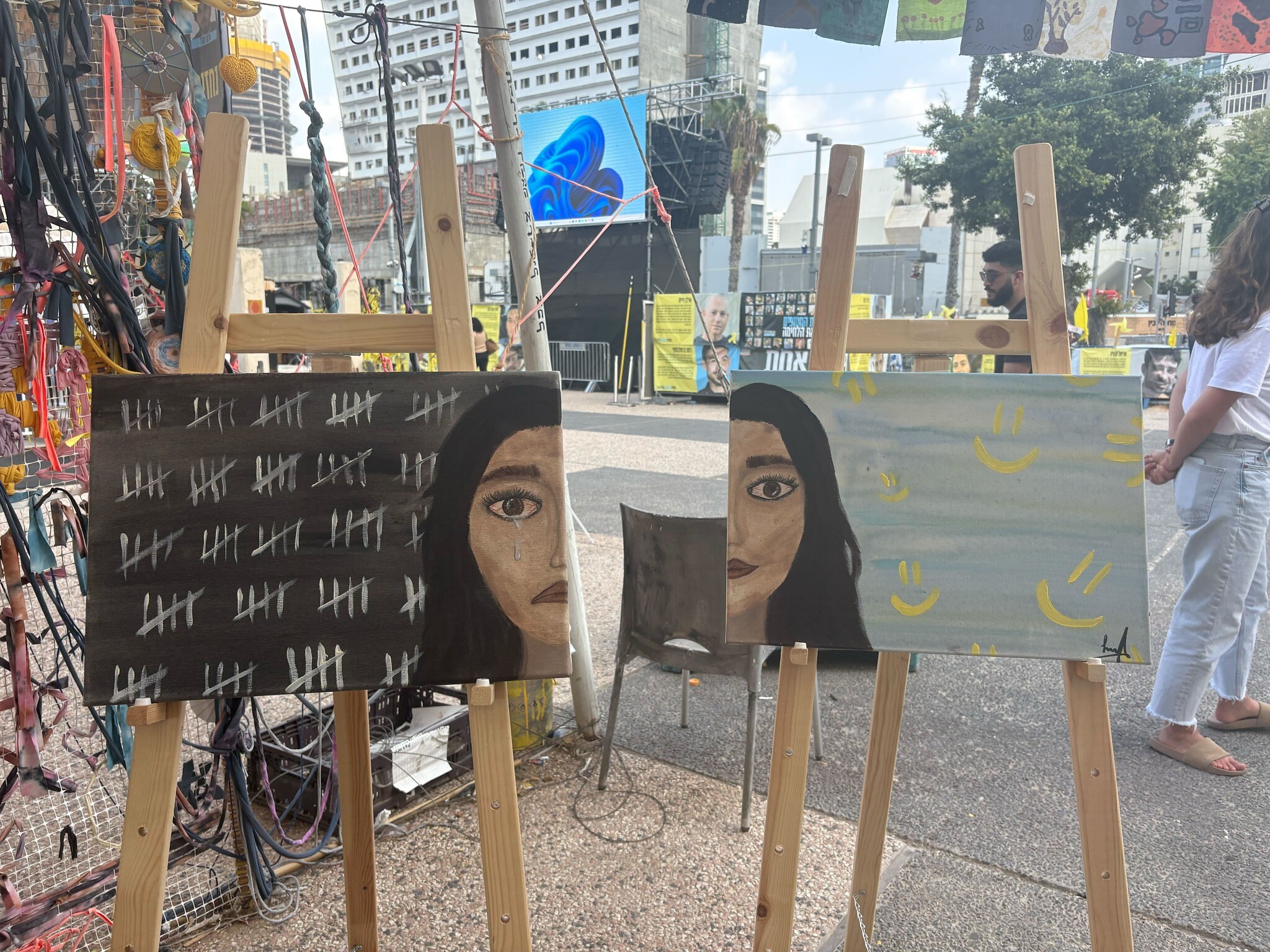
An exhibition of paintings created by former hostages is being displayed at Hostages Square in Tel Aviv, as part of a day of protest demanding a deal to bring back the remaining captives, and opposing the government’s decision to expand the war in Gaza.
The exhibit, previously displayed at Ben Gurion Airport, features paintings and sculptures by released hostages, including Raz Ben Ami, Meirav Tal, Ilana Gritzewsky, Yarden Bibas, Karina Ariev, Naama Levy, Liri Albag, Keren Munder, Ohad Munder-Zichri, Margalit Mozes and Aviva Siegel.
Each work is accompanied by a paragraph written by the artist describing the emotions behind it.
Ben Ami, who has experience creating art, tells The Times of Israel that her painting is “about the chaos in all of our lives, but also about trying to find the good, and the good I see is when all of the hostages will come back.”
She adds, “It’s horrible that we have to stand here and remind people of this, but we have no choice. And we will do it until they are returned.”
Aviva Siegel, also in attendance at the square, writes that her piece takes viewers “to the darkest place in the whole world — where our hostages lie under piles of garbage, suffocating, afraid, sad, hungry, thirsty, frustrated, longing, worried, feeling forgotten. Just like I felt.”
Albag, released from captivity in February, writes that art was the only way she could express herself when she was in Gaza, drawing one half of a self-portrait while there. Now, her two paintings contrast that darkness with a colorful, smiling self-portrait.
“However, half of me is still in Gaza,” she says. “This painting is not just mine. It’s everyone who is still there. I painted myself, but I know that the eyes in this painting are those of someone who is still waiting.”
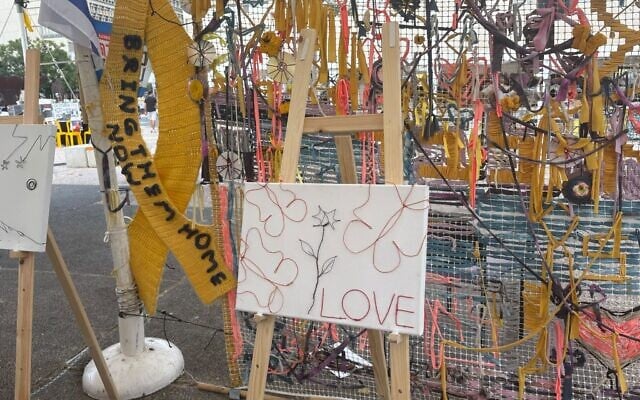
For Bibas, the exhibition is a way of commemorating his murdered family. Abducted from Kibbutz Nir Oz, Bibas was released in February after his wife Shiri, four-year-old Ariel, and baby Kfir were killed in captivity. His work, “Freedom and Love,” features wire butterflies and the word “love” for his son Ariel, who loved butterflies. “Through butterflies, I send my love to Shiri, Ariel, and Kfir. And through them I also demand freedom for all the kidnapped who are still in captivity,” he writes.


The Times of Israel Community.