

Polish deputy minister urges opening of ‘Polocaust’ museum
Jaroslaw Sellin says that after Jews, Nazis sought to annihilate ‘Slavic people, especially Poles’
 Add ToI as a Preferred Source on Google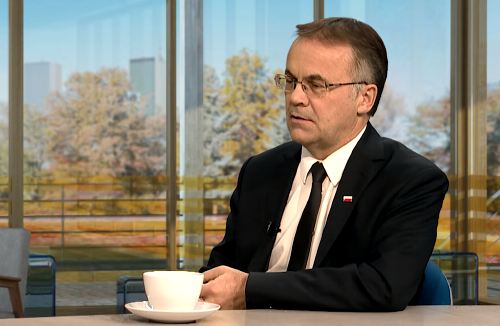
Poland’s deputy culture minister on Tuesday called for the opening of a “Polocaust Museum” to commemorate the Polish victims of Nazi crimes during World War II, amid an ongoing rift between Israel and Warsaw over a new law and a series of statements by the country’s leaders on the Holocaust.
“I think the story of how the fate of Poles during World War II looked like … deserves to be told and shown in this way [in a museum],” Jaroslaw Sellin told Poland’s Radio One, according to translations by Reuters.
“It is enough to read official German documents from these times or Hitler’s book to know that after the Jews, whom he wanted to completely erase from Europe…, the next [target] was generally Slavic people, especially Poles,” he added.
The Polish deputy minister was responding to recent calls in Warsaw for museums dedicated to expanding the country’s narrative on the Holocaust.
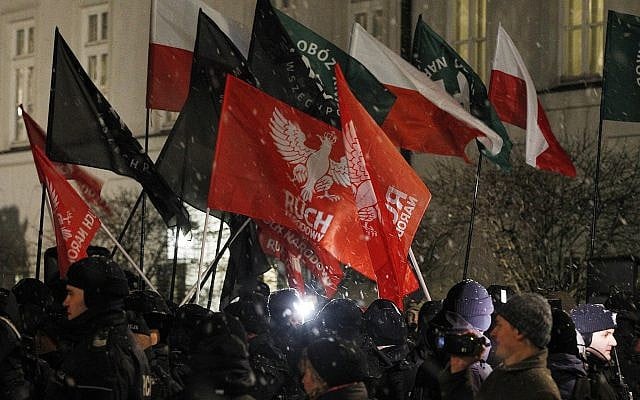
Marek Kochan, a popular columnist, suggested opening a “Polocaust Museum” in response to the criticism Warsaw has received over a law signed last week that criminalizes blaming the Polish nation or state for Holocaust crimes.
“The State of Israel has succeeded in imposing a narrative reducing the victims of the war to the victims of the Holocaust. And yet no death resulting from criminal intentions is better or worse than another,” Kochan wrote in the Polish Rzeczpospolita daily, according to translations from the Buzzfeed news site.
In recent weeks, Israeli officials have sharply criticized the legislation, accusing Poland of seeking to use the law to whitewash the role of some Poles who helped Germans kill Jews during the war. Holocaust scholars estimate that Poles have either killed or helped Germans kill as many as 180,000 to 200,000 Jews.
Polish authorities say they just want to protect Poland from being depicted as a collaborator of the Nazis, when the country was Adolf Hitler’s victim and suffered through nearly six years of war and occupation.
צפו | ראש ממשלת פולין בתשובה לשאלתו של @ronenbergman: "בשואה היו פושעים פולנים, כמו שהיו פושעים יהודים" • @DorGlick עם הפרטים המלאים והתיעוד >> https://t.co/eFLSq9LWO8 pic.twitter.com/ZCV6j8faw7
— חדשות 13 (@newsisrael13) February 17, 2018
The comments from the deputy culture minister came three days after Polish Prime Minister Mateusz Morawiecki claimed that “there were Polish perpetrators, as there were Jewish perpetrators.”
Addressing the Munich Security Conference, Morawiecki was rejecting criticism of the new complicity law, when he was asked by an Israeli journalist if sharing his family’s history of persecution in Poland would be outlawed under the new legislation.
“Of course it’s not going to be punishable, [it’s] not going to be seen as criminal to say that there were Polish perpetrators, as there were Jewish perpetrators, as there were Russian perpetrators, as there were Ukrainian; not only German perpetrators,” Morawiecki told Yedioth Ahronoth’s Ronen Bergman.
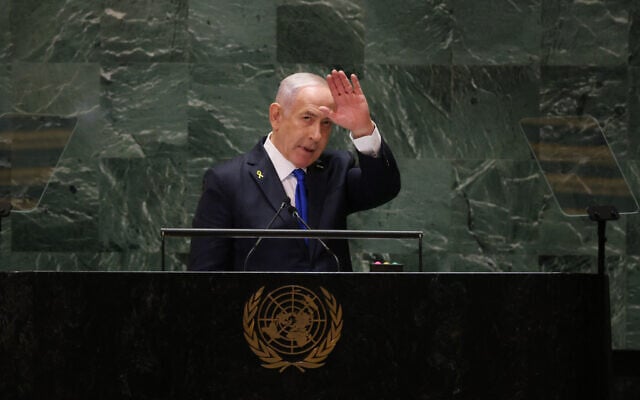
Prime Minister Benjamin Netanyahu said the comment was “unacceptable,” but stopped short of summoning Israel’s ambassador or downgrading ties.
Earlier on Tuesday, Poland’s foreign minister told a Polish newspaper that there had been cases in which Jews denounced to the Nazis the Poles who were hiding them.
Polish-Jewish relations during World War ll were complex, Jacek Czaputowicz told Dziennik Gazeta Prawna. “There were traitors among Poles and [there were] former heroes,” he said. “There were also cases, however, that Jews caught by the Germans denounced the Poles who were hiding them. The situation was extremely complicated.”
Agencies contributed to this report.


The Times of Israel Community.