

Pushing for election cameras, Netanyahu takes page out of Trump playbook
With career on the line, PM has embraced tactics of US president, lashing out at media, judiciary, police, Arabs and claiming there is a conspiracy of ‘elites’ trying to oust him
 Add ToI as a Preferred Source on Google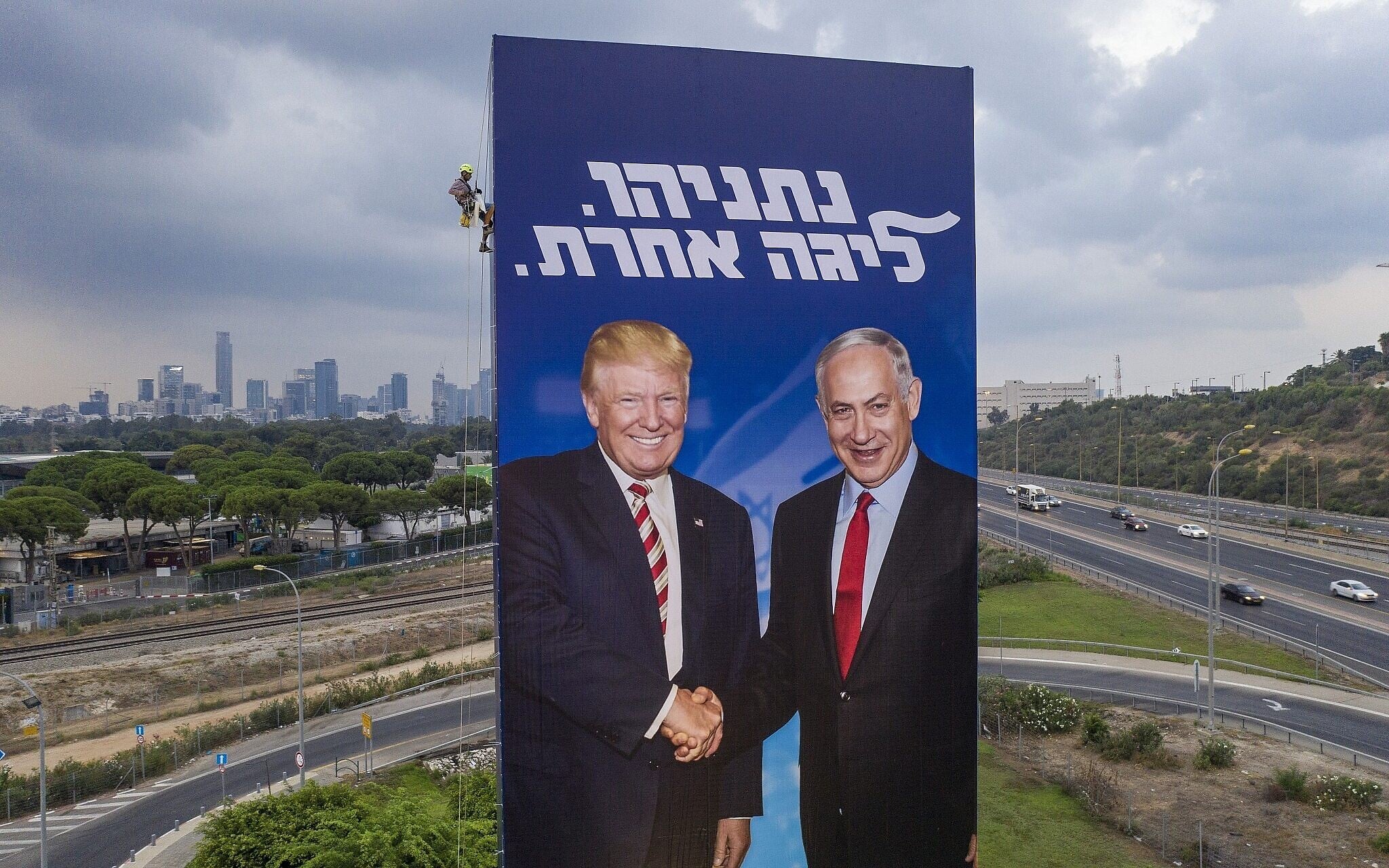
AP — In a strategy reminiscent of US President Donald Trump’s 2016 campaign, Prime Minister Benjamin Netanyahu is preemptively claiming to be a victim of electoral fraud as the country prepares to head to elections.
In a Facebook video Sunday, Netanyahu accused his opponents of conspiring to “steal” the election. He also pushed through his cabinet a proposal to install cameras in voting stations to prevent what supporters claim is fraud in Arab districts. The proposal drew renewed accusations that Netanyahu was promoting racism and incitement against the country’s Arab minority.
Next week’s vote comes after an inconclusive April election. While it is unclear whether the right-wing Israeli leader will be able to get his camera proposal through parliament in time for the do-over September 17 election, the issue has nonetheless galvanized his supporters, as he fights for his survival in a tight race clouded by a host of corruption charges against him.
But critics accused him of diverting attention from a flawed campaign, undermining the country’s democratic institutions, and potentially setting the stage for a Trump-like rejection of the results if he loses.
“He is preparing the ground for the day when he can say, ‘The Arabs are stealing the election,'” Ayman Odeh, leader of parliament’s main Arab faction, the Joint List wrote on Twitter on Sunday. “And if he loses, to appeal the results.” Israel’s Arab minority makes up around 20 percent of the population.
Addressing his cabinet on Sunday, Netanyahu vowed to press ahead with the plan for cameras, which he said he wants in all stations, and tried to paint the issue as one of transparency.
“The integrity of the election is one of the foundations of a democracy,” he said. “The best way to prevent forgeries in the election is to place cameras at all the polling stations.”
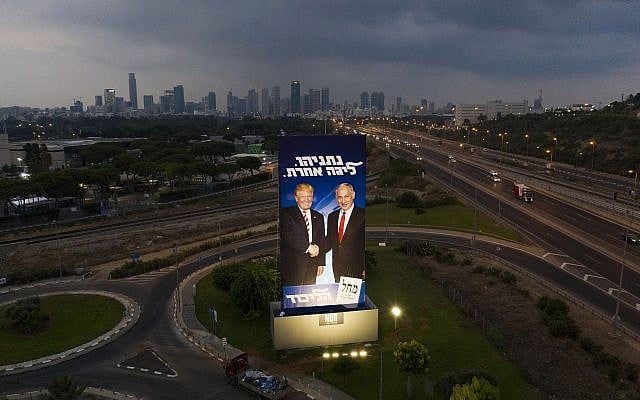
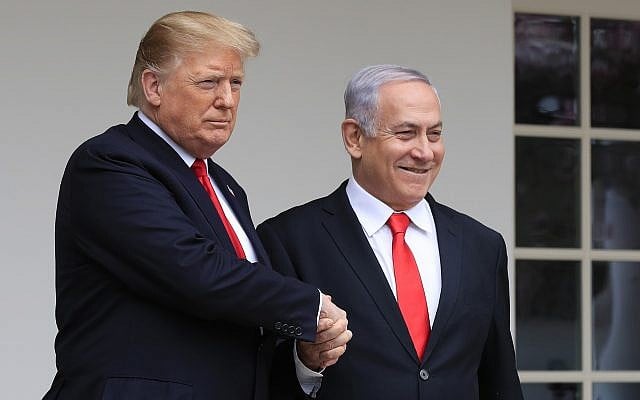
With his career on the line, Netanyahu has embraced the tactics of Trump, a good friend and political ally. Netanyahu routinely lashes out at the media, the judiciary, the police, the country’s Arab minority and his political opponents, claiming that there is a conspiracy of “elites” trying to oust him.
In a Facebook video Sunday, Netanyahu accused his opponents of conspiring to steal the election and hinted that Arab forgery prevented him from winning the April vote.
In the run-up to the 2016 election, Trump similarly warned of a system “rigged” against him, urged his followers to monitor voting in areas with large minority populations, and threatened to reject the election results if he did not win.
Netanyahu’s camera proposal has a controversial and dubious past.
During the April election, Netanyahu’s hard-line Likud Party sent out campaign workers to videotape Arab voters entering polling stations, claiming they were preventing fraud.
A Likud-linked PR agency that spearheaded the campaign later boasted it had helped suppress Arab turnout, while Arab leaders accused Likud of trying to intimidate voters. Israel’s Central Election Commission has banned the practice this time around.
Despite claiming victory in April, Netanyahu failed to cobble together a 61-seat majority coalition in parliament after the election. He later dissolved parliament and forced the upcoming vote, the first time Israel has ever held two elections in the same year.
Opinion polls show Likud in a neck-and-neck race with the main challenger, the centrist Blue and White party, and indicate that Netanyahu could fall short of securing a majority with his traditional religious and nationalist partners.
Israel already has a number of safeguards to prevent fraud at polling stations, including nonpartisan election commission monitors.
A senior Election Committee official, Orly Ades, told Israel’s Ynet news said that just two cases of suspected voter fraud in Arab towns are being investigated by police. She also warned in a radio interview that if the law passes, it could create “chaos” at polling stations on election day.
Netanyahu has used anti-Arab incitement before. In the April election, he tried to portray Arab lawmakers as a threat to national security, and in the current campaign, he has claimed his centrist opponents are conspiring with Arab politicians to topple him.
In 2015, Netanyahu famously warned that Arab voters were voting “in droves,” as he implored his supporters to vote. Netanyahu later apologized.
On Sunday, Netanyahu’s hand-picked attorney general, Avichai Mandelblit, made a rare appearance before the cabinet to argue against the plan. The cabinet went ahead and voted unanimously in favor of Netanyahu’s proposal.
Following Sunday’s cabinet vote, the Likud was trying to organize an emergency session of parliament to push through the legislation, a process that can normally take months or years.
President Reuven Rivlin, who holds a position meant to serve as a moral compass above politics, said the proposal risked causing damage to Israeli democratic institutions and public servants.
Stav Shaffir, an Israeli politician running with the leftist Democratic Union, accused Netanyahu of chipping away at democracy with his repeated attacks on opponents and institutions.
“If he thought the elections were done in an unclean way, he had 10 years to fix that,” she said. “When you do it a week before elections, what you want to create is chaos.”
Tehilla Shwartz Altshuler, a senior fellow at the Israel Democracy Institute, a nonpartisan Jerusalem think tank, said Netanyahu’s strategy targeted various “layers” of society.
First, she said it is a way to divert attention from more damaging issues, such as the corruption cases and continuing unrest along Israel’s border with the Gaza Strip. It also is meant to “scare” Arab voters and “create some sense of urgency” for Netanyahu’s supporters. Finally, she said Netanyahu’s criticism of the attorney general is a “promo” for what lies ahead if he is indicted.
“I think Mr. Netanyahu is a genius and he is really concentrated now in winning the election,” she said. “Every means is justified in his own eyes, even though it creates collateral damage among the Israeli population.”





The Times of Israel Community.