

Rouhani slams officials’ ‘vow of silence’ in face of domestic protests
Not referring to Revolutionary Guards by name, Iranian president says local leaders being pressured to keep quiet by ‘supervisory bodies,’ avoid response to popular demonstrations
 Add ToI as a Preferred Source on Google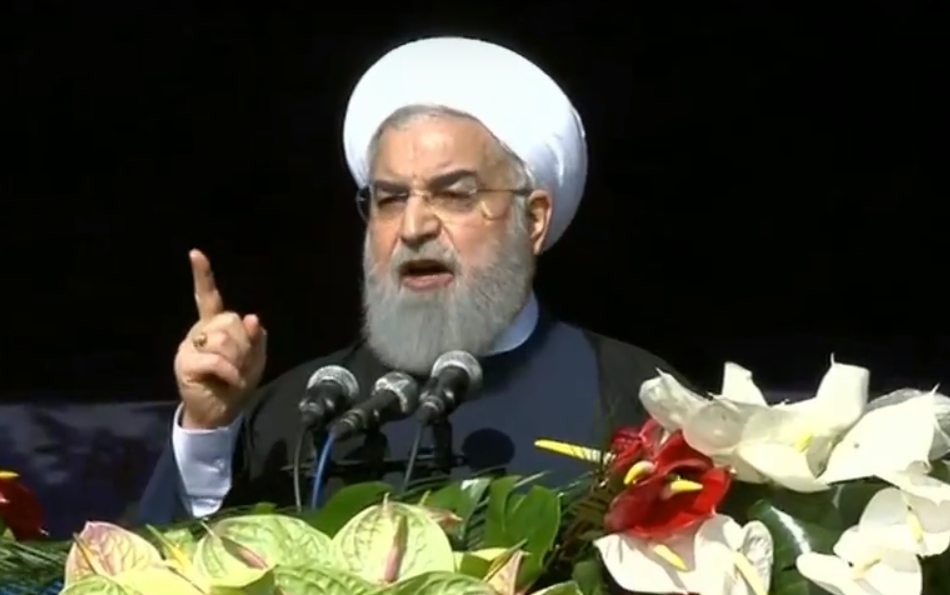
TEHRAN, Iran — Iran’s President Hassan Rouhani said Saturday that officials were failing to respond effectively to mounting popular protests, in part because they are being threatened by unnamed behind-the-scenes forces.
Recent weeks have seen social media filled with videos and reports of protests, but since they are barely covered by domestic media and access is restricted for foreign journalists, they have been hard to verify.
They include protests by farmers over water shortages in Isfahan; by ethnic Arabs over the treatment of minorities in the southern province of Khuzestan; and over administrative reforms in the southwestern city of Kazeroon.
The videos appear to show these localized protests taking on broader slogans against the Islamic establishment, such as: “Our enemy is right here and falsely they say America is our enemy.”
But in a wide-ranging speech carried on state television, Rouhani said officials were failing to respond and appeared to have taken “a vow of silence.”
“As people haven’t got enough information… as people don’t see plans for the future, as people see the current problems, they may get upset and angry, come to the streets and cry out,” he told senior officials in Tehran.
“[But] we speak little to the people. Our government managers have taken a vow of silence. I don’t know who told them to. I don’t know what they are scared of.”
Rouhani said a major problem was that officials were being intimidated by unnamed “supervisory bodies.”
He did not name them, but Rouhani has previously clashed with the powerful Revolutionary Guards and the conservative-dominated judiciary over their outsized role in politics and the economy.
“When in the morning [an official] is going to work, somebody sends him a text message, another calls him, another threatens him… the country cannot be run like this,” Rouhani said.
In the past month, Tehran’s reformist mayor Mohammad-Ali Najafi and the deputy head of the environment agency Kaveh Madani both quit their posts following pressure from hardliners, though Najafi claimed he left for health reasons.
“Don’t pay attention to some letters, some threats. If you are scared to respond, send them to me,” Rouhani said.





The Times of Israel Community.