

Russia: Chemical weapons inspectors head to Syria site
Inspectors were kept away for a week in Damascus before being allowed to Douma; US and UK fear delay enabled cover-up
 Add ToI as a Preferred Source on Google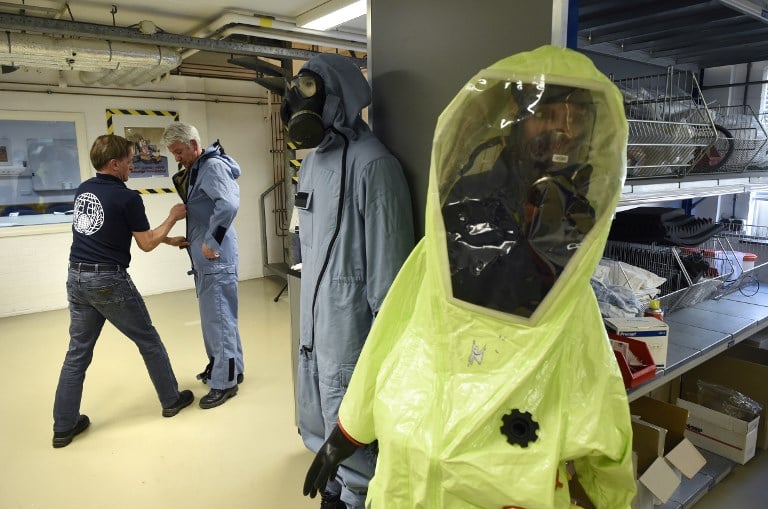
BEIRUT — International experts from the global agency for the monitoring of chemical weapons set off to the site of a suspected April 7 gas attack in Syria on Saturday, Russia’s foreign ministry said.
Inspectors from the Organization of the Prohibition of Chemical Weapons were delayed for one week in Damascus before they could visit the town, just minutes’ away from the capital, where the alleged attack occurred.
The town of Douma was at the time under rebel control and facing a ferocious government air and ground assault. Militants gave up the town days after the alleged attack.
The US, France, and Britain blamed the Syrian government for the attack, and struck suspected Syrian chemical weapons facilities one week later.
The Syrian government and its ally Russia denied responsibility for the attack.
Russian ministry spokeswoman Maria Zakharova said the delays to the OPCW team were “unacceptable,” in a statement Saturday.
A UN security team touring Douma on Tuesday came under small arms and explosives fire, leading the OPCW to postpone its visit.

The US and Britain accused the Syrian government and Russia of delaying the investigation to stage a cover up.
Images that emerged from Douma in the hours after the attack showed lifeless bodies collapsed in crowded rooms, some with foam around their noses and mouths.
Medical workers and activists in Douma at the time said at least 40 people were killed.
Thousands of people — rebels and civilians — left Douma on buses to north Syria in the days after the attack, believing they could not reconcile with the government after it took over the town. North Syria is divided between opposition, Turkish, and al-Qaida control.
The evacuations were the latest in a string of population transfers around the Syrian capital that have displaced more than 60,000 people as the government reconsolidates control after seven years of civil war.
UN officials and human rights groups say the evacuations amount to a forced population displacement that may be a war crime.
On Saturday, rebels began evacuating three towns in the eastern Qalamoun region in the Damascus countryside, state TV reported.
State-run Al-Ikhbariya TV said several buses left the towns of Ruhaiba, Jayroud, and al-Nasriya carrying hundreds of rebels and their families to opposition territory in north Syria.
The station said there could be 3,200 rebels leaving three towns on Saturday. It said the evacuations will continue for three days.
Syrian government forces will take over the towns once the departures are complete.








The Times of Israel Community.