

The US should sit tight on Syria — for now
The White House has good reasons to maintain its wait-and-see approach, despite the horrific images emerging from Damascus

 Add ToI as a Preferred Source on Google
Avi Issacharoff, The Times of Israel's Middle East analyst, fills the same role for Walla, the leading portal in Israel. He is also a guest commentator on many different radio shows and current affairs programs on television. Until 2012, he was a reporter and commentator on Arab affairs for the Haaretz newspaper. He also lectures on modern Palestinian history at Tel Aviv University, and is currently writing a script for an action-drama series for the Israeli satellite Television "YES." Born in Jerusalem, he graduated cum laude from Ben Gurion University with a B.A. in Middle Eastern studies and then earned his M.A. from Tel Aviv University on the same subject, also cum laude. A fluent Arabic speaker, Avi was the Middle East Affairs correspondent for Israeli Public Radio covering the Israeli-Palestinian conflict, the war in Iraq and the Arab countries between the years 2003-2006. Avi directed and edited short documentary films on Israeli television programs dealing with the Middle East. In 2002 he won the "best reporter" award for the "Israel Radio” for his coverage of the second intifada. In 2004, together with Amos Harel, he wrote "The Seventh War - How we won and why we lost the war with the Palestinians." A year later the book won an award from the Institute for Strategic Studies for containing the best research on security affairs in Israel. In 2008, Issacharoff and Harel published their second book, entitled "34 Days - The Story of the Second Lebanon War," which won the same prize.
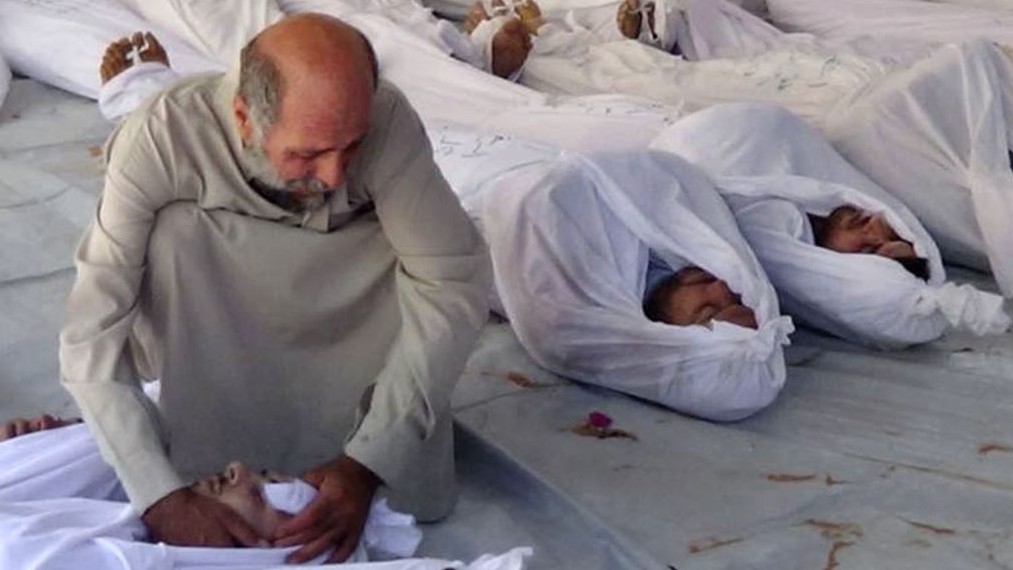
The images that emerged from the Damascus suburbs Wednesday demonstrated to the State of Israel and the international community the scale of the atrocities taking place in Syria — right across our border.
The regime of Syrian President Bashar Assad was immediately suspected of once again using chemical weapons, apparently sarin, against civilian population centers where the opposition fighters operate.
However, the puzzling timing of such a massive attack — exactly a year after US President Barack Obama announced that the use of chemical weapons would trigger involvement by the US, and with a team of UN inspectors currently in Damascus to investigate whether such weapons have been used — raises questions about who fired those chemical-bearing missiles, and if they necessarily acted under Assad’s orders.
The almost immediate response of many commentators and experts was to criticize the Obama administration’s policy in the Middle East. They said Obama’s famous “red line,” as he termed chemical weapons use, was crossed yet again and that Washington was sitting on its hands while paradoxically reserving its condemnation for the new government in Egypt — which is fighting radical Islam.
It’s hard to disagree with the criticism of the administration’s approach to the government in Cairo and the Egyptian army. These days, the alternative to the military is the return of the Muslim Brotherhood in an even more radical form, or an assortment of armed militias that would bring about the collapse of Egypt — a scenario even the White House doesn’t wish for.
However, the administration has good reasons to be cautious in its approach to the ongoing events in Syria. Very good reasons.
In Syria, there is no choice between “good” and “bad.” Assad’s regime is bad, but the apparent opposition in the country is also bad — maybe even worse, as far as the West is concerned. Al-Qaeda-style gangs are taking control of more and more territory across Syria, including areas in the country’s large cities. The fall of Assad would see the West dealing with no less serious a threat — of armed Sunni militias with no desire or ability to talk to the West and the US, and definitely not to Israel.
Therefore, as awful as it sounds, the US administration doesn’t have many options in Syria, and it needs to proceed with extreme caution. For a start, it should probably resist calls for it to attack the Assad regime at least until the UN investigating team can identify who exactly fired those chemical weapons.






The Times of Israel Community.