

US official welcomes PA takeover of Gaza border crossings
Move was seen as a key step in advancing the ongoing intra-Palestinian reconciliation process between Hamas and Fatah
 Add ToI as a Preferred Source on Google
Dov Lieber is a former Times of Israel Arab affairs correspondent.
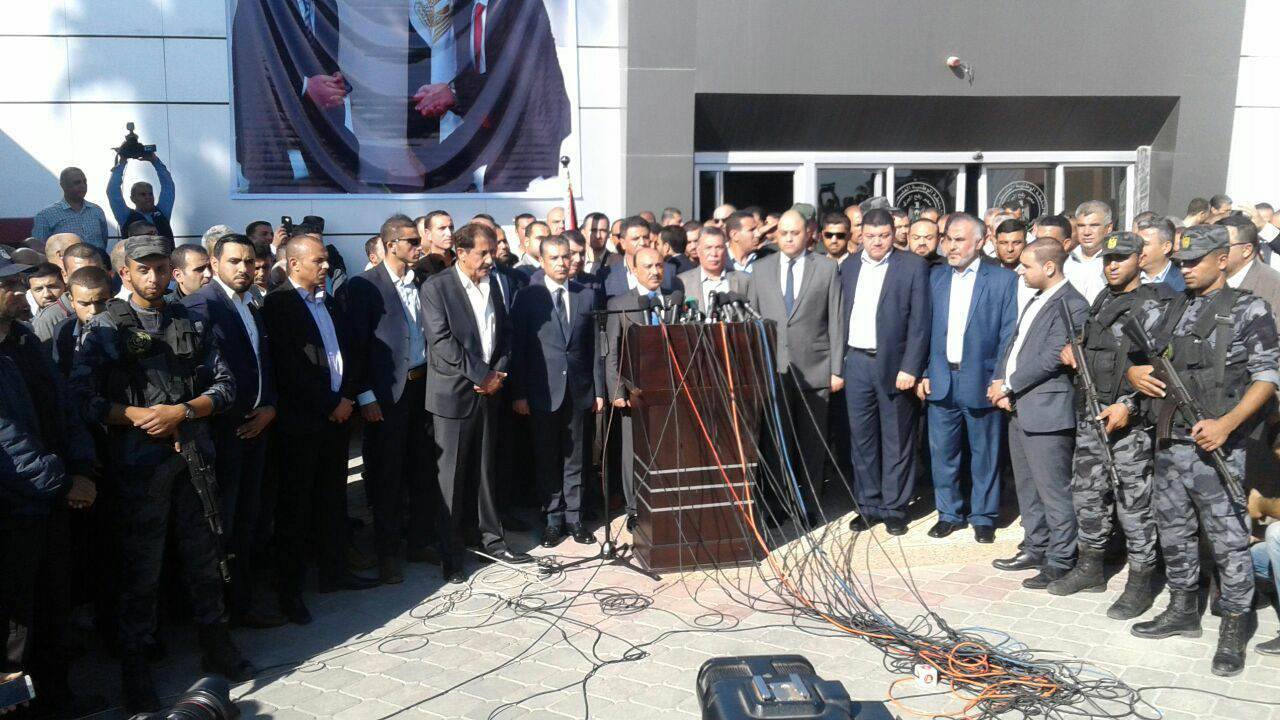
The United States Special Representative for International Negotiations Jason Greenblatt on Thursday hailed the Palestinian Authority’s renewed control over the Gaza Strip’s border crossings with Egypt and Israel, relinquished by Hamas a day earlier in a key test of the reconciliation accord it signed with Fatah last month.
“The United States welcomes the Palestinian Authority’s deployment yesterday to the Erez, Kerem Shalom, and Rafah crossing points in Gaza. The United States believes it is essential that the Palestinian Authority assume full responsibility for Gaza,” Greenblatt said in a statement.
Greenblatt said the US would closely monitor the developments and work to improve the humanitarian situation in the coastal enclave. He reiterated that the unity government formed in the wake of the reconciliation agreement between rivals Fatah and Hamas must see the terrorist group recognize Israel and lay down its weapons.
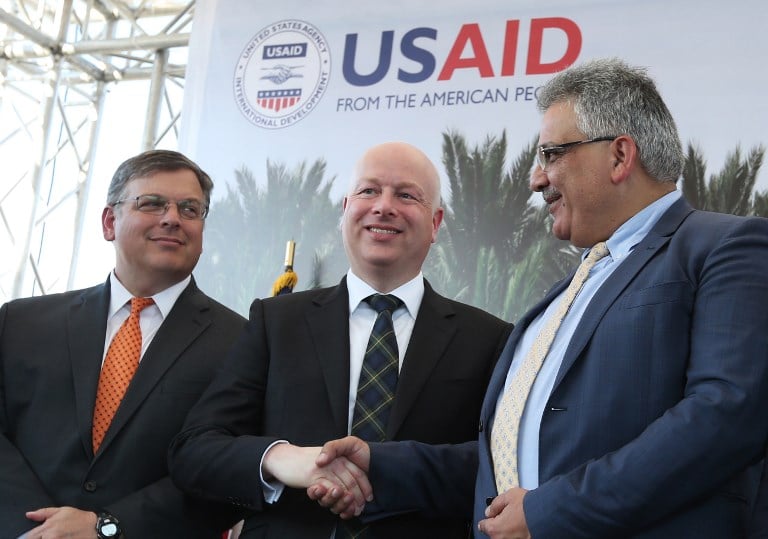
“As we’ve made clear in the past, any Palestinian government must unambiguously and explicitly commit to nonviolence, recognize the State of Israel, accept previous agreements and obligations between the parties — including to disarm terrorists — and commit to a negotiated solution to the Israeli-Palestinian conflict. If Hamas is to play any role in a Palestinian government, it must accept these basic requirements,” he said.
On Wednesday, Nazmi Muhanna, the Palestinian Authority’s top official for border crossings, formally received control of the Rafah crossing with Egypt from his Hamas counterpart.
At the Erez Crossing with Israel, Hamas also began to dismantle its facilities.
Under the Egyptian-brokered deal, the Palestinian Authority is due to take full civilian control of Gaza by December 1.
The checkpoints had been due to be handed over by November 1 and were seen as a first test of the strength of the reconciliation agreement.
Just passed thru what was – until this AM – the Hamas-controlled border crossing at Erez (4/4). Dismantling of facilities underway right now pic.twitter.com/sLqTOiWSIw
— Robert Piper (@UNPiper) November 1, 2017
PA Minister of Civil Affairs Hussein al-Sheikh immediately announced that all “illegal” levies imposed by Hamas since it took over the Strip in a violent battle in 2007 were canceled.
Azzam al-Ahmad, the official leading negotiations for Fatah, the ruling party of the PA, also announced over official PA radio on Wednesday that by November 15, the Rafah crossing would be permanently opened on the Egyptian side.
Since 1996, most Gazans have left the Strip via the Rafah crossing into Egypt. But starting in 2013, Egypt has kept the crossing mostly closed, opening it periodically for only a few days at a time. This left most of the 2 million residents of Gaza unable to leave the Strip freely, unless they were able to obtain permission to leave via Israel, which has strict requirements.
Egypt said it has been conducting construction at the Rafah crossing in recent months in order to prepare for its permanent opening.
“The handing over of the Gaza Strip crossings is an important step in the implementation of the reconciliation agreement, allowing for the movement of individuals and goods to become the responsibility of the national reconciliation government,” Ahmad said.
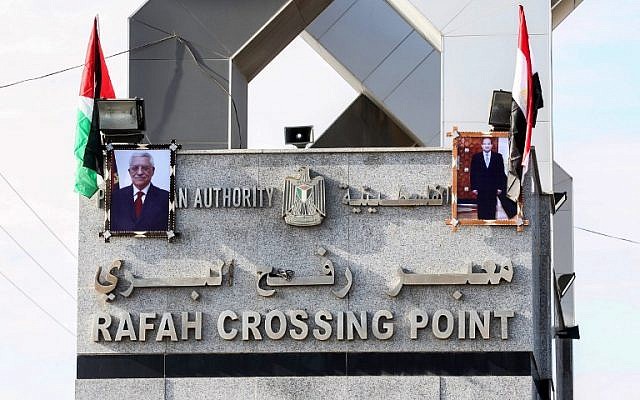
At the Rafah crossing, Palestinian and Egyptian flags were flying, alongside large pictures of Palestinian Authority President Mahmoud Abbas and Egyptian leader Abdel-Fattah el-Sissi.
The PA has said it will comply with the 2005 Movement and Access Agreement signed between the PA and Israel and overseen by the United States and the European Union.
The agreement calls on the PA, Egypt, the US and Israel to cooperate on security matters regarding Gaza’s crossings. The two sides also agreed that a third-party observer, an EU police force, would be present at the Rafah crossing.
That agreement also stipulates that “the PA will act to prevent the movement of weapons and explosives at the Rafah crossing.”
Ahmad said that the EU police would be present at the border crossing, though it’s unclear what security coordination with Israel will look like as Hamas, a key player in deal, continues to vow to destroy the Jewish state.
Maj. Gen. Yoav Mordechai, head of the Coordinator of Government Activities in the Territories, the Defense Ministry branch that liaises with the PA on civil and security affairs, said he ordered COGAT officials to discuss security arrangments with their PA counterparts for the Erez and Kerem Shalom crossings from Israel into Gaza, but did not mention the Rafah crossing.
PA Prime Minister Rami Hamdallah is slated to arrive in the Strip in the coming days to check the progress of the crossings.
The fate of the Hamas security forces after it transfers power to the PA remains one of the most delicate stumbling blocks facing the reconciliation process.
Abbas wants the handover to be comprehensive and include all security institutions, but Hamas’s leader in Gaza, Yahya Sinwar, has said “no one” can force his group to disarm.
Israel and the United States have meanwhile said that Hamas, an Islamist terrorist organization that seeks to destroy Israel, must disarm as part of any unity government.
They have also demanded that the group recognize Israel.
AFP contributed to this report.






The Times of Israel Community.