

Want to visit your Israeli grandchildren after a year of separation? Get in line
First-degree family members, new grandparents and Israeli residents with visas try to navigate the labyrinthine regulations of entering Israel during the pandemic
 Add ToI as a Preferred Source on Google
Jessica Steinberg, The Times of Israel's culture and lifestyles editor, covers the Sabra scene from south to north and back to the center
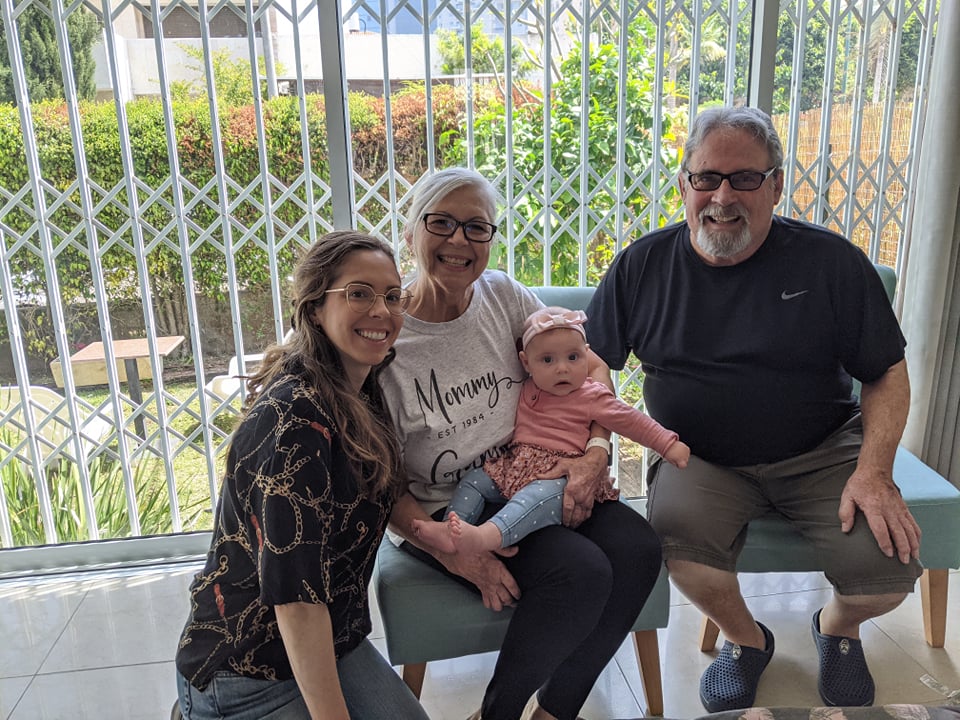
Want to visit your new grandchild in Israel? Sounds like a good idea, but it may take time.
It’s been a rough period for Israeli immigrants trying to get permission for their vaccinated, non-Israeli first-degree relatives to visit, after more than a year of coronavirus separations.
Following some eight months of lockdowns, and then several more months of Israel closing its borders to visitors and sometimes to its own citizens, Ben Gurion Airport reopened, but with stringent guidelines that didn’t allow in many non-nationals. Those who did receive permission to enter had to apply for the privilege.
Two weeks ago the State of Israel began requiring that official documents needed in the entry application, such as birth certificates, marriage licenses or other proofs of family connection, include an apostille — official government certificates attached to documents to verify their authenticity.
The apostille requirement, “a major obstacle” to many hopeful visitors’ travel plans, was finally removed on Wednesday night, according to former Knesset member Dov Lipman, who has been acting as an envoy of sorts for immigrants in Israel trying to get their permission for their relatives to visit.
That was just one part of the morass of complicated rules and regulations delineating how non-Israelis can enter Israel, as the country slowly reopens during what appears to be the tail end of the coronavirus pandemic.
Potential visitors need to email their local Israeli consulate with a single PDF file, no larger than 10 megabytes, with photocopies of their own passports and that of the person they want to visit, proof of the family connection — with an apostille, until recently — as well as proof of vaccination or recovery from COVID-19, affidavits that they will enter quarantine, proof of health insurance valid in Israel, valid plane tickets, and that’s all before they even get on a plane to Israel.
It’s not surprising that many people have had their applications rejected.
That’s what happened to Shayna Smilovitz’s parents, who had applied to the Israel consulate in San Francisco hoping to get to Israel as soon as possible after Smilovitz gave birth in November.
They couldn’t come then, because non-citizens weren’t allowed in. Instead, they applied as soon as they were vaccinated and after the entry rules were changed at the start of April.
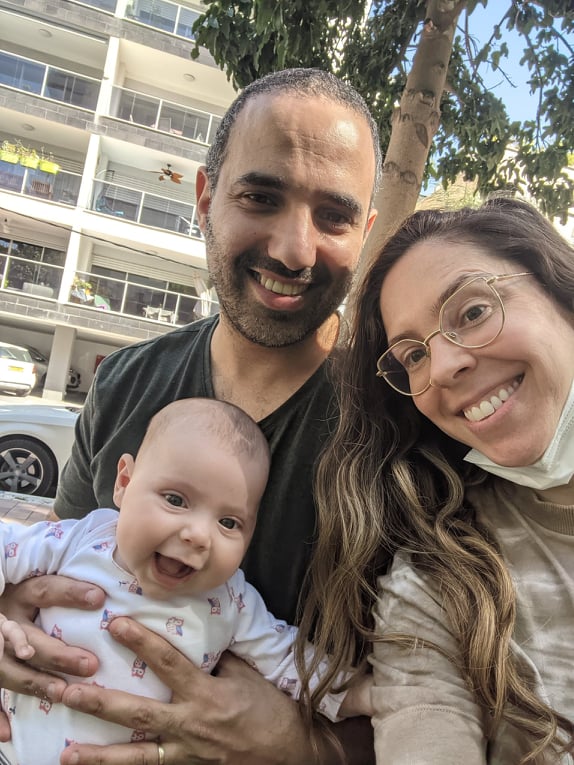
Her parents made sure to get all their paperwork emailed to the consulate well ahead of their planned April 13 flight. They were prepared, said Smilovitz, but the same couldn’t be said of the consulate, which didn’t approve their application as fast as they’d hoped.
“You could tell they didn’t have their act together.” said Smilovitz, 36, who’s currently on maternity leave from her job at Facebook. “I get it; all the consulates were probably scrambling.”
The elder Smilovitzes were eventually advised to resubmit all their documents. They were given the go-ahead 24 hours prior to their flight, and are now getting to know their 5-month-old granddaughter.
During the months of waiting, Smilovitz and some other expectant mothers started a Facebook group, Reunite Olim With Their Families, expressing their frustration and anger about the unexplained airport closures and lack of entry visas for their families.
“We’re trying to field as many questions as possible, trying to connect as many people as possible,” said Smilovitz, who regularly posts on the group with recommendations and suggestions.
She’s found it takes a very long time for people abroad to hear back from their consulates, which often pushes the Israeli relatives to try to expedite the process by going to their local branches of Israel’s Interior Ministry, which processes visas and passports. There they find plenty of inconsistency, with some offices requiring apostille documents, some offering the ability to book appointments, and some recommending that people simply show up very early, around 6 a.m. or 7 a.m.
“I think it’s cool that everyone’s helping each other and coming up with scrappy ways, but this isn’t over and I feel like the policy is going to change soon,” said Smilovitz.
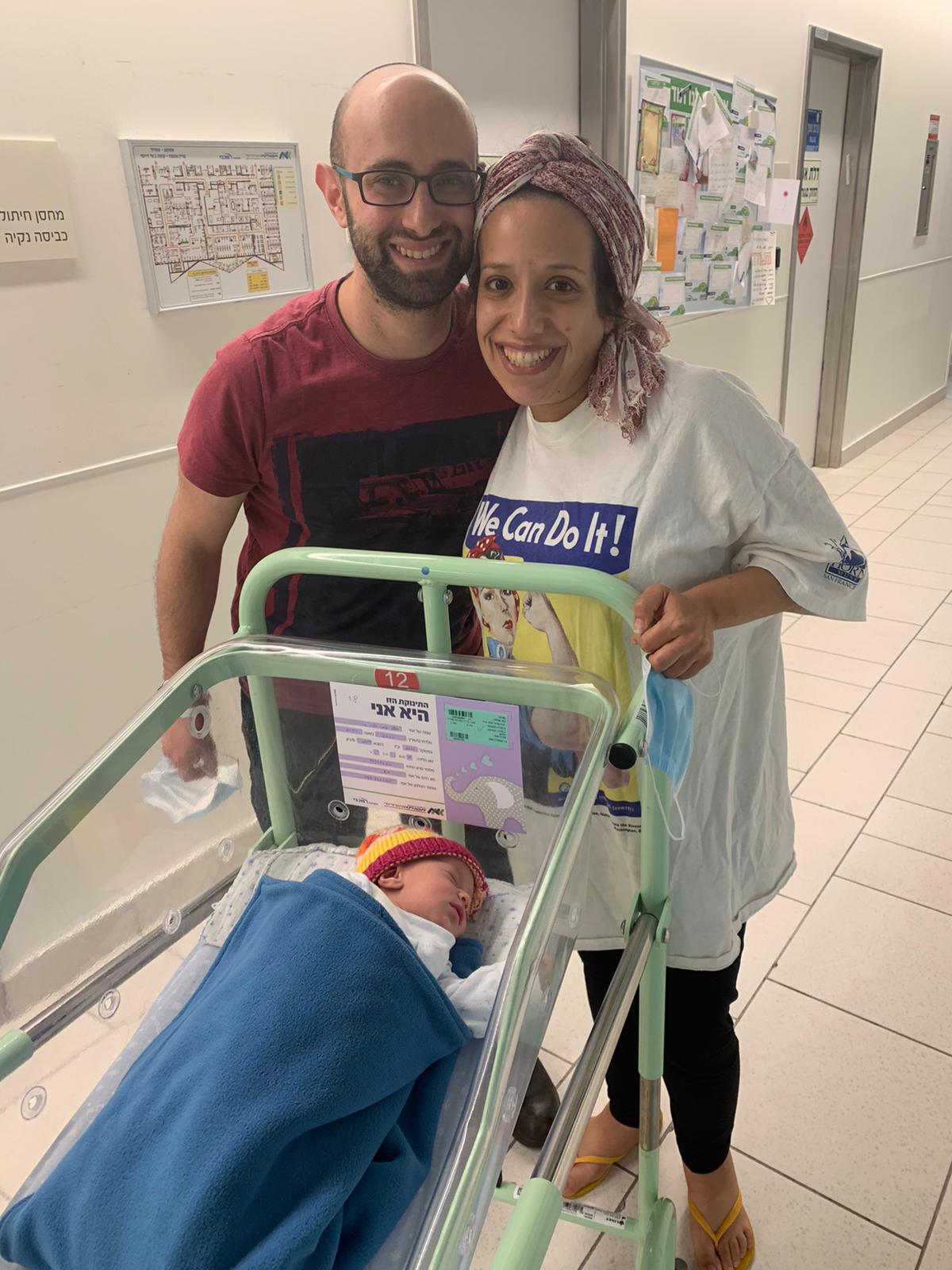
Talya Adler, 30, and her husband took their week-old daughter and drove from their home in Rehovot to the Interior Ministry office in Jerusalem’s Har Homa neighborhood to secure the paperwork needed for Adler’s parents to visit.
“They were friendly and helpful, but we spent most of the day going there and back with a one-week-old baby,” said Adler.
The obstacles to travel affect people looking to leave Israel as well. Libby Novack, chief operating officer of a Tel Aviv startup who has lived in Israel for five years with a B1 visa and hasn’t changed her status to become a citizen, can’t take the chance of leaving Israel because she may not be allowed back in.
“No one is taking responsibility for issuing exceptions in these kinds of cases,” said Novack, who wanted to fly to New York to see her parents and brother, who was about to undergo surgery.

Novack was told by her local Interior Ministry office that she wouldn’t have any trouble getting back into Israel, but she was skeptical; she had heard of too many people in her situation who weren’t allowed back home to Israel.
“I have some flexibility and want to go for my own mental sanity but it’s frustrating beyond belief that I can’t go,” she said.
If the situation is complicated for non-Israeli relatives of Israeli citizens, it’s even more complex for non-Israeli relatives of people living in Israel with temporary visas.
Adrienne Crowe, a nurse midwife from Denver, Colorado, can’t believe she still hasn’t seen her 2-month-old granddaughter, born in Safed in February.
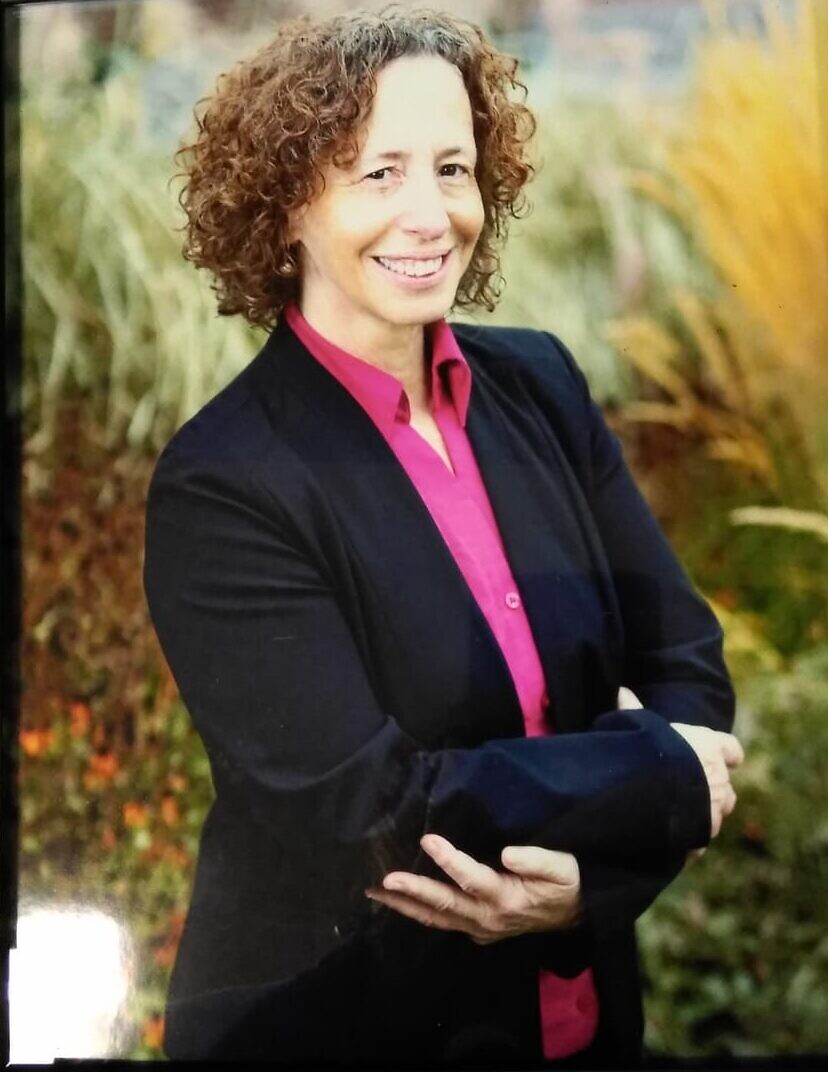
“I’ve placed the first grandchild into the arms of many grandparents,” said Crowe. “There’s a little sting to it that I haven’t held my grandchild yet.”
Crowe’s son, Shmuel Crowe, 29, has been living in Israel for three years after he came on a Birthright trip, became religiously observant and attended a yeshiva in the northern Israeli city of Safed. He married his wife in February 2020 in New York, which was the last time Crowe saw them.
Crowe, who got vaccinated in December, has since applied six times to visit her son and daughter-in-law, but she can’t because the regulations currently allow entry only to immediate family members of Israeli citizens. The younger Crowes are in the process of becoming Israeli citizens; they have an A2 visa.
“Things got progressively worse and worse and worse,” said Crowe, who has felt bereft over the last few weeks.
Crowe also found that the Israeli consulate in Los Angeles, the closest to her home, became increasingly obtuse in its communications.
“They made less and less sense and then got rude,” she said.
Her children can’t visit the US either because it’s unclear if they would be able to return to Israel, “and that’s where their life is, their apartment, their books, their music,” said Crowe.
“We don’t even have a date in sight,” said Crowe. “And now Birthright and other groups are going in, but we grandparents, who are in our 60s and 70s — we’re not partying, but we can’t come.”







The Times of Israel Community.