

When it’s too dangerous to attend the funeral of your own murdered twin
Deadly crime in the Arab community has long since become a national crisis

 Add ToI as a Preferred Source on Google
David Horovitz is the founding editor of The Times of Israel. He is the author of "Still Life with Bombers" (2004) and "A Little Too Close to God" (2000), and co-author of "Shalom Friend: The Life and Legacy of Yitzhak Rabin" (1996). He previously edited The Jerusalem Post (2004-2011) and The Jerusalem Report (1998-2004).
An earlier version of this Editor’s Note was sent out Wednesday in ToI’s weekly update email to members of the Times of Israel Community. To receive these Editor’s Notes as they’re released, join the ToI Community here.
Twice this week, gunmen have carried out horrific killings in Israel’s Arab community. And statistically speaking, that’s not particularly unusual.
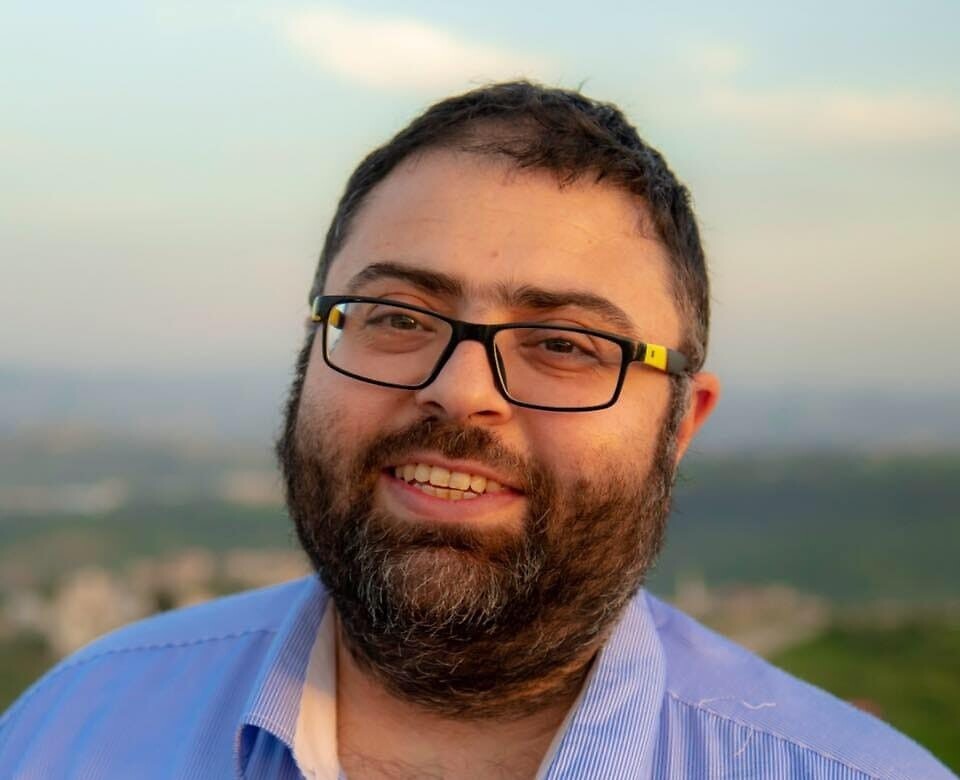
On Sunday, Nadal Ighbaria, a, journalist, was gunned down in his car in the northern city of Umm al-Fahm, reportedly as he made his way home from mosque.
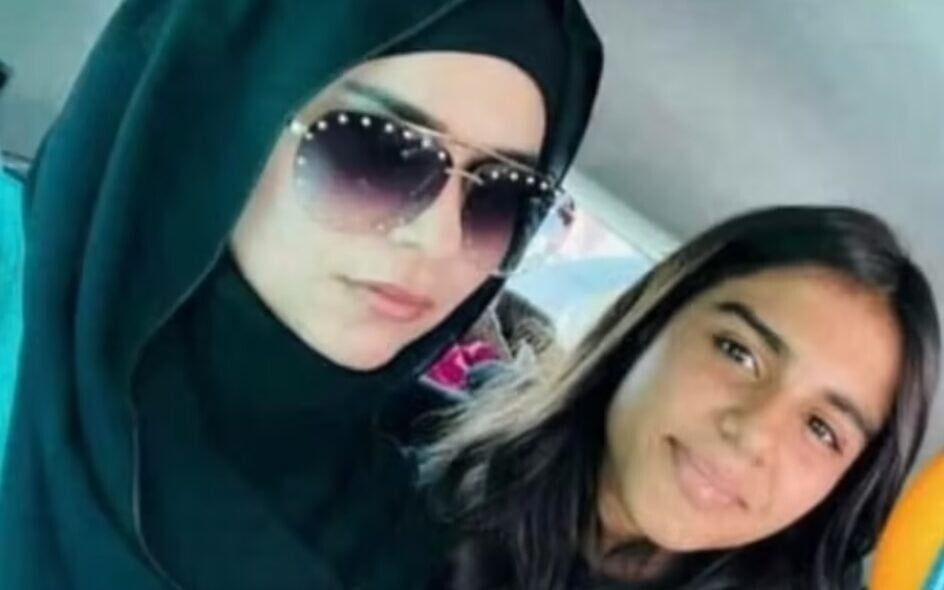
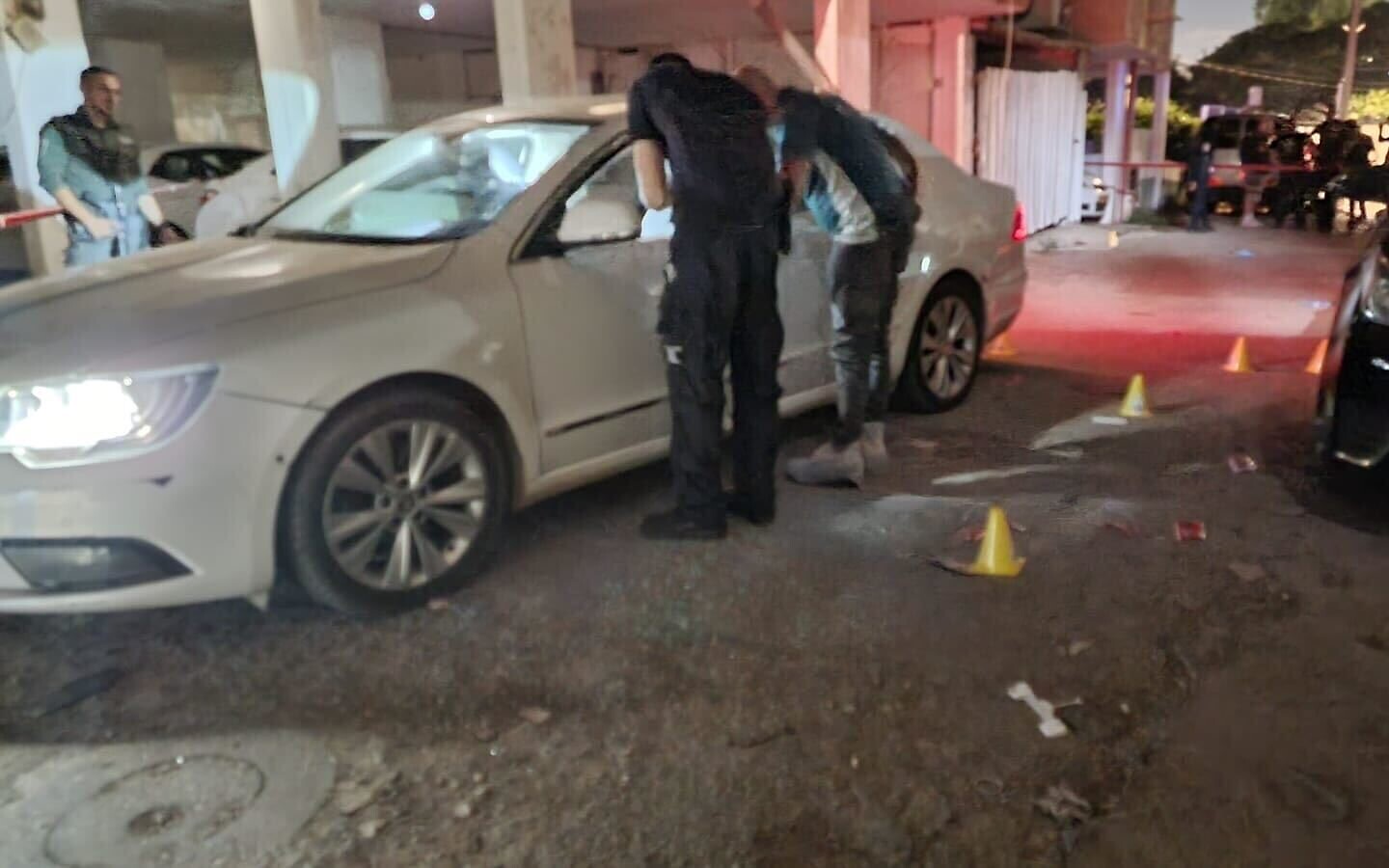
A day later, Manar Hajaj and her daughter Khadra, 14, were shot dead as they unpacked groceries outside their home in Lod, near Tel Aviv. Khadra’s twin sister, Maryam, was shot in the leg as she fled, and is believed to have survived only because the killer’s gun jammed.
Not much more than a year ago, Lod was wracked by some of the worst Arab-Jewish violence Israel has experienced in decades, an accompaniment to a major, Hamas-initiated conflict between Israel and Gaza. This week’s killings, by contrast, were by all accounts “internal” Arab gangland murders. Overall, they are reported to be the 73rd, 74th and 75th fatalities this year in a relentless wave of killings directly afflicting the Arab community, horrifying and potentially endangering all Israelis.
The three victims, it is believed by police, had no criminal connections but were fatally entwined nonetheless. And that has been the case with numerous such murders, where innocents have been targeted in acts of revenge against other criminals, as messages of deterrence, or been in the wrong place at the wrong time and caught in gangland crossfire — as was the case in January for Ammar Hujayrat, a 4-year-old who was fatally hit by a stray bullet in a playground.
Nowhere is safe.
This week’s fatalities
Journalist Ighbaria, ironically, had reported on crime in his city, and had previously been targeted for assassination.
“The writing was on the wall,” his bereaved father lamented on Monday. The bullet holes were, too: In June of last year, dozens of shots were fired at the home where he lived with his wife and daughter, in an attack said to have been motivated by his coverage of the crime wave.
His killing on Sunday, it has been suggested, however, may have been connected to his brother’s financial dealings.
Manar Hajaj and her 14-year-old daughter, it is suspected, were killed in the context of a protracted gang dispute — a convoluted horror story allegedly featuring a marital affair, beatings, an attempted bombing and a previous murder, part of which is currently subject to a police gag order.
Police Commissioner Kobi Shabtai has declared catching their killer or killers a top priority for the force. “Criminals who plan the murder of a mother and her two little daughters are the lowliest and most brutal criminals there are,” he said. Visiting Lod on Tuesday, Shabtai announced the establishment of a 300-strong police task force in the city, to “carry out substantive and offensive operational missions in the sector.”
The wider struggle
Israel’s Public Security Minister Omer Barlev on Tuesday noted that crime in the Arab community has been skyrocketing for years, and referenced years of relative neglect by previous governments and police in tackling it. He also stressed the complexity of the task — for a police force trying to bring law and order to a community part of which is too terrified to help and a small part of which, he intimated, glories in the violence.
“The fight against crime in Arab society is difficult, complex and requires a very long period of aggressive and determined police and enforcement activity,” Barlev said. “This goes hand in hand with large investments in, among other things, education, welfare and employment, along with a change in cultural perception; treating the scourge of violence in Arab society does not only amount to thwarting and solving.”
The government has over the past year prioritized and directed resources to tackle the blight, with Barlev’s deputy Yoav Segalovitz, a redoubtable former senior police officer, at the forefront of the effort. But in confronting this and other crises, the force remains understaffed and overstretched.
According to the Abraham Initiatives monitoring group, only nine of this year’s Arab sector murders so far have been cracked. If these killings had been taking place in the Jewish community, Lod’s Mayor Yair Revivo said at the scene of the Hajaj killings on Monday, “the country would come to a standstill.”
On Tuesday, Prime Minister Yair Lapid convened security officials to highlight the imperative to ensure the latest killings do not in turn spark further revenge attacks, and the urgent need for more progress in the uphill struggle against the deadly menace.
Ighbaria had filed a complaint with police, and told them everything he knew about the threats he was facing, an Army Radio report said on Thursday, and still his life could not be saved. Responding, police spokesman Eli Levy said that the force was making progress in the overall battle, did not need the Shin Bet security agency to get involved, and had prevented no fewer than 60 more killings in the Arab community this year — incidents in which the would-be assassin was en route “with a bullet in the chamber.”
Meanwhile, Maryam Hajaj, the teen survivor of Monday’s shooting, has reportedly been moved from the hospital in central Israel where she was taken for treatment, to a secret location. For her own safety.
Her mother and twin sister were laid to rest on Wednesday. Maryam did not attend. Police deemed it too dangerous.




The Times of Israel Community.