

When the dust settles, will all-Arabic drama ‘Sand Storm’ bring Israel an Oscar?
Elite Zexer explains how she made her prize-winning movie — a maelstrom of drama that resonates among woman anywhere, despite the chasm between the West and the Bedouin community it depicts
 Add ToI as a Preferred Source on Google
Jessica Steinberg, The Times of Israel's culture and lifestyles editor, covers the Sabra scene from south to north and back to the center
There is more than one moment in “Sand Storm,” Elite Zexer’s Ophir award-winning drama about a Bedouin family in Israel’s south, when viewers find themselves nodding in understanding at the maelstrom of emotions playing out on the screen.
Taking place in a dusty, remote hamlet that is home to a tribe of Bedouin families, the film carefully unpacks the story of a family whose middle-aged father, Suliman (Hitham Omari) is taking a second wife, while his eldest daughter, Layla (Lamis Ammar), a daddy’s girl and university student, appears to be breaking free of traditional Bedouin restraints.
Suliman’s first wife, Jalila, played with a heavy-hearted, restrained manner by the excellent Ruba Blal-Asfour, is treading water, trying to control her four daughters while attempting to avoid intense resentment of her husband’s new life, and wife.
Zexer doesn’t offer too many details about why or how the dramatic changes are wrought, and it doesn’t much matter. Viewers easily identify with Layla and Jalila’s raw emotions and reactions, so similar in nature to any woman anywhere, despite the chasm of differences between the Western world and the Bedouin community.
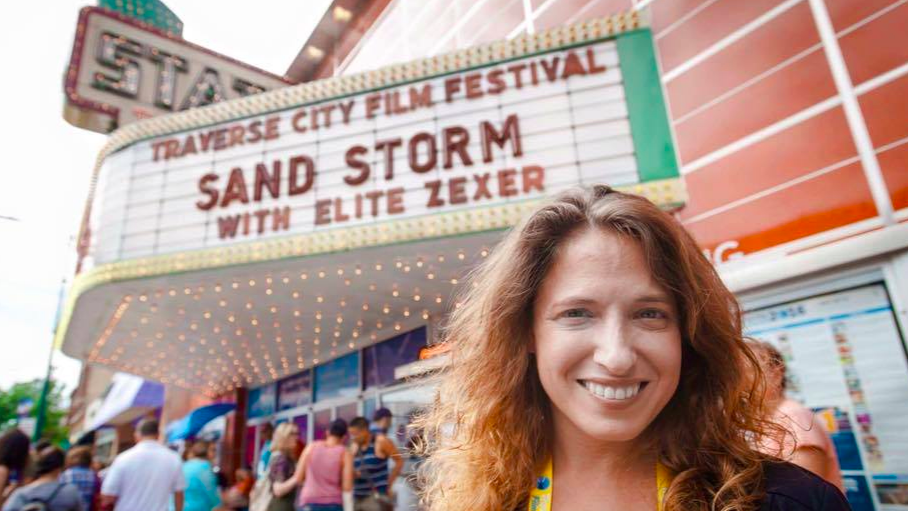
That sense of identification is what Jewish Israeli Zexer, a first-time feature filmmaker, said she was aiming for during her decade of work on the film, which is entirely in Arabic.
Given the wave of attention and awards for “Sand Storm” — which won at Sundance and the Jerusalem Film Festival before sweeping the Ophir Awards, making it Israel’s choice for the Oscar foreign film nomination shortlist — it seems she had the right idea.
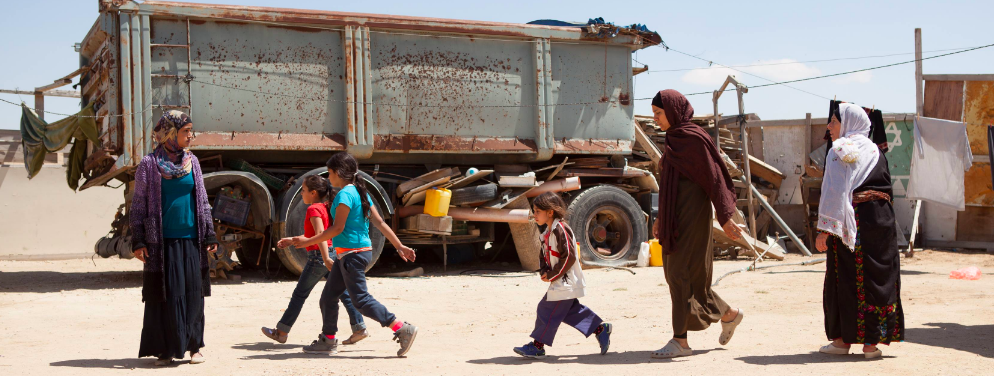
“I didn’t want to make an anthropological film that would feel far from viewers,” said Zexer. “I wanted it to feel different, but just like me, just like my mother and relations in my family, and to do that you have to focus on dramas and relationships. The Bedouin backdrop is the background.”
Herzliya-raised Zexer entered the Bedouin world by chance, when her mother, a scientist by trade who spends much of her free time as a photographer, found herself drawn to taking stills in various Bedouin villages. As her mother deepened her relationship with various families in different villages, they would ask her to photograph their family weddings, often two-day affairs.
Her mother always offered her services for free and often ended up photographing at least two weddings a week. Zexer would come along to help, and as she got to know the families in the arranged marriages, had the thought that there was a movie in those details.

Filmmaking hadn’t always been Zexer’s career path. A lifelong lover of science and technology, she had begun studying science in university and quickly realized she didn’t want to spend her life in a lab. She grabbed an opportunity to intern for a Los Angeles cousin who worked as a producer, and fell in love with the profession.
After spending a year at different Hollywood production offices, she signed up for the film and business track at Tel Aviv University, but it was her graduate project, “Take Note,” a short film about an unsuccessful army officer, that convinced Zexer she needed to make films and not just manage them.
It was around the same time that Zexer accompanied her mother to photograph a wedding of someone marrying a man she had never met, who told the Zexers that she would not force the same trajectory on her own, future daughters.
“I said, ‘I have to make a movie about this,’” said Zexer.
That was ten years ago. Her first venture into a film about the Bedouin was “Tasnim,” a 10-minute short about a young Bedouin tomboy who shuns the traditional conventions of Bedouin culture and tradition, and is backed by her father, who marries for a second time in the course of the film.
The film was equally appreciated by the Bedouin and international film festivals, and it gave Zexer the push she needed to begin working on a full-scale feature Bedouin drama.
It took four years to fully complete the script of “Sand Storm,” as Zexer wanted to be careful to avoid stereotypes, or a more external point of view of Bedouin village life.
“I wanted to capture the way they see things, and the way they see their culture,” she said. “I would go from village to village, I would go and hear another sentence, and that would send me back home, to try it again.”
By the end of 2013, the film was being translated into the Bedouin dialect of Arabic, another facet of taking care that the film adhered to a true form of Bedouin culture, said Zexer. The Bedouin, she said, don’t say that dinner is at 7 p.m., but after prayers, and she wanted those kinds of nuances reflected in their speech.
The movie was filmed in April 2015, shooting the film in four different Bedouin villages over the course of a month, and working with a small crew and a team of producers who stretched every dollar of a very small budget. A local Bedouin filmmaker, from the southern town of Rahat, worked closely with Zexer to be sure she wasn’t missing pertinent details.
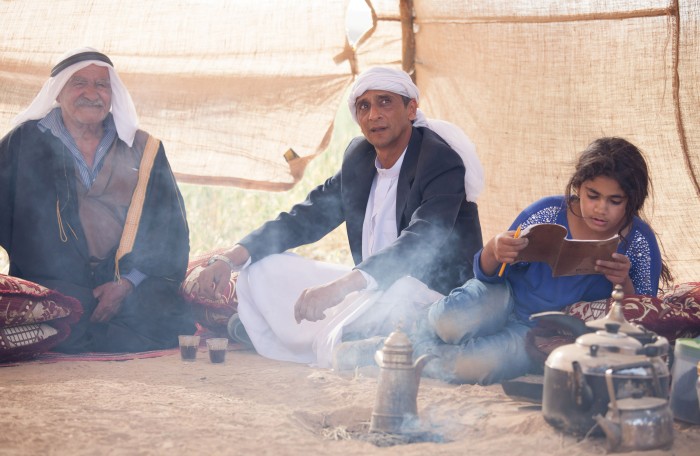
“We all felt on the set like something special was happening,” said Zexer. “We rehearsed like crazy, and we couldn’t improvise because of the language issues.”
That sense of camaraderie extended to the villages with which Zexer worked. They stayed in the south, where most of the Bedouin tribes dwell, living on dusty tracts of land that are often visible from the roads, but unmarked by signs or roads. The villagers, said Zexer, were mostly welcoming and helpful.
“I wanted to show this population that lives in Israel and that is so isolated and very close to us, but it feels like a different world,” she said. “I show that in many frames, that the village is on the road and Israeli cars pass all day long and you can hear the cars all day but nobody stops at the village, and that feels so strange as someone who was so welcomed at the villages.”
Many of the villagers went to see the film in the theater, something many have never done before. Zexer’s best screening, in fact, was the premiere in the south, attended by many of the Bedouins who had helped make the movie.
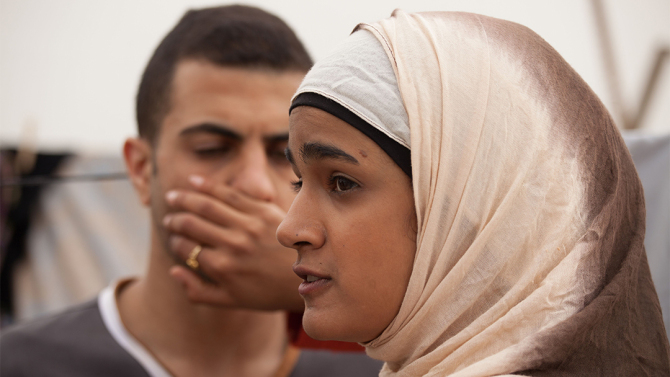
The final day of shooting was on the day of last year’s Ophir ceremony, said Zexer, and her crew kept trying to get online to see who was winning which awards.
“They kept saying, ‘Next year it’s you.’ And I kept saying, ‘Stop it,'” said Zexer, who said she never let herself dream of festivals or awards, as making a feature film was a dream in itself.
She’s now trying to develop a television show and two different films, but is finding it hard to find the time, given the amount of attention she still has to devote to “Sand Storm.”
“’Sand Storm’ is my whole life,” she said.
Back at her Tel Aviv apartment, Zexer walked into the kitchen where she stores her Sundance award on the counter, because it’s too heavy for any of the shelves. Now the Ophir sits on the same counter next to it. But an Oscar? She might have to build a new shelf for that golden statuette.
“Sand Storm” is currently playing in Israeli theaters, as well as in theaters in New York and Los Angeles.








The Times of Israel Community.