

Zarif accuses US of waging ‘psychological warfare’ against Iran
After reimposed sanctions harm economy, regime says Trump administration is intimidating Tehran’s business partners
 Add ToI as a Preferred Source on Google
Michael Bachner is a news editor at The Times of Israel

Iran’s foreign minister slammed the United States on Sunday, after sanctions reimposed on the Islamic Republic caused major airlines and companies to back out of trade with Tehran.
Mohammad Javad Zarif said the US was focused on a “psychological war against Iran and its business partners,” Reuters reported, quoting Iran’s Tasnim news agency.
British Airways and Air France announced Thursday that they would end their flights to and from Tehran next month, citing low profitability, joining Dutch carrier KLM which made a similar announcement last month.
Last Monday, French oil giant Total announced that it had officially quit its multi-billion-dollar gas project in the country.
It was the latest in a string of major international companies to pull out, including German carmaker Daimler, Deutsche Telekom, and Deutsche Bahn.
The United States said in May that it was abandoning the 2015 nuclear deal and reimposing sanctions on Tehran in two phases, in August and November.
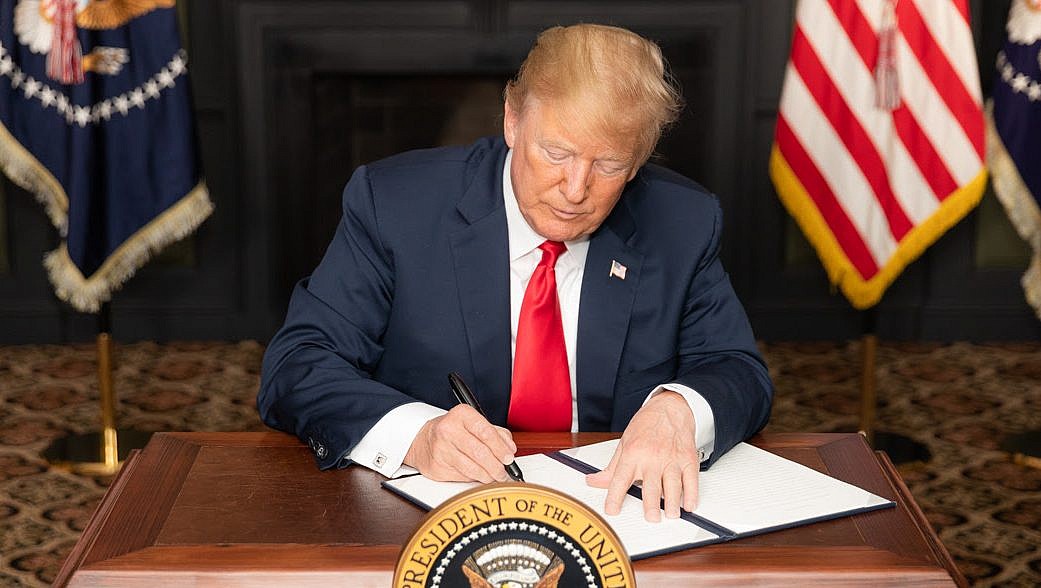
Zarif was also quoted Sunday saying US President Donald Trump’s nixing of the nuclear deal was hurting the United States.
“From the time that Trump announced the withdrawal from the nuclear deal, America has not been able to reach its goals,” he said according to the ISNA agency, Reuters reported.
Zarif also criticized political forces in Iran who have slammed the regime in recent months for signing the nuclear accord in the first place.
“There are some in the country who, instead of laying the groundwork for using the opportunities presented by the nuclear deal, chose a political fight,” he was quoted as saying by ISNA. “And this political fight led to despair and disappointment.”
Since the US pulled out of the nuclear deal with Iran in May, the Iranian rial has slipped to record lows, which has consequently led many in the authoritarian country to explicitly call for an end to the rule of Iran’s Islamist leadership.
Protests have sprung up in several major cities including Isfahan, Shiraz, Mashhad and Tehran, driven by concerns over the economy as well as wider anger at the political system.
Videos have shown demonstrators cry out against “the dictator” in reference to Khamenei.
The numerous protests are a continuation of sorts of a nationwide anti-government movement that started gaining ground in late December and continued protesting sporadically throughout the year.
On Thursday the European Union announced a first financial support package to Iran of 18 million euros ($21 million), as part of the bloc’s commitment to keeping the nuclear deal alive.
AFP contributed to this report.







The Times of Israel Community.