

A general heads to the hospital, an attorney general defends himself
AG Avichai Mandelblit’s promise to consider releasing the PM-Mozes tapes some day dominates headlines, but vies for attention with Chief of Staff Eisenkot’s medical matters
 Add ToI as a Preferred Source on Google
Ilan Ben Zion is an AFP reporter and a former news editor at The Times of Israel.
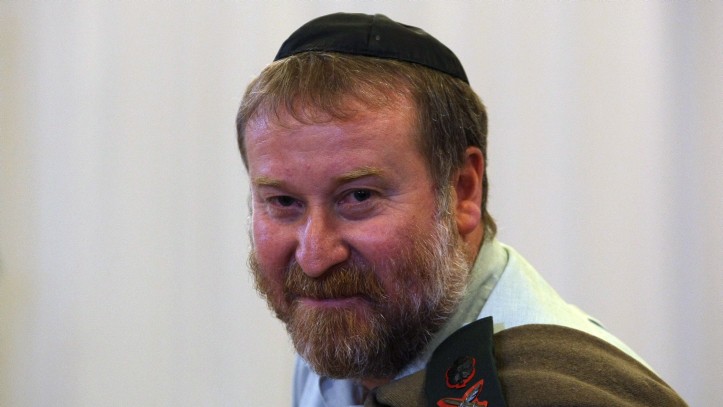
Rarely do the stars align and all the Hebrew newspapers run much the same headline, but try as you might, the attorney general’s statement that he will consider, at the appropriate time, releasing the full tapes of conversations between Prime Minister Benjamin Netanyahu and Yedioth Ahronoth publisher Arnon Mozes is everywhere, even across the front page of Yedioth Ahronoth.
But the embattled newspaper, whose owner was questioned once again Monday by police in the ongoing corruption investigation into the prime minister, leads off with a nebulous report about IDF Chief of Staff Gadi Eisenkot going on leave a few days before an unspecified “medical procedure.” There are scant details about the nature of the operation in any of the newspapers, and the announcement came as a surprise, as Eisenkot has been going about his usual routine.
Perhaps to draw attention away from the police investigation, Yedioth plays up Eisenkot’s medical leave, and the death of an IDF soldier in a training accident, before getting around to Attorney General Avichai Mandelblit’s remarks and the latest details from the investigation. The paper discloses no particulars about the chief of staff’s medical problems, but says that Eisenkot turns 57 this May and “the medical procedure he’ll undergo is considered relatively common at that age, and the chances of recovery are considered high. Hospitalization is supposed to last only a few days, and after recovery Eisenkot is expected to return to his post.”
Haaretz gives little prominence to the issue of Eisenkot’s imminent hospitalization, sticking it on Page 10 after a stream of opinion and analysis pieces picking apart the prime minister. Haaretz, which unlike Yedioth Ahronoth and Israel Hayom has thus far kept itself clear of controversy in the Mozes-Netanyahu scandal, feels free to open fire with all op-eds blazing. Four opinion pieces alone accompany its reporting on Mandelblit’s statement that prematurely releasing the entire recordings could complicate the investigation.
Snippets of the transcripts of the tapes have leaked to Channel 2 every evening for the past week, offering juicy, but sparse and somewhat decontextualized, tidbits. Yossi Verter writes in Haaretz that “the public deserves to listen to the recording in its entirety, but not before the specific investigation has run its course.”
Verter says Netanyahu’s claim to the public, at a Likud faction meeting on Monday, that he’s the victim of a “vast media conspiracy,” is “pathetic”: “He’s the one in the conversation, he’s the alleged criminal, he’s the one who proposed the recording and his accomplice is the one doing the recording, the attorney general is the one who decided on a criminal investigation — yet the media is to blame.”
It comes as no big surprise that Israel Hayom runs a full article on Netanyahu’s dismissal of the press’s coverage of the investigation as an attempt “to depose the Likud government I head,” but what is surprising is that neither Haim Shine nor Dan Margalit run op-eds stepping to Netanyahu’s defense. Israel Hayom runs a separate article penned by “Israel Hayom staff” on Channel 2’s report that Mozes and Netanyahu discussed a deal which would limit Israel Hayom’s circulation. But there’s little meat on its bones, just a transcript of quotes attributed to Mozes and Netanyahu that Channel 2 published hours earlier.
When Yedioth Ahronoth does get around to reporting on Mandelblit’s comments, it’s on Page 6, where it leads off with the attorney general’s rejection of claims that external considerations have been influencing the investigation as “baseless and irresponsible speculation.”
To step to the paper’s defense, Yedioth Ahronoth runs an op-ed by Yifat Erlich, who says she wasn’t raised in a Yedioth Ahronoth household, and she only started writing for the paper as a counterpoint to its positions. Her article is another apologia by the paper of the paper: “Each time anew I was surprised by the fact that Noni [Mozes’s] leftist paper didn’t censor me. I wrote in favor of Netanyahu. I wrote against the campaign of persecution against Netanyahu. I wrote harsh words against my colleagues. And each morning I was surprised again to see my column, prominent and scathing, black on white, in Noni’s leftist paper.”
See? Yedioth Ahronoth isn’t skewed at all! Erlich says so. “I learned I have complete journalistic freedom,” she writes, making the case against Mozes’s alleged editorial control over the paper’s content. “The owner of this paper, even if he wanted to do it, cannot cut deals that involve integrity, courage and professionality — not mine, not my colleagues’, the industrious and talented editors and writers.”







The Times of Israel Community.