

Ahead of strike, Israel Broadcasting Authority workers interrupt news
Over 1,000 employees of ailing corporation will lose their jobs if new state broadcaster goes ahead as planned
 Add ToI as a Preferred Source on Google
Raoul Wootliff is a former Times of Israel political correspondent and Daily Briefing podcast producer.
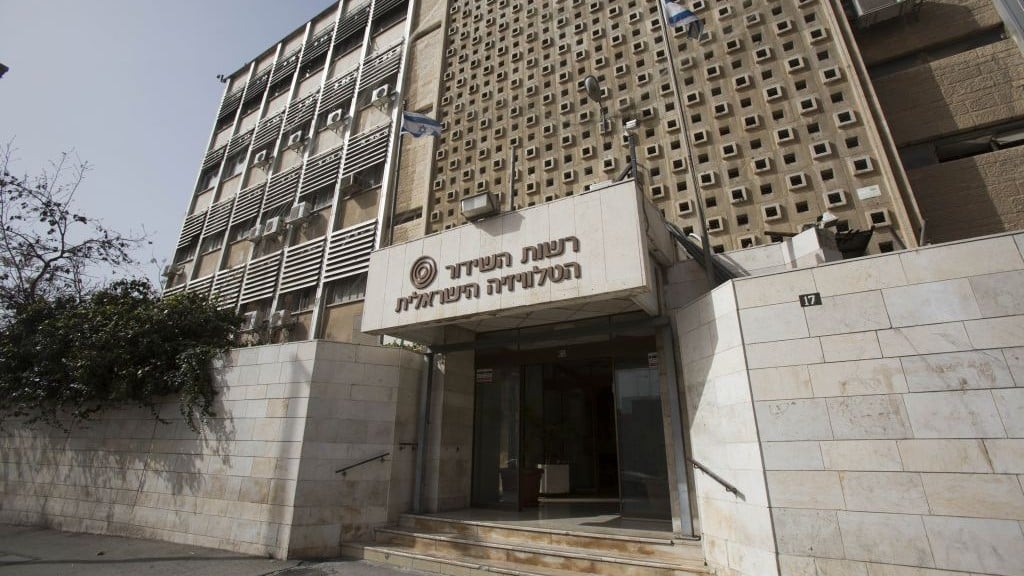
Employees of the Israel Broadcasting Authority briefly interrupted Channel 1’s flagship news program on Sunday night, in a preview of planned labor action over the imminent closure of the ailing broadcaster set to be replaced by a new state-run media conglomerate.
An image of employees holding signs protesting the move appeared briefly on the screen during the nightly “Mabat” newscast, accompanied by a message directed at politicians leading new media reforms that will see the IBA shuttered.
“Citizens of Israel, on April 30, the eve of Memorial Day, the IBA will be closed at the order of Finance Minister Moshe Kahlon,” the message read. “One thousand families will be added to the unemployment pool. Today it’s us — tomorrow it’s you!”
The various IBA workers’ unions have called an emergency meeting on Tuesday morning to decide on the final arrangements for a labor strike that will indefinitely shut down the entire IBA broadcasting apparatus.

In 2014, the Knesset passed wide-reaching reforms aimed at closing the Israel Broadcasting Authority, which politicians at the time described as increasingly irrelevant and costly, and replacing it with a new broadcasting corporation called “Kan.” The new corporation is slated to take over and expand current public broadcast offerings, including the IBA’s radio and TV stations.
Despite numerous delays and efforts to scupper the move, the government is reportedly working on a proposal that would enable the Kan’s long-delayed launch, in April — but only in return for increased control over the country’s media landscape.
In October, Kahlon broke his silence over Prime Minister Benjamin Netanyahu’s effort to dismantle the new public broadcasting corporation, saying that reverting back to the IBA would incur massive financial losses for the state. The decision to allow Kan to begin broadcast is said to be the result of a temporary committee set up by Kahlon and Netanyahu to find a compromise on the issue.
In conjunction with Sunday night’s broadcast disturbances, the IBA labor unions sent a letter to the national Histadrut labor federation chair Avi Nissenkorn appealing for help.

“On the first of May I will be unemployed, yes on International Workers’ day,” reads the letter, worded in the first person, “Why? Because you and Prime Minister Benjamin Netanyahu have failed to prevent the opening of the new broadcast corporation and you are allowing the government to close the work place of a thousand employees… for a broadcaster that will do exactly the same, just less professionally and with less experience.”
The IBA was established in 1948 and held a monopoly on TV and radio broadcasting in Israel until the 1990s.
Since 1965, any Israeli household with a television set was obligated to pay an annual television tax which helped fund the IBA. Today, the tax stands at NIS 345 per year ($90). The IBA strictly enforced this rule, ignoring pleas from TV owners who did not use IBA’s services or were not connected to any television service whatsoever.
The aging broadcaster has already been subjected to drastic manpower and budget cuts in recent years in preparation for its replacement, including the early retirement and firing of hundreds of employees.
The Mabat news broadcast is currently functioning on 40% less staff, including directors, camera crews, sound and graphics. Weather forecaster Sharon Wechsler has been doing her forecasts by simply sitting next to anchorman Ya’akov Eilon, sometimes with no slides or graphics.








The Times of Israel Community.