

Army still on alert in North, fearing Hezbollah response to Syria strike
After Iran threatens attacks from the West Bank, Liberman reportedly set to convey call for calm during trip to Moscow
 Add ToI as a Preferred Source on Google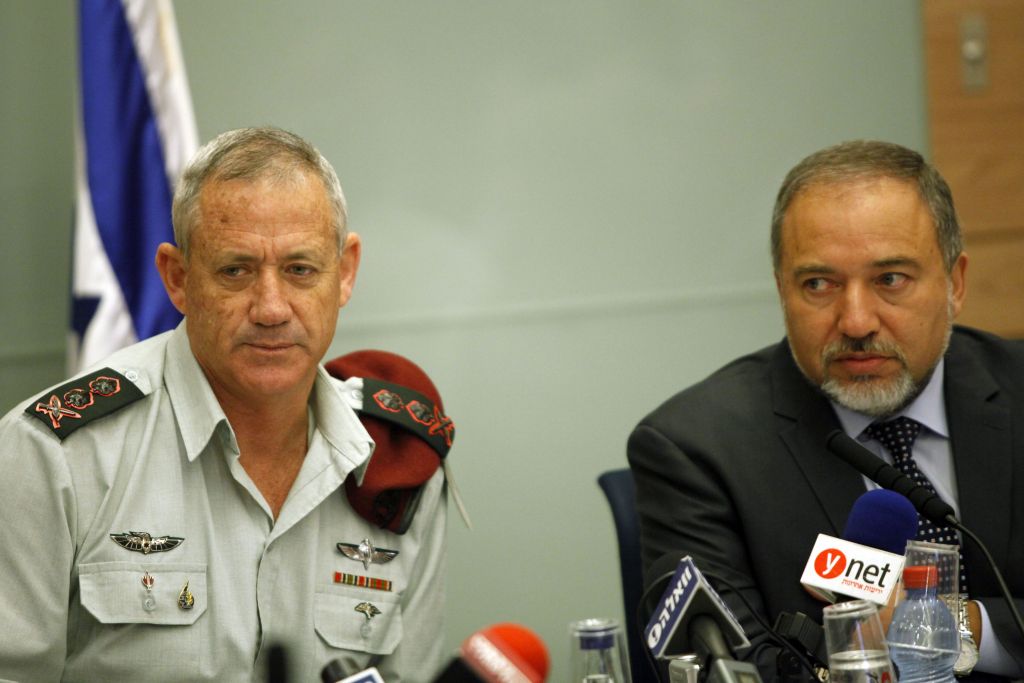
The Israeli army remained on alert, with a bolstered deployment, in northern Israel on Saturday, fearing a response by Hezbollah to last Sunday’s alleged Israeli strike in Syria.
IDF Chief of the General Staff Benny Gantz spent part of the day in the area, having also toured the Northern Command on Friday. Gantz said Friday security forces were “very alert, very primed, very prepared for any action that will be required” of them.
Lebanese media reported Israeli planes were flying over Lebanon on Saturday. Lebanese media also reported that Hezbollah has assured the government in Beirut that it will not strike back at Israel from Lebanese territory.
For its part, Iran on Saturday threatened to attack Israel from the West Bank, in retaliation for the alleged Israeli airstrike that left 12 Iranian and Hezbollah operatives dead.
Foreign Minister Avigdor Liberman is reportedly set to send a message via Russia to Iran, Syria and Lebanon that Israel has no interest in escalated hostilities, but cannot tolerate the establishment of terror basis across the Syrian border on the Golan. Ynet reported that Liberman will convey the message during talks with his Russian counterpart on a visit to Moscow and Beijing that begins Sunday.
On Friday, Channel 10 reported that Israel had sent calming messages to Iran and Hezbollah via Moscow after the strike, clarifying that it was uninterested in an escalating conflict with Tehran or the Lebanese terror group.
According to the report, Israeli officials told Moscow that Israel viewed the strike as an act of self-defense, and that Hezbollah had forced Israel’s hand by building an offensive infrastructure on its border. Jerusalem stressed it did not want the situation to deteriorate into a regional conflict. Russian leaders conveyed this message to Beirut and Tehran.
Deputy head of Iran’s Revolutionary Guards Lt.-Gen. Hossein Salami vowed Saturday to “open new fronts [against Israel] and change the balance of power.” In an excerpt of an interview with Salami, the IRGC’s number two said that Iran and Hezbollah would provide a “special reprisal” to the strike, according to the Tasnim News Agency, adding that opening a new front in the West Bank was in the works.
“Opening up a new front across the West Bank, which is a major section of our dear Palestine, will be certainly on the agenda, and this is part of a new reality that will gradually emerge,” Salami said in the inteview with Iran’s Arabic-language news channel al-Alam.
Iran and Hezbollah have issued a series of threats since the strike earlier this week, warning of a “crushing response,” and “destructive thunderbolts.” The dead included an Iranian general and senior Hezbollah commanders, Muhammad Issa and Jihad Mughniyeh, son of slain terror mastermind Imad Mughniyeh.
There have been conflicting reports as to whether Israel knew that Iranian general Mohammed Allahdadi was in the convoy.
A report on Channel 2 Friday said the strike targeted the leaders of a substantial new Hezbollah terror hierarchy that was set to attempt kidnappings, rocket attacks and other assaults on military and civilian targets in northern Israel.
The new terror unit involved Mughniyeh, who was coordinating with the commander of the Quds Force of Iran’s Revolutionary Guards, Qasem Soleimani, the Channel 2 report said. There was no suggestion in the report that Soleimani, a key figure in supporting Syrian President Bashar Assad and Hezbollah, was in the area at the time.
The terrorist hierarchy included recruitment and intelligence departments, and was set to begin operations targeting Israel from the Syrian Golan, including “kidnappings, firing rockets and mortar shells, and using anti-tank weapons against Israeli residential areas.”
The unit was set up “with Iranian sponsorship,” the report said. Israel’s targeting of some of its members underlined that “a red line was crossed that Israel would not tolerate.”
The TV report said Israel was braced for a response. If that response targeted Israeli civilians, however, subsequent Israeli retaliation would endanger the Assad regime in Syria, Channel 2’s military commentator Roni Daniel said. He did not state a source for that assertion.






The Times of Israel Community.