

Ehud Barak: Nuclear deal not as bad as expected… yet
Ex-PM says tentative agreement could be salvaged if Obama maintains credible threat of surgical attack on facilities
 Add ToI as a Preferred Source on Google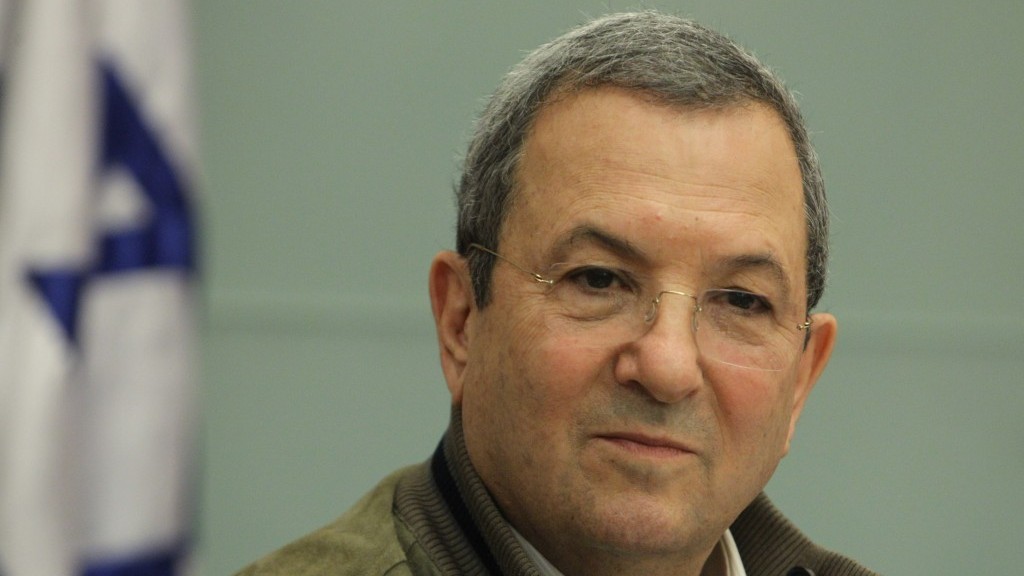
Former prime minister Ehud Barak argued that the tentative nuclear deal with Iran was not as disastrous as many in Israel believe.
“It’s bad, just not as bad as we were expecting,” wrote Barak in a piece for Time Magazine published on Thursday.
Leaks during the talks suggested that Western concessions to Iran would be more significant than what was finally agreed upon, he wrote. “But as always heaven and hell both reside in the details. Much can go wrong before June 30, when the accord described in Laussane must be rendered into unambiguous specifics.”
The threat of military force must be held over Iran’s head in order to make sure the P5+1 powers extract the most concessions they can from Tehran, he argued.
Barak criticized US President Barack Obama for publicly shying away from the option of a “surgical strike” against Iranian nuclear sites: “A surgical strike on key nuclear facilities in Iran can throw them five years backward, and a repetition would become a major Iranian worry,” Barak wrote.
“On the spectrum of military actions, this would be closer to the raid that killed Osama bin Laden than to the invasion of Iraq. The possibility should not be rhetorically holstered. It may, finally, later down the stream be the only language Iran understands.”
Nonetheless, Barak criticized the framework for the deal expected to be signed on June 30, insisting far too many concessions were made to a government dead-set on obtaining nuclear weapons in a path similar to that of North Korea and Pakistan in years past.
Discussion of an Israeli military attack on Iran’s nuclear facilities peaked in 2011-2012, when Barak was defense minister and Netanyahu premier. In addition to serving as prime minister from 1999-2001, he served as IDF chief of staff and was also defense minister under prime minister Ehud Olmert and Benjamin Netanyahu.
“There is a perception across the Middle East that America is weakened,” Barak wrote. “Perception these days works as reality, and the common view is that America negotiated not out of strength but out of an appetite to obtain a deal. This by itself allowed Iran an advantage in the negotiations, and that advantage has been enhanced by the announcement of an agreement.”
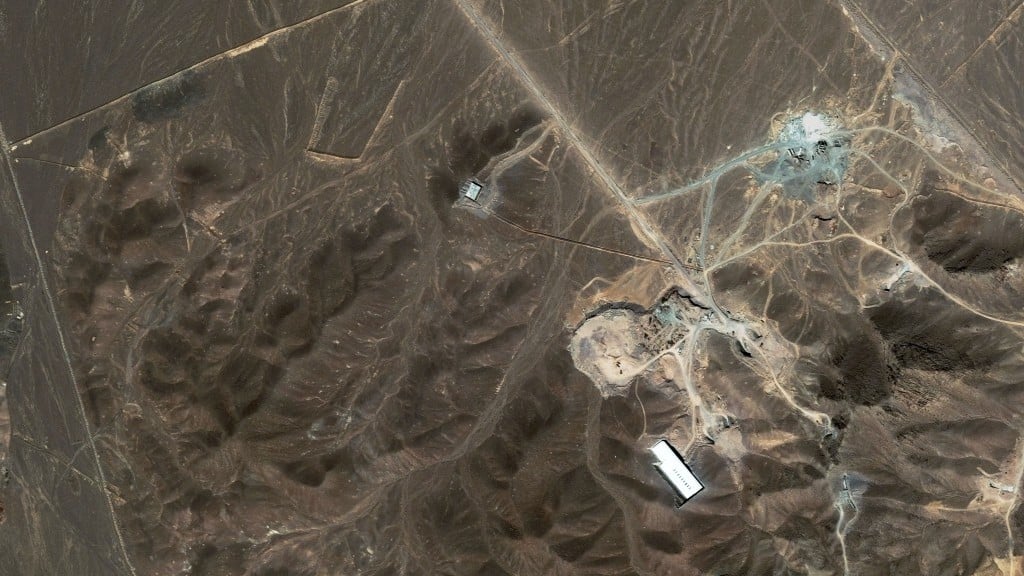
Barak called for a significant draw down of centrifuges and the closure of Fordo, Iran’s underground uranium enrichment facility, in order to further hinder Tehran’s development of a nuclear weapons program: “When the day arrives that the Iranian leadership announces, as North Korea did, that it has expelled the inspectors or that it is withdrawing from the Nuclear Nonproliferation Treaty, it must start its sprint for the bomb from that much further back.”
The former prime minister concluded by cautioning world powers to tread carefully till the agreement is finalized in June, reiterating the need to weaken Tehran’s position over the next two months: “Iran wants to get to a signature in June, and the relief from sanctions that will soon follow. The smiles they wear are the smiles of a man who has escaped a noose. Don’t let him get too far.”
Iran and the global powers sealed the agreement on Thursday outlining limits on Iran’s nuclear program designed to prevent the country from developing atomic weapons. The West has long suspected Iran is pursuing a nuclear weapons program. Iran denies the charge, saying its nuclear research is focused on peaceful purposes like power generation and cancer treatment.
According to that text, many of the nuclear limits on Iran would be in place for a decade, while others would last 15 or 20 years. Sanctions related to Iran’s nuclear program would be suspended by the US and the European Union and eased by the UN after the International Atomic Energy Agency confirmed Iran’s compliance.
The fact sheet also says Tehran is committed to significant cuts in centrifuges, the machines that can spin uranium gas to levels used in nuclear warheads. Of the nearly 20,000 centrifuges Iran now has installed or running at its main enrichment site, the country would be allowed to operate just over 5,000. Much of its enriched stockpiles would be neutralized. A planned reactor would be reconstructed so it produced no weapons-grade plutonium. Monitoring and inspections by the UN nuclear agency would be enhanced.
Opponents of the emerging accord, including Israel and Republican leaders in Congress, reacted with skepticism. They criticized the outline for failing to do enough to curb Iran’s potential to produce nuclear weapons or to mandate intrusive enough inspections. President Barack Obama, who seeks an Iran nuclear deal as a capstone of his presidency, disagreed.
“This framework would cut off every pathway that Iran could take to develop a nuclear weapon,” Obama declared. “This deal is not based on trust. It’s based on unprecedented verification.”
America’s negotiating partners in Europe strongly backed the result. President Francois Hollande of France, who had pushed the US for a tougher stance, endorsed the accord while warning that “sanctions lifted can be re-established if the agreement is not applied.”
On Friday, Netanyahu said that his cabinet was united in “strongly opposing” the framework deal with Iran.
Insisting that the deal “threatens the survival of the state of Israel,” the prime minister echoed many of Barak’s concerns about the Islamic republic’s nuclear program in a telephone call with Obama hours after the deal was agreed upon on Thursday.
“A deal based on this framework would threaten the survival of Israel. Just two days ago, Iran said that ‘the destruction of Israel is nonnegotiable,’ and in these fateful days Iran is accelerating the arming of its terror proxies to attack Israel,” Netanyahu told Obama during the call. “This deal would legitimize Iran’s nuclear program, bolster Iran’s economy, and increase Iran’s aggression and terror throughout the Middle East and beyond.”
The prime minister also called Friday for any final deal to guarantee “clear and unambiguous Iranian recognition of Israel’s right to exist.”
Times of Israel staff contributed to this report.





The Times of Israel Community.