

Emotion on the wane, are US-Israel ties ‘becoming purely transactional’?
The Jewish state has not ‘outgrown’ its relationship with America, say co-authors of ‘Our Separate Ways,’ but it’s at ‘an unprecedented period of tumultuous change’
 Add ToI as a Preferred Source on Google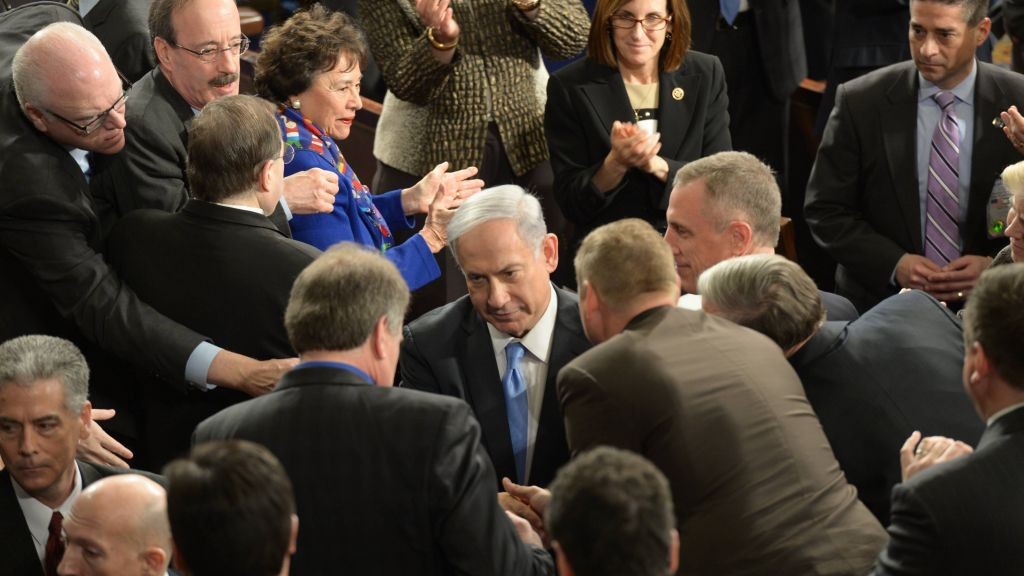
LONDON — On March 3, 2015, Prime Minister Benjamin Netanyahu made history when he addressed a joint session of Congress in Washington to discuss the Iran nuclear deal, which US President Barack Obama was finalizing at the time.
In its audacity, the speech was an anomaly.
No foreign leader had ever attempted to address Congress with the sole intention of trying to rally the American political leadership to topple a diplomatic negotiation that the president of the United States deemed important to American security and foreign policy.
Of course, this wasn’t the only time Netanyahu and Obama have clashed.
Four years earlier, in May 2011, the prime minister told Obama that it would be impossible to expect Israel to ever return to anything like the June 1967 lines, which Obama said was an essential compromise toward a lasting peace settlement with the Palestinians.
So, are Netanyahu and Obama simply two leaders who are fundamentally incompatible? Or, perhaps is there something deeper going on in the shifting relationship between Israel and the United States?
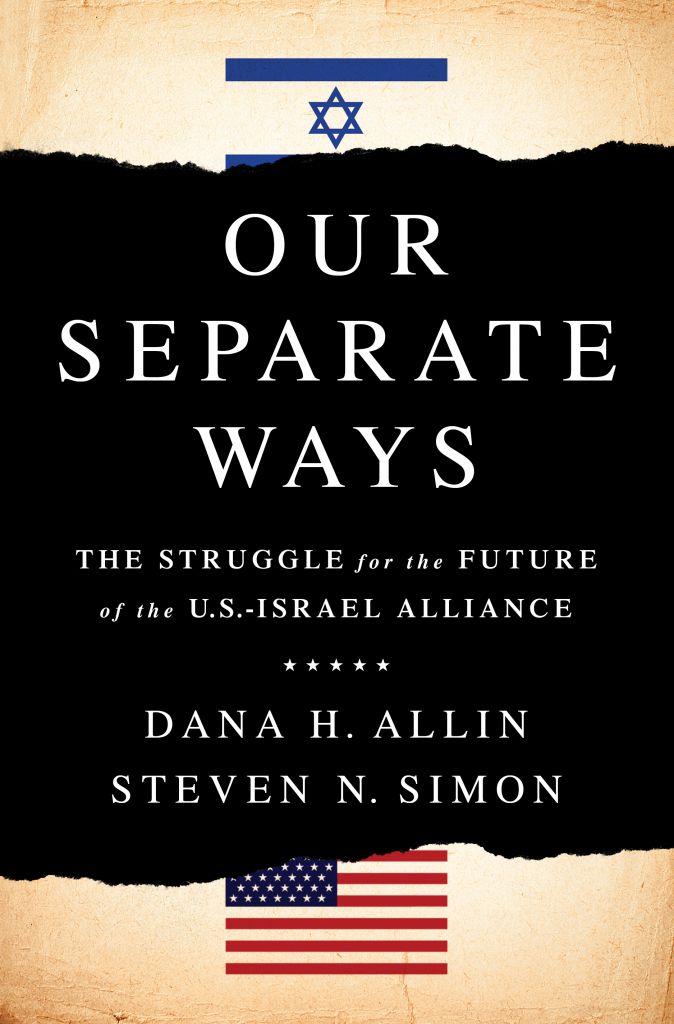
According to “Our Separate Ways: The Struggle for the Future of the U.S.- Israel Alliance,” a book co-authored by Dana H. Allin and Steven N. Simon, these two awkward public diplomatic scuffles prove that relations between the two countries are currently going through an unprecedented period of tumultuous change.
While both Allin and Simon describe themselves as “viscerally committed to Zionism,” at times their firm belief in American exceptionalism appears to blind the authors to their double standard regarding Israeli policies.
Simon grew up in an Orthodox Jewish family in the United States and went to Israel as a civilian war volunteer in the Yom Kippur War in 1973. He’s worked as a foreign policy adviser in American administrations under Reagan, Clinton and Obama, and began his diplomatic career at the US Embassy in Tel Aviv.
Allin is not Jewish but much of his career has been spent as a scholar of international relations, making the case for Zionism to more skeptical Europeans.
As their latest book explains, both authors are extremely concerned for the future of Israel, especially with relation to what they say is the Jewish state’s insistence that it can now make it in the international sphere alone, without US backing. When doing research for their book, both authors interviewed numerous Israeli politicians and diplomats. They say many told them — quite bluntly — that the Jewish state has now “outgrown its relationship with the United States.”
Meanwhile, many Americans, unable to let the plight of the Palestinian people slide, see the US and Israel like a dysfunctional couple in a loveless marriage, inevitably moving in different directions.
‘We don’t want to see the US-Israeli relationship becoming purely transactional’
Moreover, the Jewish community in the United States is much more integrated than ever before, and therefore both authors believe inherent support for Zionism among Jewish Americans is not nearly as strong as it used to be.
“We wrote this book because we don’t want to see the US-Israel relationship becoming purely transactional, or focused on a very narrow set of security interests,” Simon tells The Times of Israel from the office of the International Institute for Strategic Studies in central London.
“Maybe that outcome is unavoidable. But this book is a search for a way forward to sustain the historical and profoundly emotional relationship that distinguishes the US-Israel relationship — perhaps with the exception of Britain — from all its other allies,” Simon says.
Both authors are extremely critical of Netanyahu, particularly his public diplomatic reaction to the Iran nuclear deal.
“Netanyahu gave the impression that the Obama administration could be defeated on this issue,” says Allin, his IISS colleague. “It’s dangerous for a right-wing Israeli government to count on a polarized basis of American support.”
“It would be a tragedy for the alliance [between the US and Israel] if the issue of Israel becomes increasingly polarized. And Netanyahu’s intervention plays into that polarization,” he says.
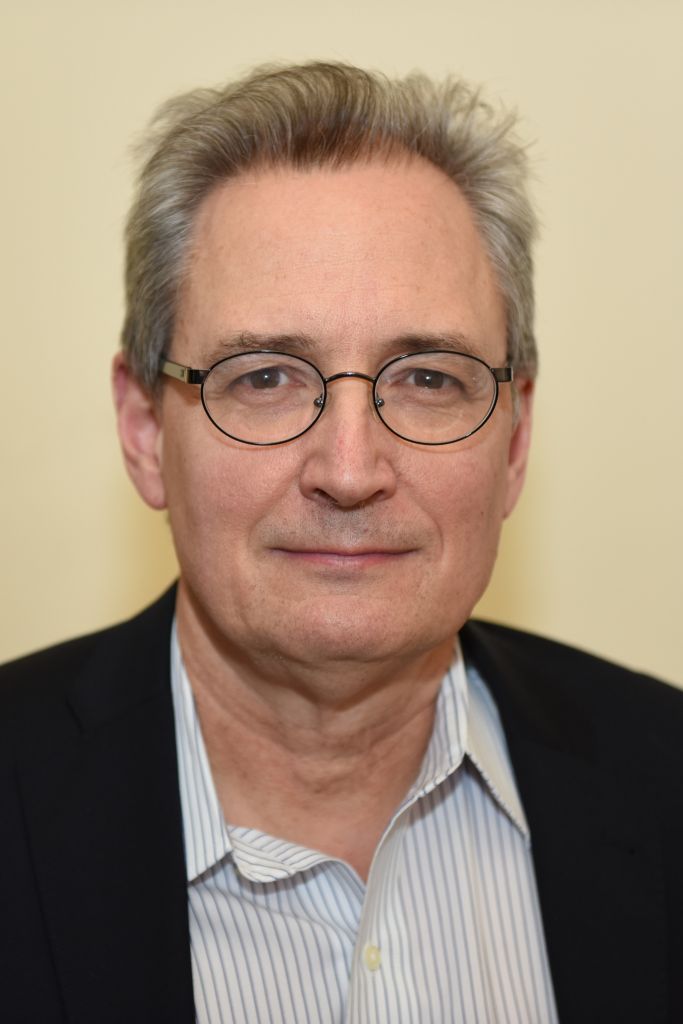
There was an expectation on Netanyahu’s part, Allin says, that Jewish Democratic congressmen and senators would launch a strong attack on the Iran nuclear deal.
But that never happened. This was a major miscalculation by the Israeli government, Allin believes.
“Despite what Netanyahu thinks,” Allin says defiantly, “Obama is not an aberration.”
Obama’s outlook on international relations, both authors believe, is what the United States is slowly becoming over time: multicultural, and, crucially, more liberal.
At times it seems that xenophobia, gun violence, police brutality, and a barreling Trump campaign have shaken the foundation of US politics, dividing the country on issues of race and ethnicity and turning the country more inward and rightward. On the surface, this indeed may well appear to be the case, both authors agree. However, their argument — that Israel is moving to the right, while America moves gently but perceptibly left — they say, is neither linear nor uncomplicated.
Mostly, it’s to do with changing demographics.
A growing Hispanic population has ensured that the United States is becoming more politically liberal overall despite the growing right-wing populism the country is presently experiencing, they say.

Meanwhile, inverse changes are underway in Israel. IDF officer candidates are much more likely to identify themselves as religious than they were a decade ago. And there are political moves to further define the State of Israel by its religion. In 2015, for example, the Knesset debated a bill that would have made Israel “the nation state of the Jewish people.”
By default, the authors argue, if the relationship between the two countries keeps moving in opposite directions, the United States will no longer have a deep emotional and cultural commitment to Israel, a country they believe is shifting drastically to the right.
“It’s really difficult to see how the health of Israeli democracy can improve when there is permanent Israeli control over a large body of Palestinians who do not have political say in the way the regime is run,” Allin says with conviction.
Allin believes Israel cannot control the Palestinians in the West Bank forever without granting them political rights and still remain a democracy. It’s an argument which has been present in mainstream Israeli politics for years. Many Israelis who share the belief, however, also share Netanyahu’s repeated assessment that the region is too unstable, and the current Palestinian leadership too unreliable, for Israel to attempt high-risk territorial compromise. As with the Iran deal, this question has been a great source of friction with the Obama administration.
Since the 1967 Six Day War between Israel and neighboring Arab nations, it’s always been the official position of the United States government that negotiations should lead to withdrawal from these territories, he says.
For nearly 50 years, says Allin, “Americans have had a visceral understanding of Israel’s situation. Yes, Israel was an occupying power, but this was against its will, at least initially. So American support continued. And the alliance has grown stronger over this period.”
“Now there are greater levels of coercion required to maintain the status quo,” says Allin. “But this is something that has long been understood by Israel’s close ally the United States as a situation that arose out of the 1967 war.”

“This situation is unfortunate,” says Allin. “But it’s one that is involuntary and temporary. And that is still the American position. Americans have a lot of understanding for Israeli dilemmas in this regard. But as the possibility of a two-state solution fades, one has to ask the question: What is the future?”
One of the key issues regarding the future of US-Israel relations has been the fixation on settlements. Those on the Israeli religious right have been particularly upset by the United States’ insistence that settlements must stop.
Settlements present some of the most difficult issues in reaching an agreement between Israelis and Palestinians, both Allin and Simon believe, predominantly because the conflict is over land many see as their ancestral home. The issue is emotional and leads to passion and fanaticism on both sides of the conflict.
“The Obama administration’s point on this is very simple. If [Israelis] are going to continue to build on land that is the subject of negotiation, it’s going to present political obstacles to a [peace] settlement,” says Allin.
“The George W. Bush administration held the same view,” Allin also points out. “It helped to promulgate a road map which said settlement activity should stop. As a friend of Israel, the president of the United States has an obligation to say to his Israeli counterpart, ‘You are at risk [with these settlements] of endangering the democratic and Jewish future of your country.'”
In “Our Separate Ways,” Allin and Simon discuss how the settler population has changed drastically since the early days of settlement construction nearly half a century ago. The change has affected both population numbers and political voting patterns, they believe.
Until the early 1990s, population growth resulted from Israelis moving to the West Bank.
The implication was that if there was a policy decision to prohibit settlement immigration, growth of settlements could be slowed or halted.
However, by the late 1990s, settler birthrate had exceeded growth owing to new arrivals. In 2011, for example, both Simon and Allin cite the fact that 3,600 Jews moved to the West Bank, but nearly 11,000 Jews were born there.
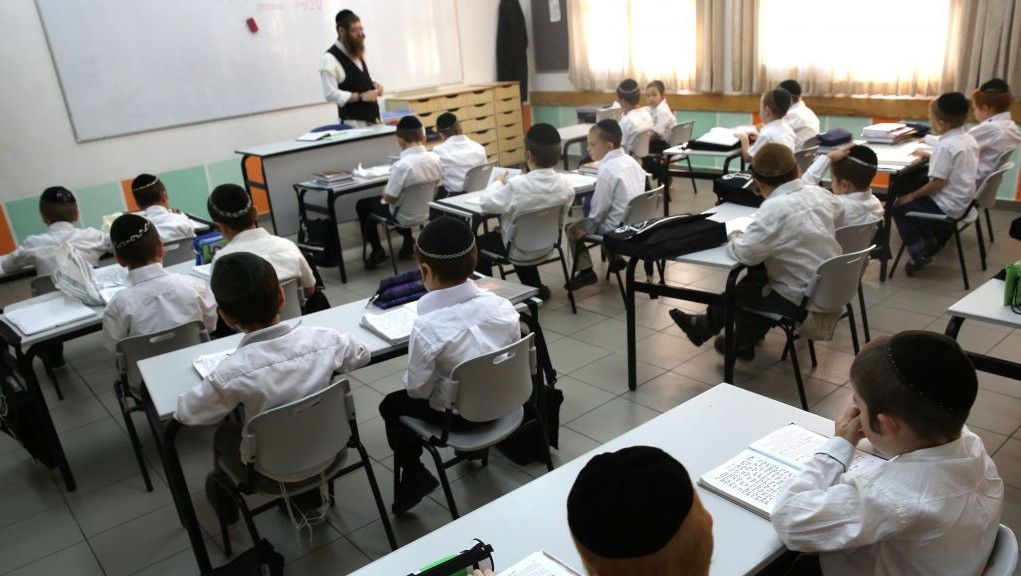
Moreover, demographers, Allin and Simon say, predict this trend to increase because of the growing number of ultra-Orthodox Jews who have been relocating to the West Bank.
In 1991 only about five percent of settlers were ultra-Orthodox. By 2011, they constituted 30 percent of the population. By the end of this decade, their share will account for 40 percent of the settler population. Fertility rates among ultra-Orthodox women is on average 7.7. This compares to a fertility rate of just 3.1 for West Bank Palestinians.
Simon believes that the settlement issue is not just about population numbers. It has also created political allegiances to right-wing parties from certain — but not all — ultra-Orthodox Jews.
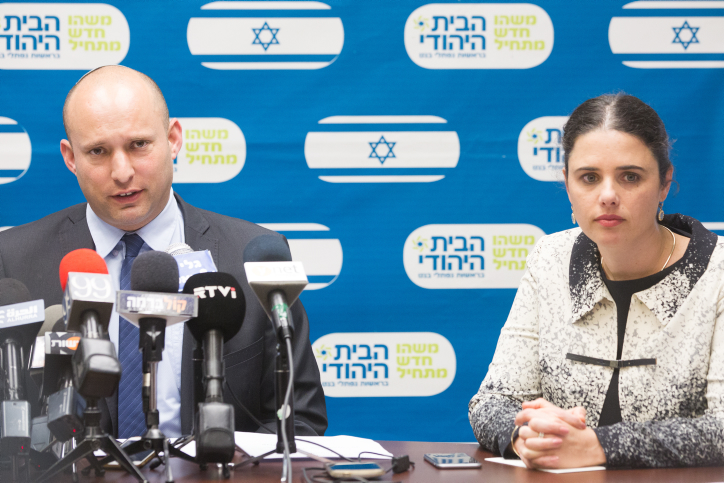
“An interesting phenomenon, going back to the 2005 elections, has been an increase in Haredi votes for non-Haredi right-wing parties,” says Simon. “And more broadly, there is an overlap, in terms of territorial interests, between the national religious parties and the ultra-Orthodox parties.”
“Secular right wing parties have consistently been more capable of outbidding left wing parties for ultra Orthodox collaboration in the coalition formation process that follows national elections. In the last Knesset session, even Naftali Bennett’s moderately right wing party had to give up a legislative measure that would have compelled ultra-Orthodox males to serve in the army,” they write.
‘Even a Congress that is energetically pro-Israel cannot get behind settlements’
In reading “Our Separate Ways,” it is at times unclear if the authors truly have a handle on Israeli politics. For example, few political thinkers in Israel would call Bennett’s Jewish Home party “moderately right wing.” Also, in their book, Simon and Allin neglect to address the anti-nationalism inherent in most ultra-Orthodox ideology — an important insight into their settlement practices.
What is clear is that the authors believe the settlements to be the crux of any future peace agreement.
“What Israelis have to remember,” Simon says, “is that even a Congress that is energetically pro-Israel cannot get behind settlements. And they think a freeze is a good idea.”
What’s also making the settlement issue so difficult, Simon and Allin argue, is the impractical nature of Netanyahu’s diplomacy at times, particularly his insistence that Palestinians must formally recognize Israel as a “Jewish state.”
“A Jewish state has always been what America supports. But in a de facto sense,” Allin explains.
“There are dilemmas here,” Allin goes on. “Because it’s a Jewish state and that’s the idea that America supports. But it’s a state for all of its citizens, a fifth of whom are not Jewish. And the question is, what is this demand [by Netanyahu] during this particular period of negotiation history really meant to accomplish? I don’t think we really know.”
There is a deep desire on the part of many Israelis, Simon interjects, “for Palestinians to take an official position — in a very dramatic fashion and in explicit terms — that repudiates Palestinian claims to the land of Israel. To make clear that Israel is a homeland for the Jews.”
“One can understand why this is important to so many Israelis who feel anxiety on this issue,” Simon allows.
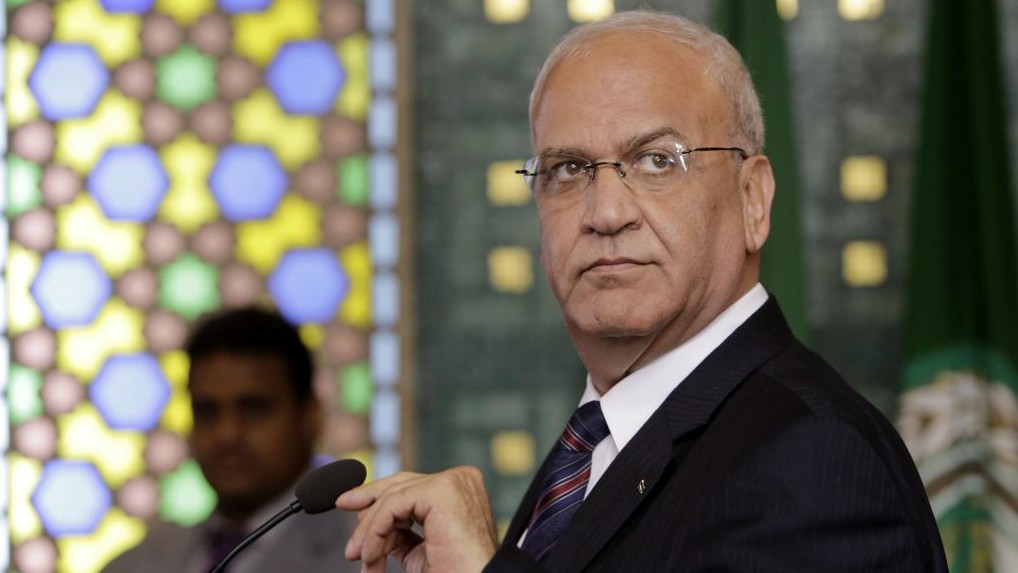
“Israelis feel if Palestinians don’t acknowledge this, no peace agreement will ever suffice, because Palestinian aspirations will continue to include all of Israel, not just the West Bank and Gaza.”
Israelis want to get some kind of incontrovertible acknowledgement from the Palestinians that will alleviate this anxiety, Simon believes.
But this sort of a statement — certainly in advance of an agreement — “would be impossible for Mahmoud Abbas, or any Palestinian leadership, to sign onto,” says Simon.
“And that’s created yet another barrier for a [peace] settlement, which is a real pity,” Simon adds.







The Times of Israel Community.