

Freed migrants head to the big city, despite bans
Immigration officials arrest 20 people in Tel Aviv, as cities seek to deter 1,200 detainees released by court order
 Add ToI as a Preferred Source on Google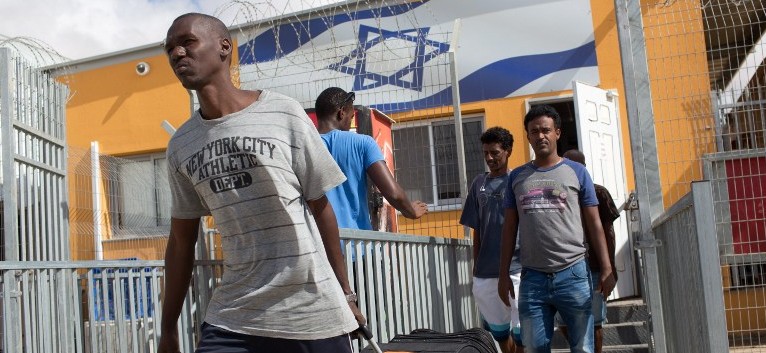
Many of the first wave of African migrants released from the Holot detention center in southern Israel were heading north Tuesday, hoping to reach the larger cities and possible work opportunities, despite a ban on them entering the major industrial hub of Tel Aviv, as well as Eilat and Arad in the south.
Officials from the Population and Immigration Authority swung into action shortly after the first of two court-ordered releases, and arrested 20 illegal migrants who had already reached Tel Aviv, the Haaretz daily reported.
Some 600 migrants detained at the Negev facility were released Tuesday after the High Court of Justice ruled earlier this month that migrants could not been detained by the state for more than 12 months. Another 600 or so were due to be freed Wednesday.
Interior Minister Silvan Shalom on Sunday issued a ban on the migrants entering Tel Aviv and Eilat, while Arad Mayor Nissan Ben Hamo said that they would not be permitted to enter his city, and urged local residents to enforce the ban. Currently several hundred migrants live in Arad.
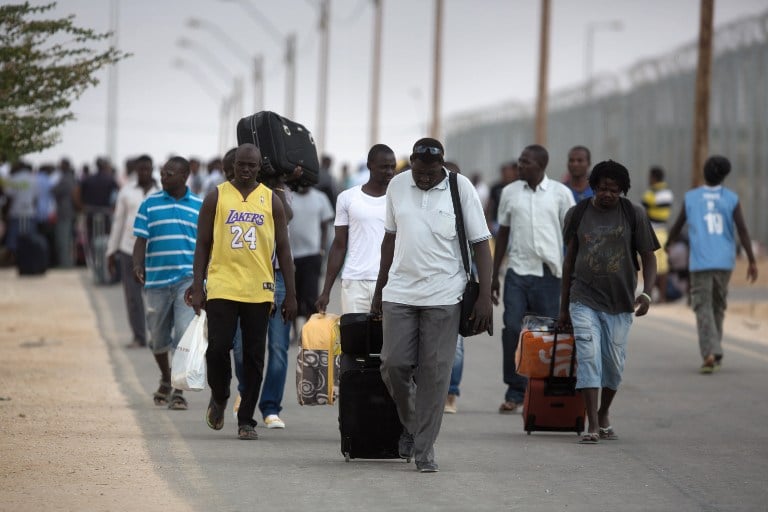
A police officer stopped alongside a group of migrants who had alighted Tuesday in the southern city of Beersheba and, notebook in hand, asked where they were headed, Channel 2 reported. “Jerusalem, why do you ask?” one of them responded. “Just asking,” the officer said, and continued on his way.
“He asked because we’re forbidden from going to Tel Aviv,” a migrant identified as Tuskum, who was released earlier that morning, told Channel 2. “People are dispersing to all kinds of places. It could be that people will continue to Tel Aviv, but they won’t tell you.”
“Some of the [migrants] went to Neve Shaanan Street [in Tel Aviv] to buy some things,” Mutasim Ali, executive director at the African Refugee Development Center, told Haaretz. “Others left the central bus station on their way to Petah Tikva or other places. There they were arrested and put into vans.”
“One of the immigration officers told me that everything was fine and that they were just going to question and then release them,” he said.

There are currently some 47,000 African migrants living in Israel, the vast majority of whom claim asylum seeker status. More than 90 percent of them come from Eritrea, Sudan and the Congo, but Israel has recognized fewer than 1 percent as asylum claims, and since 2009, less than 0.15 percent — the lowest rate in the Western world.
South Tel Aviv has seen multiple protests over the presence of the migrants, with some long-term residents claiming that they have caused an increase in crime to the neighborhoods. Other residents, however, say that this is not the case, and that low municipal investment, general poverty and a high proportion of drug addicts play a role in the dilapidation of the area.









The Times of Israel Community.