

In US wilderness, Palestinian and Israeli girls camp for coexistence
‘Creativity for Peace’ brings together teenage girls for the summer in a bid to bridge emotional fault lines created by 70 years of conflict
 Add ToI as a Preferred Source on Google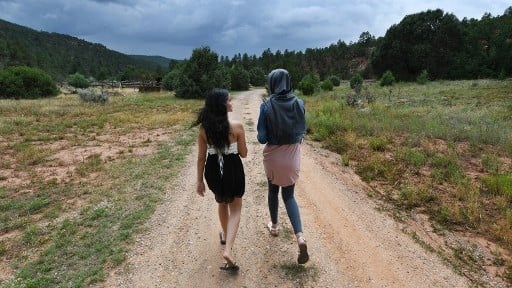
SANTA FE, New Mexico (AFP) — As a young girl during the worst days of the Second Intifada, Liza Masri feared the soldiers patrolling her neighborhood in the West Bank city of Nablus.
But it wasn’t until after the violence of 2000-2005 — in which Palestinian suicide bombers killed hundreds of Israeli civilians in a relentless onslaught — that she felt her anxiety most clearly vindicated, when she witnessed Israeli troops shoot dead her Palestinian neighbor as he smoked a cigarette on his balcony.
“It’s flashbacks I can remember… the ambulance, the way they took him down the building,” the 21-year-old said, as if the intervening decade has suddenly melted away. “We weren’t allowed into the streets. We were afraid they would kill us. It’s something I will always remember — it’s so painful.”
Some years later, her neighbor’s bereaved daughter introduced Masri to “Creativity for Peace,” an organization in Santa Fe, New Mexico, that brings together Palestinian and Jewish Israeli girls in a bid to bridge the emotional fault lines created by 70 years of conflict.
Half a world away from the streets of Nablus, they get together at a ranch in the timbered foothills of the southern Rocky Mountains to hear for the first time the stories of enemies they have grown up learning to hate.
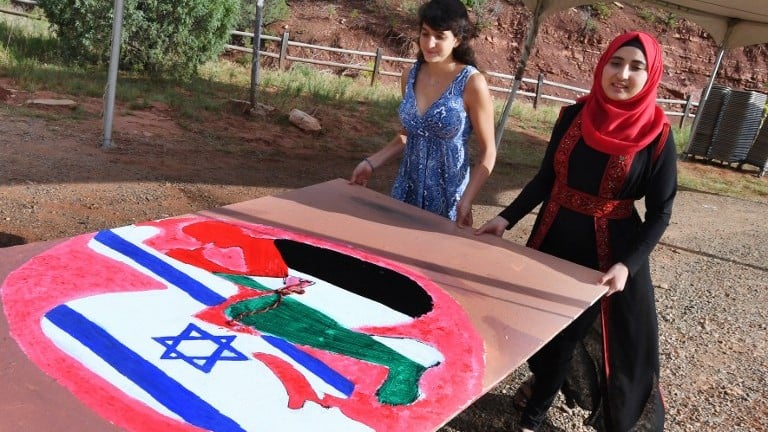
Since 2003 more than 200 girls of ages 15 to 17 have participated in the Creativity for Peace camp, where Masri has returned this year as a “young leader” after taking part in 2013.
It was at the camp that she befriended Naama Shlomy, a Jewish Israeli who lives some 60 miles (100 kilometers) south of Nablus, on the border with Gaza.
Trauma
Shlomy was three years old when her home town of Sderot was targeted by Hamas’s Qassam artillery rockets, the first of an estimated 8-10,000 to rain down on Israel from Gaza since 2002.
Some 30 Israeli civilians have been killed in the bombardment and the psychological trauma has been profound.
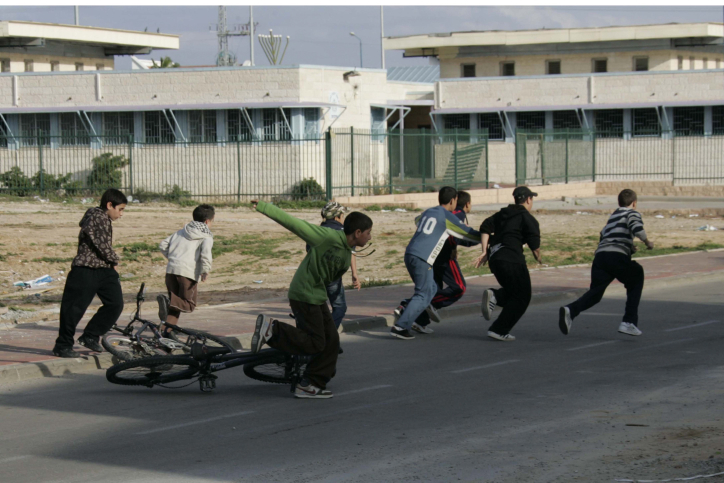
Almost half of Sderot middle schoolers surveyed for the Journal of Adolescent Health in 2008 showed signs of post-traumatic stress disorder, while high levels of miscarriage and depression are a fact of daily life.
“It’s horrible, I can’t describe it. It’s a trauma that’s in me. I’ll need to deal with it for the rest of my life,” Shlomy, 19, explained at an open day as the three-week summer camp.
When Hamas launches a rocket, an alarm sounds and the people of Sderot know they have 15 seconds to get to the nearest shelter, day or night.
“Each time you need to drop everything and go to the shelter. It’s just so stressful to keep worrying about your family all the time, and yourself,” Shlomy said.
Every year up to 20 girls — half Jewish Israelis and half Palestinians from Israel, the West Bank and Gaza — are invited to New Mexico by Creativity for Peace, which is funded privately, notwithstanding a 2015 US government grant.
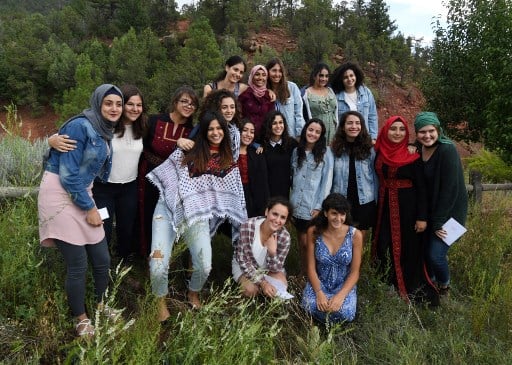
The girls share their experiences of the Israeli-Palestinian conflict as part of a total of 40 hours of dialogue founded on the notion that “an enemy is a person whose story you haven’t heard.”
Using English as their common language, they go shopping, go to the movies, divvy up chores, share bedrooms and attend art therapy classes together.
Almost all have lost family and friends to violence and most will never have spoken to members of the opposite side before.
‘Baby steps’
“We teach our young women that both sides are right and both sides are wrong. Their job is not to debate politics or go over history, but more to understand one another and find common ground,” said Dottie Indyke, executive director for the last 11 years.
The fact that both sides have suffered often comes as a revelation to the girls, although resentment can still run deep.
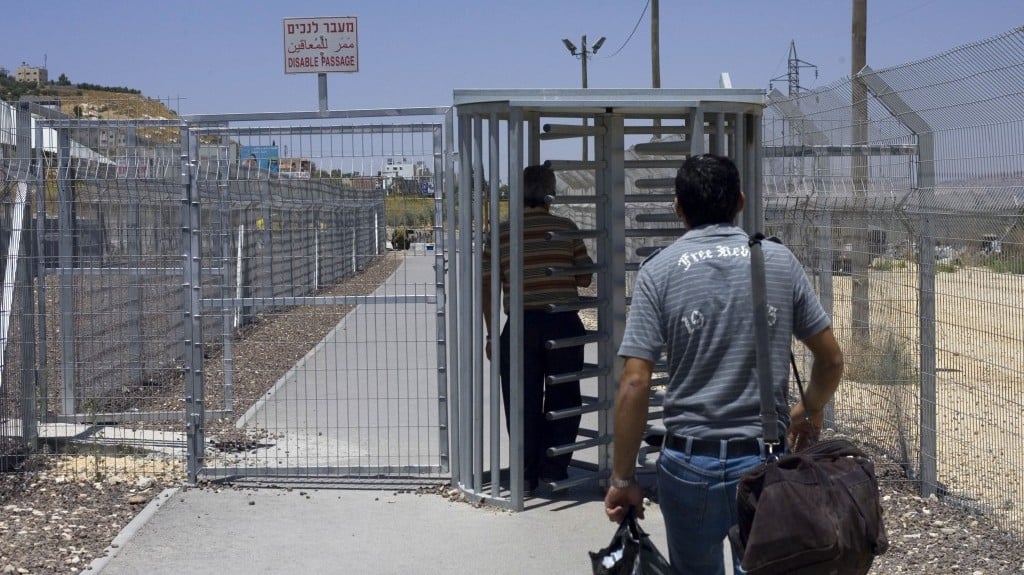
Masri points to the 400,000 Israeli settlers in the West Bank, and the numerous checkpoints surrounding Nablus, a thriving trading post since the days of the seventh century Umayyad Caliphate that now finds itself in penury.
“I understand that we both suffered. It didn’t change my mind towards the other side. I feel them, understand their stories, but that doesn’t mean I should change my perspective, that they are not doing something wrong to my country,” Masri said.
But she is persevering in the process — even turning around her initially unsupportive family — because she believes in the intrinsic value of dialogue as driver of change.
“Maybe we are not resolving the conflict but it’s a long process, it’s about trust,” she said. “As long as we trust the other side many things will start to happen.”
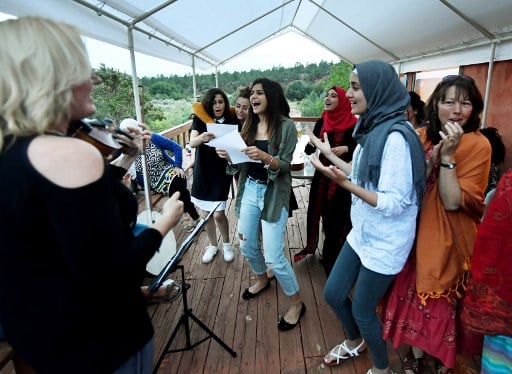
Perhaps the toughest part comes after the camp, when the girls are asked to go back to their communities as “peacemakers” who can be an example of compassion, friendship, and courage.
“Each girl can go to her family and change the way they see things, then they can change their communities,” said Sana Zahalka, 17, another young leader who first came to the camp in 2015. “It’s like baby steps. But they all lead to this amazing big step.”




The Times of Israel Community.