

Iran denies that FM spoke to Israeli newspaper
Spokeswoman accuses Maariv of publishing ‘false news’ about interview with Zarif to torpedo nuclear talks in Geneva
 Add ToI as a Preferred Source on Google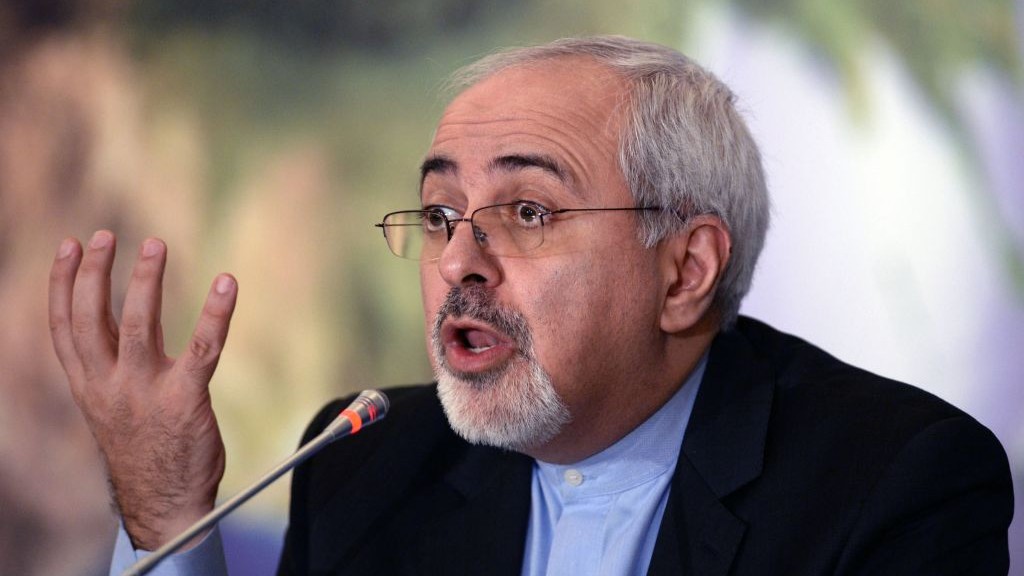
As the second round of talks between Iran and the West kicked off in Geneva Thursday, Iran’s Ministry of Foreign Affairs spokeswoman denied claims that Foreign Affairs Minister Mohammad Javad Zarif had spoken with a reporter from Maariv, which she called “a Zionist regime newspaper.”
“Due to desperation and to get out of the Zionist regime’s isolation,” Marziyeh Afkham said, according to Iran scholar Will Fulton’s translation, “this paper published false news in a vain attempt to create negative space during the new round of negotiations.”
In Thursday’s print edition, Maariv reported that Zarif spoke to its reporter in Paris before a speech at the United Nations Economic, Scientific and Cultural Organization’s General Assembly in Paris, and said “No military option will ever succeed.”
“There is no place for threats about the use of force,” Zarif reportedly continued. “Not every option is on the table. We must continue negotiations in Geneva and find the solution. We are not threatening Israel or others with the use of force.”
Zarif was also asked about the prospect of renewed Iranian-Israeli relations, cut off in the wake of the 1979 Islamic Revolution. “The subject of relations between Israel and Iran is not on the agenda in Geneva,” he emphasized.
The Iranian foreign minister said in Geneva Thursday that a deal over his country’s controversial nuclear program could be reached by week’s end, if all parties strove to reach that goal.
“If everyone tries their best we may have one,” Zarif was quoted by Reuters as saying. “We expect serious negotiations. It’s possible.”
Zarif made the comments to reporters after a preliminary breakfast meeting with European Union foreign policy chief Catherine Ashton.
A senior US official, speaking to reporters on Wednesday, said the six world powers — the US, UK, France, Russia, China and Germany — were ready to offer “limited, targeted and reversible” sanctions relief in response to agreement by Iran to start scaling back activities that could be used to make weapons.
Following Prime Minister Benjamin Netanyahu’s cue, Israeli officials said they wouldn’t accept any compromise short of dismantling Iran’s nuclear research program.
“Israel… has learned that a proposal will be brought before the P5+1 in Geneva in which Iran will cease all enrichment at 20 percent and slow down work on the heavy water reactor in Arak, and will receive in return the easing of sanctions,” an Israeli official told AFP Wednesday, speaking on condition of anonymity. “Israel thinks this is a bad deal and will oppose it strongly.”
But in a nod to skeptics in Congress, the official emphasized that any economic relief given Iran could be canceled, should Tehran renege on commitments it makes in Geneva. She added that the six powers were looking to test the durability of any initial nuclear limits Iran agreed to by waiting — possibly for as long as six months — after such an agreement before any sanctions relief kicked in.
Iran and the P5+1 were set to begin two days of negotiations on Thursday in the latest round of talks aimed at allaying Western fears that Tehran is developing nuclear weapons. The United States is leading Western powers in demanding that Iran not only halt its nuclear development but cut back on its capabilities and stockpiles of enriched uranium and plutonium.
The Associated Press contributed to this report.










The Times of Israel Community.