

Israeli director bids Italian opera farewell
Daniel Barenboim leaves La Scala after demonstrators protest excesses at world-renowned opera house
 Add ToI as a Preferred Source on Google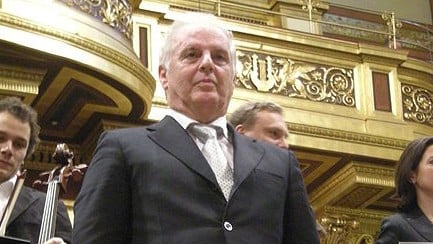
MILAN (AP) — La Scala’s gala season premier “Fidelio” on Sunday marks Daniel Barenboim’s final opening-night bow as musical director as Italian opera enters one of its most tumultuous seasons in memory.
Protesters clashed with riot police outside the famed theater as the curtain rose on the most glittering events on Europe’s culture calendar, attended by leading figures of Italian industry, fashion and politics.
Demonstrators threw eggs at riot police, who prevented them from advancing on the theater. At least one police officer was reported injured. The gala event is regularly targeted by demonstrators for its lavish excess, particularly during recent years of recession.
Italian Premier Matteo Renzi and President Giorgio Napolitano skipped the premiere this year, as the government faces increasing criticism for reforms that are seen as hurting regular workers.
Barenboim’s departure after what he called “nine truly wonderful years” coincides with a change of management at La Scala and generalized disarray in opera houses in the country where the art form was born.
Conductors and artistic directors have recently announced their departures from opera houses in Turin, Genoa and Naples ,and most resonantly in Rome, where star conductor Riccardo Muti quit the strike-plagued Teatro dell’Opera.
Barenboim, the Argentinian-born Israeli conductor, leaves La Scala at the end of the year, putting his energy into a new academy for Middle Eastern musicians in Berlin, where he is also music director of the Staatsoper. He also acknowledged that a bureaucratic impediment that prevented him from programing next year’s season-opener during the interim between general managers also contributed to his decision to hasten his departure from La Scala.
“Fidelio” stars German soprano Anja Kampe in the title role, alongside Klaus Florian Vogt as the unjustly imprisoned Florestan.
British director Debora Warner kept the staging contemporary, placing the prison where the love story unfolds in an abandoned factory — a choice that she said has particular resonance in light of revelations that disused buildings are being used as unofficial prisons to hold groups of Western hostages in the Middle East.
“I think it is particularly extraordinary to be doing this piece at this moment in a year that we’ve had both Ukraine, we’ve had ISIS beheadings,” Warner said, referring to one of the acronyms the Islamic State group goes by. “There’s a new set of responsibilities.”
Copyright 2014 The Associated Press.



The Times of Israel Community.