

NATO chief says alliance ‘stands together’ on Russia
Jens Stoltenberg says alliance finds itself in uncharted territory: ‘We are not in a strategic partnership, but we are neither in a Cold War situation’
 Add ToI as a Preferred Source on Google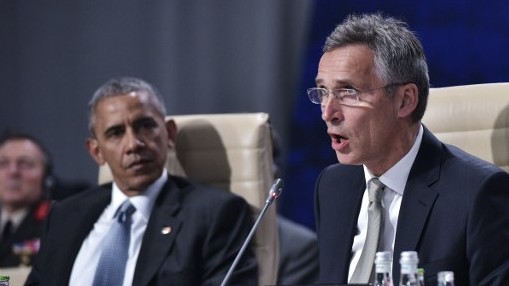
NATO chief Jens Stoltenberg said Saturday that the alliance’s leaders had agreed to maintain a united policy of deterrence and dialogue with a resurgent Russia.
“The main message… is that the alliance is united, we stand together,” Stoltenberg said when asked about talks the 28 NATO leaders had on Russia at a summit in Warsaw on Friday night.
“I am very pleased to see how strong that message is in NATO and how united we are behind that message. The united message from dinner is that defence and dialogue are what our relationship is based on.”
Asked if he agreed with French President Francois Hollande’s comments on Friday that Russia was not a threat but a partner, Stoltenberg said NATO was now in an entirely new situation.
“We don’t seen any imminent threat against any NATO ally,” Stoltenberg said.
“Russia is neither a strategic partner — we are not in the strategic partnership with Russia which we tried to develop — but we are neither in a Cold War situation,” he added.
“We are in a new situation which is different to anything else we have experienced before.”
NATO leaders on kept up the pressure on Russia over Ukraine, stressing the need for unity and a no-nonsense dialogue in dealing with a more aggressive Moscow.
The 28 NATO nations, led by US President Barack Obama at his last alliance summit, on Friday endorsed their biggest military revamp since the end of the Cold War in response to the Ukraine conflict.
The plan includes deploying four battalions of around 1,000 troops each in Poland and the Baltic states to act as a tripwire against any fresh Russian adventurism in its Soviet-era backyard.
“The decisions we took yesterday are of historic importance. I believe that NATO showed very clearly that we stand united, we stand firm,” Estonian Prime Minister Taavi Roivas said at the summit in Warsaw.
Leaders will discuss Ukraine with President Petro Poroshenko on Saturday.
Diplomatic sources said that at a dinner late Friday, leaders devoted most of their time to Russia and agreed that only a firm stand would get President Vladimir Putin to mend his ways, especially in Ukraine.
“The unanimous view now is that NATO has to be firm and united. There was unanimous support for NATO’s dual approach” of deterrence and dialogue, a NATO official said.
NATO head Jens Stoltenberg announced earlier this week that the alliance would hold fresh talks with Russia on Wednesday as a gesture of the West’s openness and good faith.
Lithuanian President Dalia Grybauskaite, a sharp critic of Putin, said a stronger NATO would be better able to talk to Russia.
“I am softening” on the need for dialogue, Grybauskaite told AFP when asked if she was happy to see NATO upping its game.
“We are not closing ourselves (behind) an Iron wall …it is saying that we are united and strong and because of that we can be open, not afraid and talk with you,” she said.
Putin is unlikely to miss the symbolic importance of the summit being held in Warsaw, the birthplace of the Soviet-era Warsaw Pact.
Moscow bitterly opposes NATO’s expansion into its Soviet-era satellites, which it sees as a threat to its own security.
NATO head Jens Stoltenberg announced earlier this week that the alliance would hold fresh talks with Russia on Wednesday as a gesture of the West’s openness and good faith.
Lithuanian President Dalia Grybauskaite, a sharp critic of Putin, said a stronger NATO would be better able to talk to Russia.
“I am softening” on the need for dialogue, Grybauskaite told AFP when asked if she was happy to see NATO upping its game.
“We are not closing ourselves (behind) an Iron wall …it is saying that we are united and strong and because of that we can be open, not afraid and talk with you,” she said.
Putin is unlikely to miss the symbolic importance of the summit being held in Warsaw, the birthplace of the Soviet-era Warsaw Pact.
Moscow bitterly opposes NATO’s expansion into its Soviet-era satellites, which it sees as a threat to its own security.




The Times of Israel Community.