

No love and no friendship
Thursday’s papers spotlight dark clouds over the planned Jerusalem pride march and Netanyahu’s coalition
 Add ToI as a Preferred Source on Google
Raoul Wootliff is a former Times of Israel political correspondent and Daily Briefing podcast producer.

In Jane Austen’s epistolary novel “Lady Susan,” adapted to the big screen and released this week in Israeli cinemas as “Love and Friendship,” the eponymous protagonist subverts all the standards of the traditional romantic novel as she seeks a new husband for herself and one for her daughter through selfish, unscrupulous and scheming means.
Thursday’s Hebrew papers similarly twist and undermine the themes of love and friendship, casting a dark cloud over the Jerusalem pride march planned for the afternoon and the bonds keeping Prime Minister Benjamin Netanyahu’s coalition together.
A year after Jerusalem’s pride parade was beset by deadly violence and amid a roiling scandal of anti-gay comments by prominent rabbinical figures, police on Wednesday, fearing a repeat attack, arrested the brother of the man who stabbed a woman to death at last year’s march, and the capital’s mayor said he would not be attending fear of offending the religious community.
Israel Hayom leads its front page with the headline, “Preparations for the march,” followed by a list of the controversies leading up to the event.
The two-page spread on the run-up to the march offers detailed reports on statements made by police and public officials, but the paper seems to opt out of taking a clear stance, nor does it present its readers with any analysis to help understand the melee.
The only opinion piece on the march in Israel Hayom comes towards the end of the paper in the form of a short piece by Oded Freid, the former head of the Union for LGBTQ Rights, who slams recent statements by religious and political leaders against the march.
“Many people ask me why we need to march at all? It’s clear that in the State of Israel in 2016 some leaders still see it acceptable to incite hatred to the point where a 16-year-old girl is murdered in the street in broad daylight. The community marched, continues to march and will not stop until we get to a day when we won’t need to march any more,” Freid writes.
Yedioth Aharonoth follows up on its Wednesday interview with Barkat in which he first said he would not attend the march, examining the widespread criticism he has received since it was published.
“The statements made by Jerusalem Mayor Nir Barkat have, as expected, caused a huge storm,” the paper reports before quoting numerous disparaging responses.
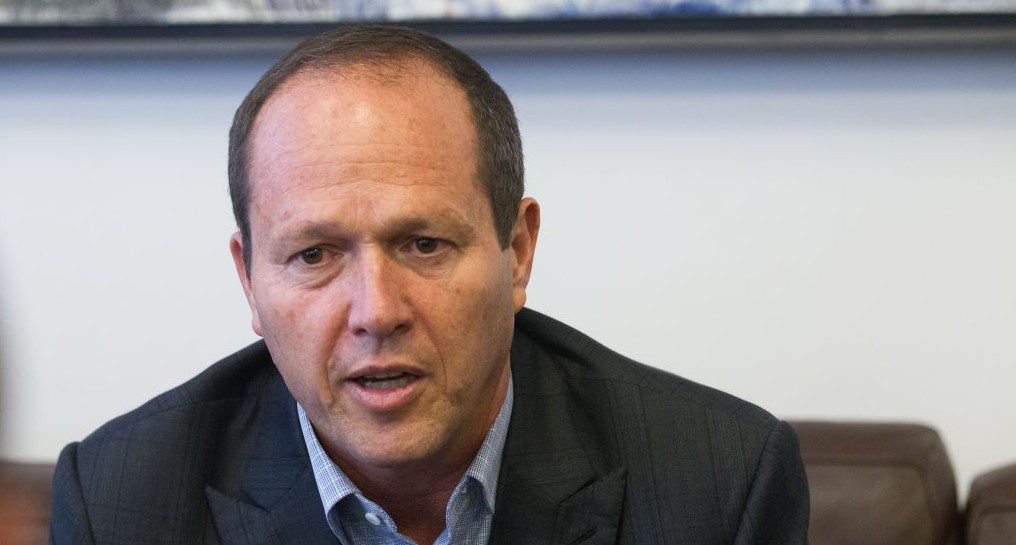
Columnist Itai Segal writes that Barkat, along with others, has made him realize the need to join the march. “I didn’t plan to march in this years parade,” he writes, “but they haven’t given me any choice.”
Haaretz, while not including the story on its front page, dedicates its daily editorial to the issue, calling on citizens to “come and march,” in light of Barkat’s statements.
“Barkat did not resort to the kind of language used by Rabbi Levinstein [a yeshiva head who called LGBT people “deviants”], but what difference does it really make when the mayor announces that he won’t attend the parade, essentially placing himself on the same side as Levinstein?” it reads. “Barkat’s depiction of the gay pride parade – which is a march for the cause of equality for an oppressed group – as offending the sensitivity of others is unacceptable… A large public presence today is important: It will signal to Barkat that his arguments and his absence are not legitimate, and most importantly it will signal a rejection of the path of rabbis like Levinstein.”
From the challenges of love to the pitfalls of friendship: the dailies also give prominent coverage to latest rumors of a coalition crisis with senior members of the cabinet criticizing the prime minister for canceling the planned reform of the public broadcasting company.
The Israel Broadcasting Authority, which was set to close and make way for a new Broadcasting Corporation in September, received an unexpected reprieve Tuesday, when Netanyahu decided to wait until the beginning of 2018 to complete the move.

Since coalition members have promised to support the prime minister in any decision relating to the communications portfolio which he holds, the latest criticism of the move by both Finance Minister Moshe Kahlon of Kulanu — who indicated Wednesday he would vote against it — and Education Minister Naftali Bennett of the Jewish Home could spell trouble ahead.
“Under the coalition agreement, we’re committed to support initiatives advanced by the communications minister, but we aren’t committed to support canceling reforms that were already approved… Changing dates isn’t a reform, but the cancellation of a reform,” Haaretz quotes senior unnamed coalition members as saying.
“As part of the coalition agreements between Kulanu and Prime Minister Netanyahu’s Likud party, budget transfers exceeding 10 million shekels must receive the finance minister’s approval. In this case the money which will need to be transferred in order to implement the delay must be approved by Kahlon,” reminds Yedioth Aharonoth of the significance of Kahlon’s opposition.
Bennett’s and Kahlon’s opposition gained them the praise of Haretz’s chief political commentator Yossi Verter who lavishes them with unprecedented compliments.
“Bennett, for the second time this week, showed the leadership and statesmanship that are so lacking in the man who heads the government (the first time was when Bennett attacked the words of a religious-Zionist darling, Rabbi Yigal Levinstein). The head of the Kulanu party, Finance Minister Moshe Kahlon, also made a statement, generally regarded as too feeble and mainly technical, against the postponement of the Public Broadcasting Corporation,” Verter writes. “The preservation of Israeli democracy is now in their hands. Netanyahu has no leverage over them.”

Only Israel Hayom, considered vehemently pro-Netanyahu, leads its story on the criticism with Netanyahu’s response (conveniently mentioning itself), plastering on its front page: “Netanyahu: Freedom of press? Then why did they want to close Israel Hayom?”
Their report focuses heavily on what Netanyhau said, pointing out that some of the same people trying to call him out for limiting press freedom attempted to close down Israel Hayom not much more than a year ago.
Haim Shine, uses his Israel Hayom piece (titled, “The two-faced Bennett,”) to come to Netanyahu’s defense, as he often seems to.
“Politicians need to always remember that in the era of Google, the internet and social media, you cannot rewrite history, it is very difficult to change your mind, and things that you have one written cannot easily be destroyed. In this case, when they [Netanyahu’s adversaries] express worry for democracy in the name of lofty ideals, they they are playing a dirty game of manipulation,” he writes in words that (had Google existed in the 18th century ) could just as well be used to describe Lady Susan.










The Times of Israel Community.