

Palestinian mom of Israeli soldier in 21-year fight for citizenship
West Bank woman married an Israeli Arab and moved here decades ago; she is now ill but ineligible for medical treatment
 Add ToI as a Preferred Source on Google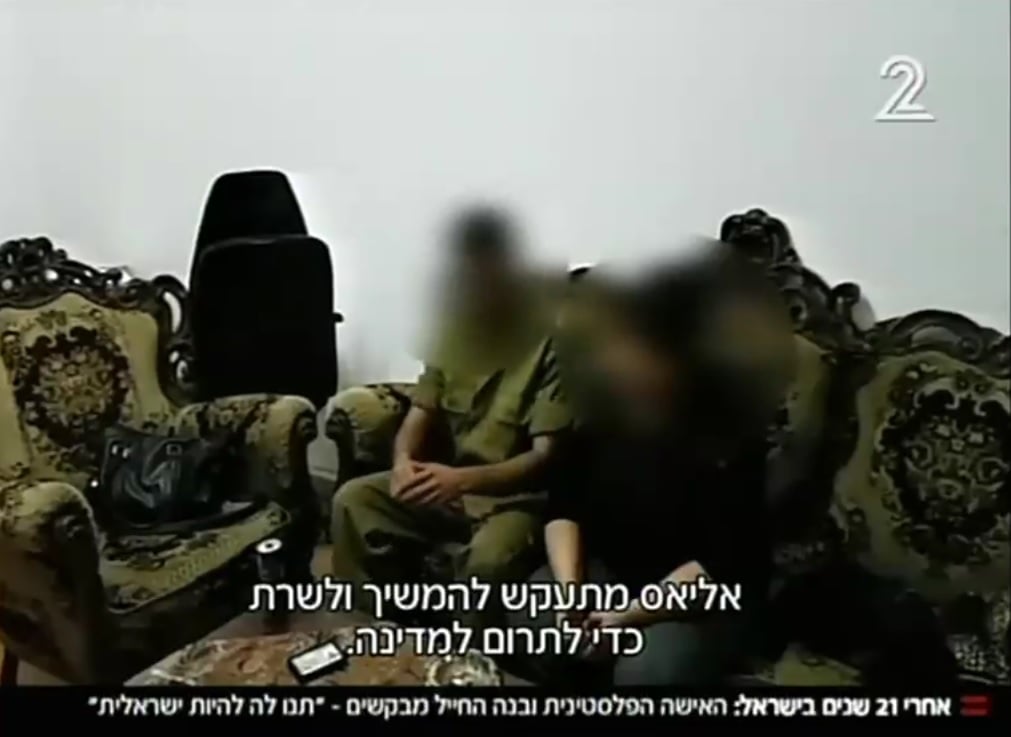
A Palestinian woman whose late husband was an Israeli citizen and whose son serves in the Israel Defense Forces has been denied Israeli citizenship for the past 21 years.
According to a report by Channel 2 TV on Wednesday, the woman — who was not identified — was originally from the West Bank city of Jenin and moved to Israel after marrying an Arab Israeli man from Haifa over two decades ago. Her husband has since died and she is ill, but remains unable to get medical insurance or work in Israel because she is not a citizen.
“She cannot receive treatment. It is infuriating. We are degraded by the state. I am disappointed because there are people who came to Israel recently and have already received an ID card and everything,” her son, Elias, who currently serves in the IDF, told Channel 2.
In most cases, a spouse of an Israeli citizen may apply for — and receive — citizenship on the basis of family reunification.
Family reunification in Israel typically involves an Israeli citizen requesting citizenship for his or her non-Israeli spouse. Israel’s Citizenship and Entry into Israel Law makes citizens of Iran, Afghanistan, Lebanon, Libya, Sudan, Syria, Iraq, Pakistan, Yemen, the West Bank and Gaza Strip ineligible for the automatic granting of Israeli citizenship and residency permits due to security concerns.
Most unification applications are submitted by Israeli Arabs on behalf of a Palestinian spouse living in the West Bank or the Gaza Strip. Although they are unable to apply for citizenship under family unification, they may apply on humanitarian grounds.
There are thousands of families in Israel that are prevented from gaining citizenship according to Adalah: The Legal Center for Arab Minority Rights in Israel.
“There are at least 25,000 families that are affected by this racist law. There are only 8,000 people who have residence permits. Only they have permission to work,” Sawsan Zaher, an Adalah attorney, told Channel 2.
The Interior Ministry told the news channel, “It seems that she is a resident of the West Bank living in Israel with a temporary permit. Recently the letter of her lawyer was transferred to the humanitarian affairs committee for residents of the region, to examine the case and circumstances.”
There has been continued concern in Israel about granting residency to Palestinians after the Shin Bet security service revealed in March that several Palestinians who carried out terror attacks had recently received — or were in the process of applying for — residency status in Israel.
“The family reunification process, which is based in humanitarian concerns, allows Palestinians with relatives who are residents of Israel to enter [the country] without incident,” the Shin Bet said.
“But recently it has come to light that a number of terror attacks have been carried out by those who have received this status,” the service added in a statement.






The Times of Israel Community.