

Republican ads attack Trump even more than Clinton
Dozens of attack videos against front-runner are sponsored by members of his own party, in effort to prevent his nomination
 Add ToI as a Preferred Source on Google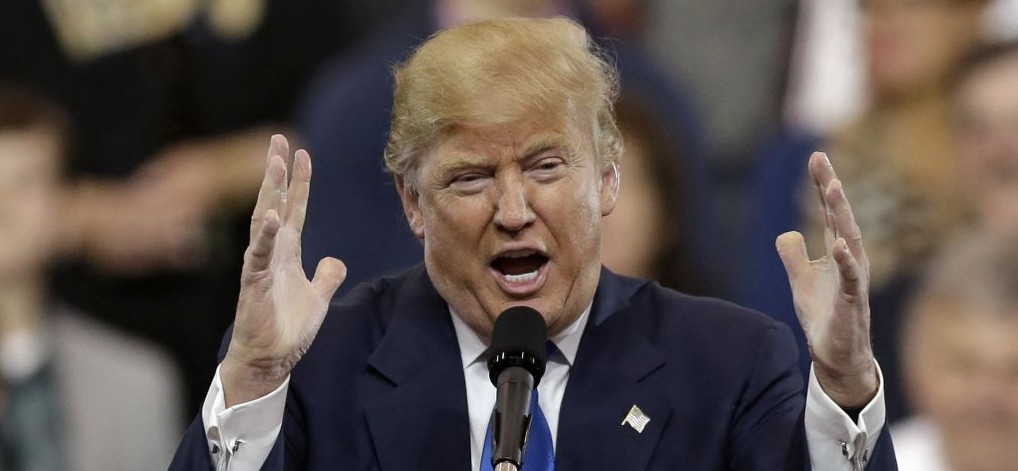
WASHINGTON — “Bimbo. Dog. Fat pig,” disgusted women say, looking straight into the camera. Another explains, “Real quotes from Donald Trump, about women.”
Another commercial features a 30-second, bleeped-out series of his coarsest comments.
Both ads, and dozens more that portray Trump as a selfish, deceptive buffoon, are sponsored by fellow Republicans trying to derail the political outsider from capturing their party’s presidential nomination.
An Associated Press review of political ads tracked by Kantar Media’s Campaign Media Analysis Group found 68 different anti-Trump commercials have been shown some 40,000 times across the country on broadcast television.
About one of every 10 presidential ads shown over the past year has taken a shot at Trump, a rate that has picked up this month as polls suggest the billionaire’s already low favorability ratings with the general public are deflating.
https://www.youtube.com/watch?v=hgzGtNJ4FFA
Trump is facing a heavier onslaught of attacks from his own party than Hillary Clinton, the Democratic front-runner. The AP found just one in 33 ads attacks Clinton, most coming from Republican groups. Her primary opponent, Vermont Sen. Bernie Sanders, never mentions her by name, but his ads take oblique jabs at her for accepting Wall Street money.
Democrats say they’re closely monitoring the Republican ads.
Justin Barasky, spokesman for Priorities USA, the best-financed of the pro-Clinton groups, said Republicans are “saving us money by beating him up.” Priorities is reserving $70 million in commercial time for the general election starting late summer, and Barasky said the group anticipates it will begin spending against Trump even sooner.
For his part, Trump has said the attack ads aren’t working, pointing to his decisive victory in Florida in the face of a multimillion-dollar effort there to tear him down. Responding to the ad featuring his comments on women, Trump told CNN this week that “half of that was show business.”
Trump’s Republican attackers argue their efforts are worth it, even if they ultimately weaken their party’s nominee.
“I don’t see the ads as the risk; he is the risk,” said Tim Miller, a spokesman for Our Principles, which has spent more than $16 million this year on TV, radio and digital ads, including the spot featuring women reading Trump comments. “That’s the point we’re trying to make. Don’t nominate someone this vulnerable to attacks from the Democratic Party.”
A similar scenario played out four years ago with Mitt Romney.
At the start of the 2012 Republican primaries, more voters had a favorable than unfavorable view of Romney. During the primaries, though, the super political action committee backing Newt Gingrich portrayed him as an unfeeling businessman.
By the time Romney earned the nomination, his numbers had flipped, with more voters viewing him negatively than positively. Over the summer, Priorities USA built on the Gingrich group’s approach to attack Romney in the general election.
Events could unfold similarly for Trump.
An NBC News-Wall Street Journal poll conducted in March found a slight increase in negative ratings of Trump among registered voters since their previous survey in February, from 59 percent to 64 percent, with “very negative” ratings going from 49 percent to 54 percent.
March has also seen a proliferation of anti-Trump advertising, according to AP’s analysis of more than 250 political advertisements on broadcast TV and national cable over the past year. Ads were classified as opposing Trump or Clinton based on whether they attacked either candidate by name or by displaying his or her photo.
Copyright 2016 The Associated Press.










The Times of Israel Community.