

Silent meditation and survivors’ embraces as pope visits Auschwitz
‘Lord, forgive so much cruelty,’ Francis writes in the memorial book at the Nazi death camp after he tours the site without speaking
 Add ToI as a Preferred Source on Google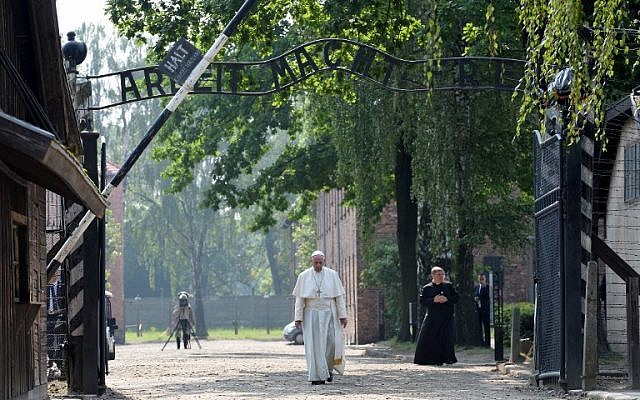
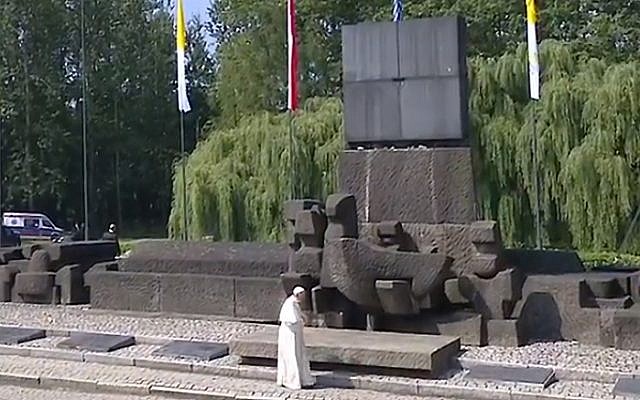
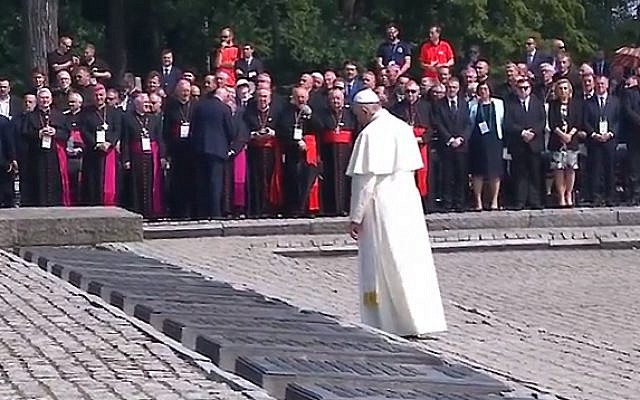
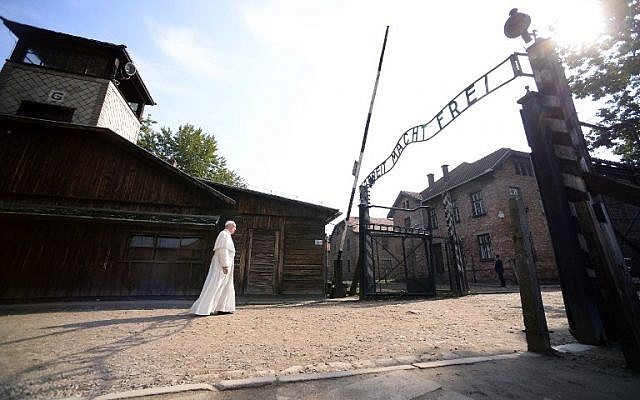
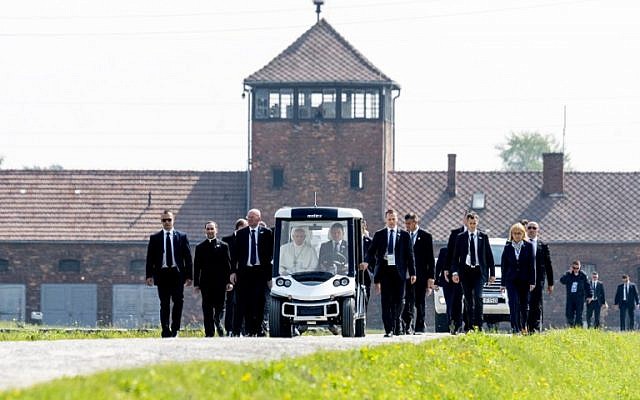
OSWIECIM, Poland (AFP) — Pope Francis walked alone Friday through the notorious wrought-iron “Arbeit Macht Frei” (Work Makes You Free) gate as he visited the former Nazi death camp Auschwitz-Birkenau.
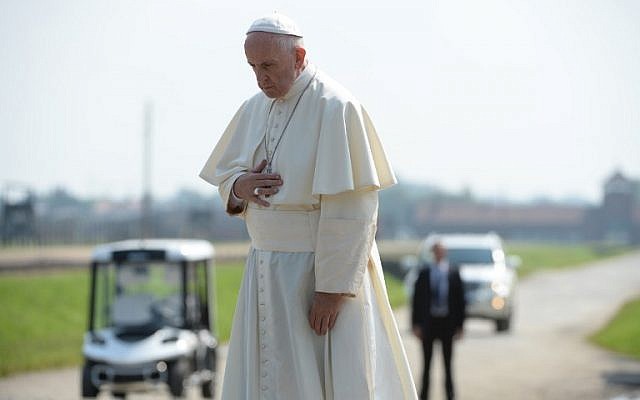
Free for once of his security entourage or cardinals, he sat on a bench among the trees and bowed his head in prayer, remaining at length in silent contemplation before meeting Holocaust survivors.
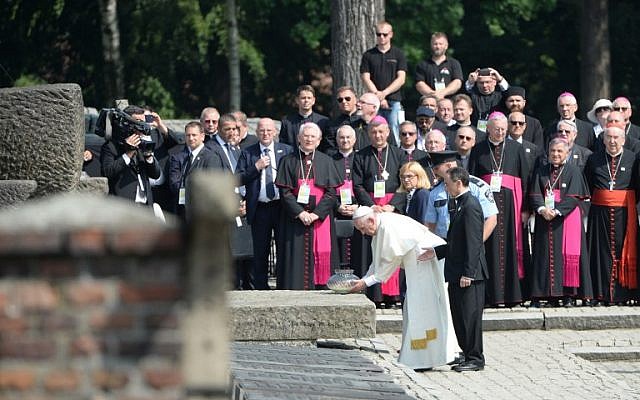
In front of the death wall where the Nazis summarily executed thousands of people by firing squad, he tenderly kissed the former prisoners.
Among them was Helena Dunicz Niwinska, a 101-year-old woman who played the violin in the Auschwitz orchestra, as well as inmates who worked at the camp hospital or who were there as children.
“It was very moving,” 86-year-old survivor Janina Iwanska said after meeting Francis.
“I wanted to kneel before him, but he took me in his arms and kissed my cheeks.”
Fellow survivor Alojzy Fros, who is 99, still remembered his arrival at the camp.
“Just after I arrived, through an open door I saw naked bodies piled up like logs about a meter high,” he told AFP.
“I’ll never forget it.”
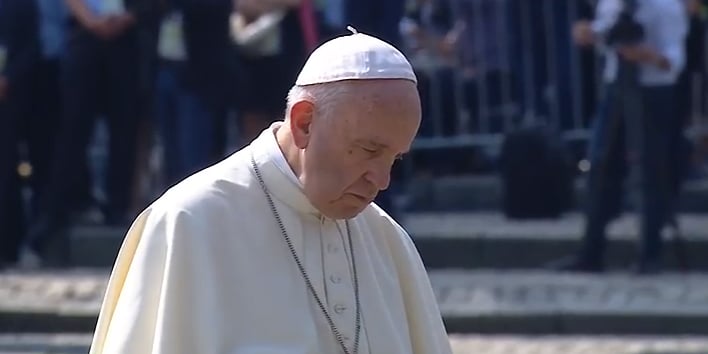
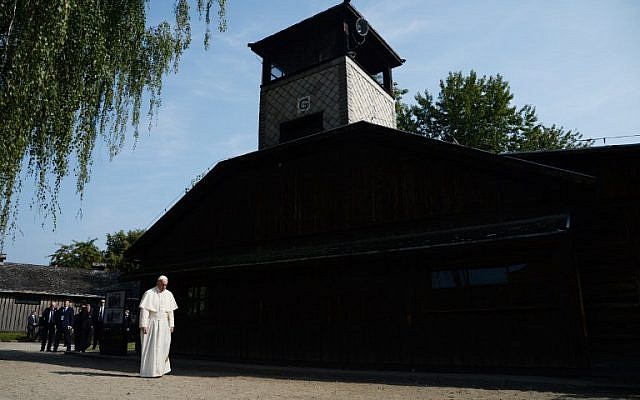
Francis lit a candle in front of the death wall, bowing his head in prayer before visiting the cell of Polish priest and saint Maximilian Kolbe, who died at Auschwitz after taking the place of a condemned man.
The visit falls on the 75th anniversary of the day Kolbe was condemned to death.
Francis cut a solitary figure in the dark, underground cell where the priest was starved then executed.
The Argentine later lead prayers for the 1.1 million people, most of them Jewish, who were murdered at the camp as part of Nazi Germany’s “Final Solution” of genocide against European Jews which claimed six million lives in World War II.
‘Forgive the cruelty’
“Lord, have mercy on your people. Lord, forgive so much cruelty,” Francis wrote in the memorial book.
He had said that rather than making a speech, he would stand in silence to reflect on the horrors committed and let his tears flow.
As he arrived Wednesday in Poland — a heartland of Nazi Germany’s atrocities — the pontiff said the world had been plunged into a piecemeal third world war.
He has repeatedly denounced those committing crimes in the name of religion, after a string of deadly jihadist attacks in Europe.
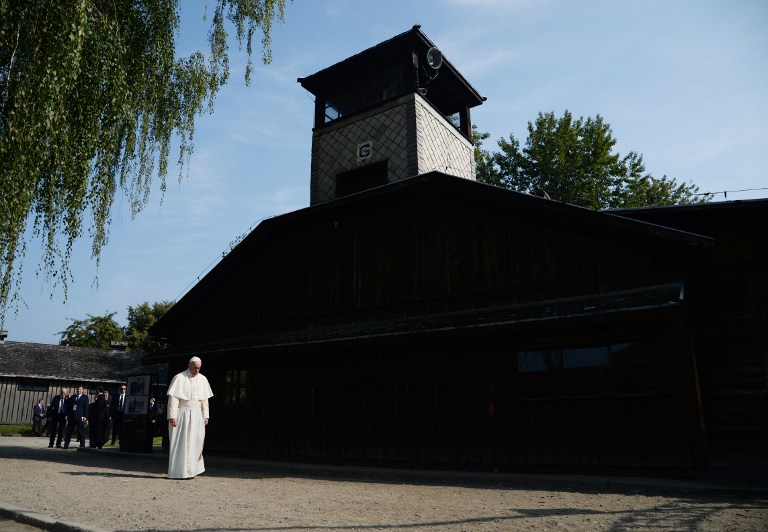
The pope traveled the two miles (three kilometers) to Birkenau, the main extermination site, and was driven alongside train tracks which allowed prisoners to be transported directly to the gas chambers and crematoria.
Francis prayed near the ruins of a crematorium blown up by the Nazis as they evacuated the camp, as Poland’s Chief Rabbi Michael Schudrich sang a Jewish prayer for the dead in Hebrew.
The pontiff clutched his crucifix to his chest as he walked slowly along a row of memorial plaques, written in the 23 languages spoken by the prisoners.
Executed in childbirth
Some 25 Christian Poles who risked their lives during the war to help hide and protect Jews — a group recognized by Israel’s Yad Vashem Holocaust museum as “Righteous Among the Nations” — also met Francis.
The group included Maria Augustyn, whose family hid a Jewish couple behind a wardrobe for years, and Anna Bando, who helped rescue an orphan from the Warsaw ghetto and gave several Jews forged “Aryan” papers.
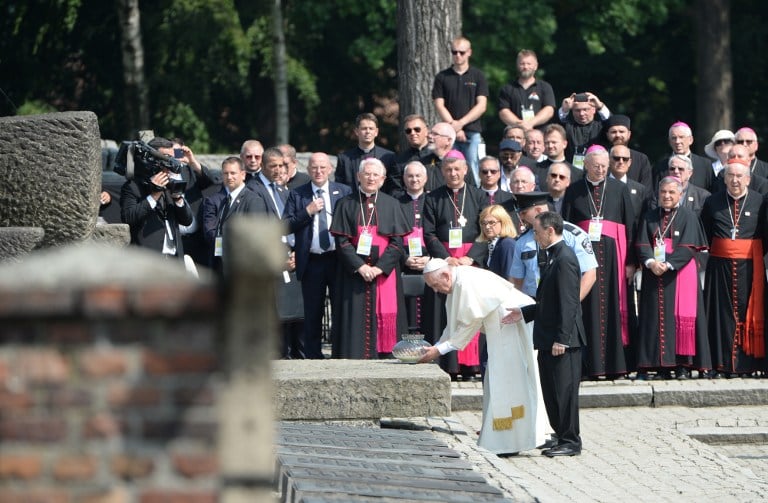
Stanislaw Ruszala, Catholic parish priest of the town of Markowa where a family was wiped out for sheltering Jews, read a Polish translation of the same Hebrew prayer read by the rabbi.
Jozef and Wiktoria Ulma and their seven children were butchered in Markowa. Wiktoria, who was seven months pregnant at the time, had started giving birth before she was executed, according to the Vatican.
More than 100,000 non-Jewish Poles, Roma, Soviet prisoners of war, homosexuals and anti-Nazi partisans also died at the Auschwitz-Birkenau camp in occupied Poland. The Soviet Red Army liberated it in 1945.
Two of the pope’s predecessors also visited the camp: John Paul II — a former archbishop of Krakow — in 1979 and Benedict XVI in 2006.


The Times of Israel Community.