

Tillerson shuttling back to Qatar with Arab rift unsettled
Gulf states say counterterrorism deal signed between Qataris and US Tuesday does not go far enough
 Add ToI as a Preferred Source on Google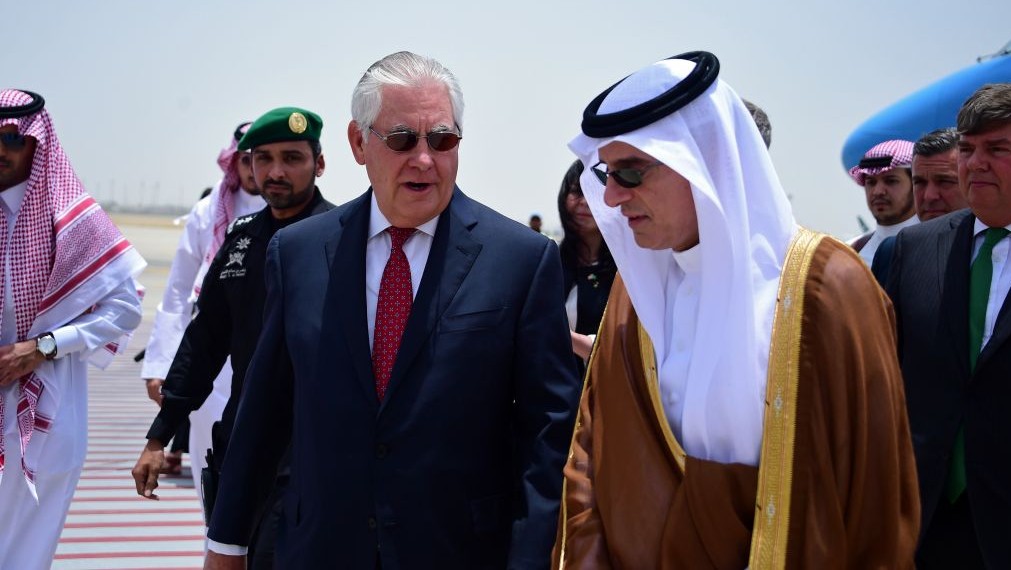
DUBAI, United Arab Emirates (AP) — The US’s top diplomat was expected to travel back to Qatar on Thursday for more talks with the country’s 37-year-old emir, a day after wrapping up discussions with the king of Saudi Arabia and other officials from Arab countries lined up against Qatar.
US Secretary of State Rex Tillerson’s travels have so far not led to any signs of a breakthrough in an increasingly entrenched dispute that has divided some of America’s most important Mideast allies.
Tillerson’s trip from Kuwait to the western Saudi city of Jeddah followed discussions on Tuesday with Qatari emir Sheikh Tamim bin Hamad Al Thani that ended with the signing of a counterterrorism pact.
Saudi Arabia, the United Arab Emirates, Egypt and Bahrain severed relations with Qatar and cut air, sea and land routes with it over a month ago, accusing Doha of supporting extremist groups. Qatar denies the allegations.
The quartet has given no indication it would be willing to back off from its hard-nosed stance. Just hours before Tillerson’s arrival in Jeddah, the four Arab states said the counterterrorism deal that Qatar signed with him on Tuesday was “not enough” to ease their concerns.
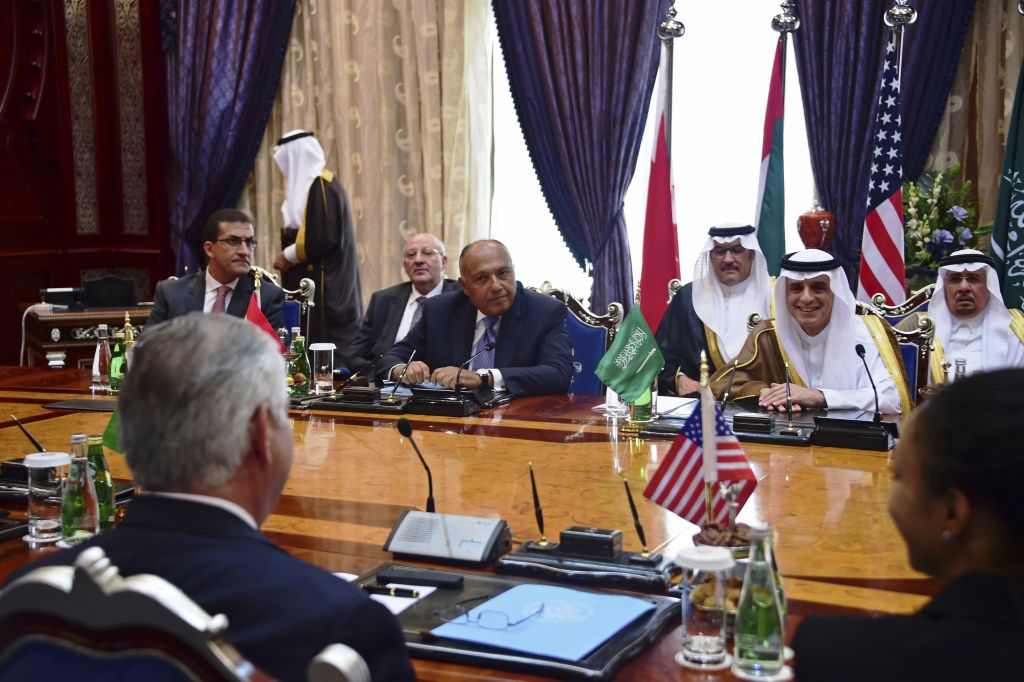
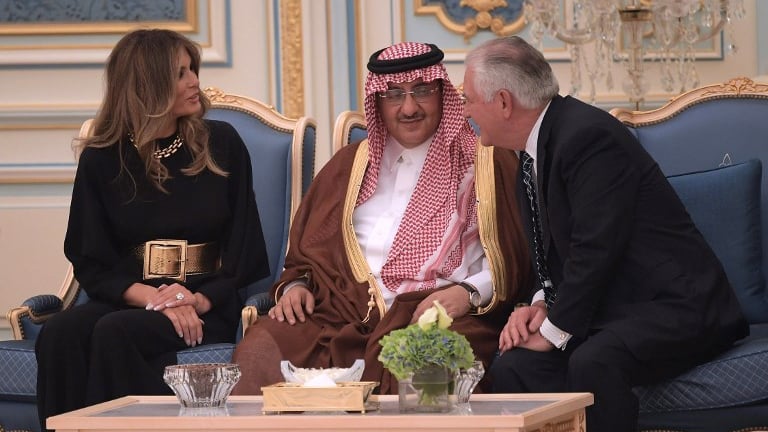
Tillerson’s visit to Saudi Arabia included talks with King Salman and his powerful son Mohammed bin Salman, who was recently elevated to the role of crown prince, placing him next in line to the throne. He also met with the foreign ministers of the four countries in the anti-Qatar bloc.
Officials gave little indication of what was discussed, but Tillerson was likely to press the bloc to ease up on some of its demands after he secured the deal for Qatar to intensify its fight against terrorism and address shortfalls in policing terrorism funding.
The four anti-Qatar countries last month issued a tough 13-point list of demands that included shutting down Qatar’s flagship Al-Jazeera network and other news outlets, cutting ties with Islamist groups such as the Muslim Brotherhood, limiting Qatar’s ties with Iran and expelling Turkish troops stationed in the tiny Gulf country.
Qatar has rejected the demands, saying that agreeing to them wholesale would undermine its sovereignty.
The head of Qatar’s government communication office, Sheikh Saif bin Ahmed Al Thani, has accused the quartet of organizing “a smear campaign in the international media to damage Qatar’s reputation” and said they are “not interested in engaging in honest negotiations to resolve our differences.”
The anti-Qatar bloc took partial credit for the US counterterrorism deal Qatar signed Tuesday, saying it was the result of “repeated pressures and demands” by the four countries and others, but that it failed to go far enough.
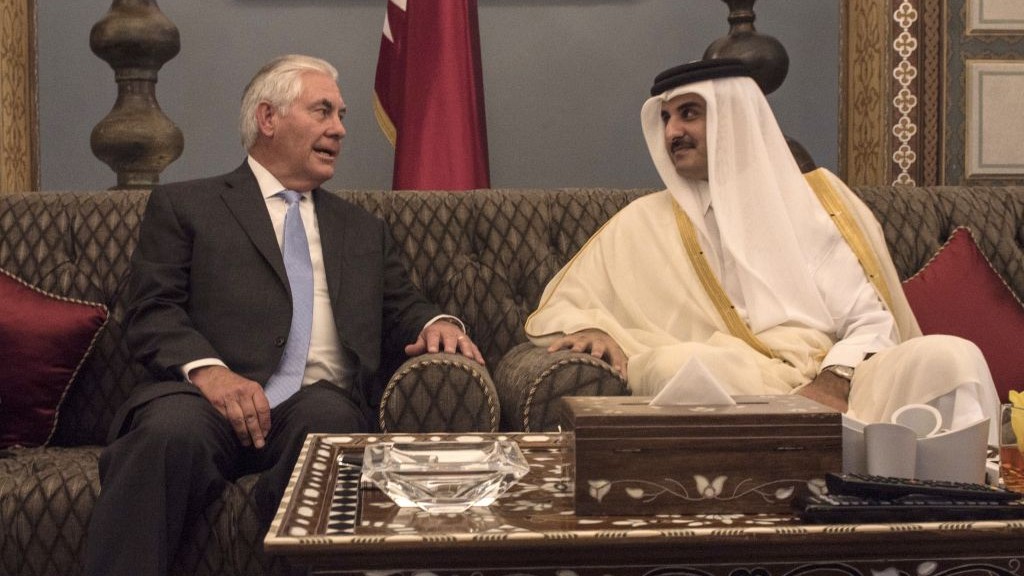
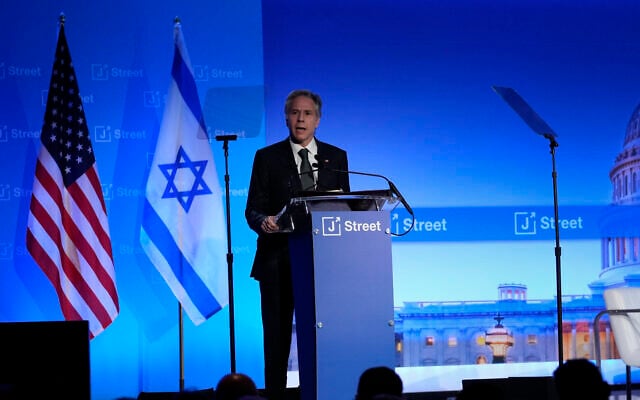
(Alexander W. Riedel/US State Department via AP)
While welcoming US-led efforts to dry up terrorist funding, the four maintained a hard line that Qatar must meet their list of what they said were “fair and legitimate demands.”
“The quartet affirms that the measures they have taken were motivated by the continuous and diversified activities of the Qatari authorities in supporting, funding and harboring terrorism and terrorists, as well as promoting hateful and extremist rhetoric and interfering in the internal affairs of states,” they said in a joint statement.
The deal struck between Washington and Doha falls far short of the sweeping demands made by the Arab quartet for Qatar to change its policy of supporting opposition Islamists in the region.
The group has mixed its accusations that Qatar supports extremists with demands that it end support for political dissidents that they have branded as terrorists. That broad definition of terrorism is seen as an overreach by many Western allies, which do not view groups like the Muslim Brotherhood as terrorist organizations.
Saudi commentators were quick to criticize the result of Tillerson’s visit to Qatar.
“What makes Wednesday’s meeting in Jeddah difficult is that Tillerson has, since the beginning of the crisis, appeared to be taking the Qatari side,” Abdulrahman al-Rashed, the general manager of the Saudi-owned Al Arabiya satellite news channel, wrote in a column published in the pan-Arab Asharq al-Awsat newspaper.
“He has to realize that he will be further complicating an already complex matter and prolonging the crisis,” he added, emphasizing that the goal of the four Arab countries is to change Qatar’s “agenda.”
Faisal Abbas, editor-in-chief of the Saudi daily Arab News, framed the security agreement signed between the US and Qatar as a win for the quartet, but added that “it is not time to party just yet.”
The squabble among five of its Mideast allies has put the United States in an uncomfortable position and risks complicating the Pentagon’s operations in the region.
Qatar hosts al-Udeid Air Base, the largest US military installation in the Middle East and hub for US-led operations against the Islamic State group in Iraq and Syria. Bahrain is home to the US Navy’s 5th Fleet, while American surveillance planes and other aircraft fly from the UAE.



The Times of Israel Community.