

Ultra-Orthodox factions seek assurances before backing Netanyahu
Officials in UTJ say they want increased yeshiva funding, relaxing of draft law in exchange for supporting PM in next election
 Add ToI as a Preferred Source on Google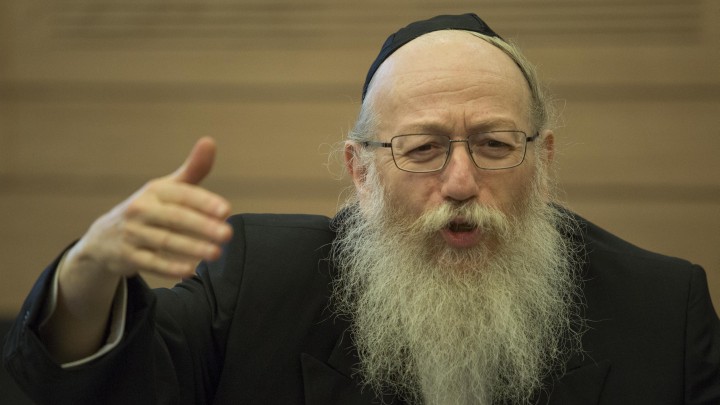
In their newfound position of power as the coalition teeters on the brink, the opposition’s ultra-Orthodox parties made clear Friday that if Prime Minister Benjamin Netanyahu wanted their support under new elections, he would need to work for it.
Knesset member Yaakov Litzman, a leader of the United Torah Judaism party, said Friday the Knesset’s Haredi parties had not yet decided who they would recommend to lead the next government following elections – Netanyahu or another candidate such as Labor chief Isaac Herzog.
On Wednesday Channel 2 reported that Netanyahu may dissolve the government in the coming weeks if he can garner guarantees from the two ultra-Orthodox parties to support him in a new coalition after elections. The prime minister, currently weathering a coalition crisis over a controversial nationality bill, asked the opposition Shas and United Torah Judaism factions to commit to lending support for him to form a new government after elections, the report said.
Litzman noted that his Ashkenazi party was coordinating its positions with Shas, the Sephardi party, and hinted that the two factions would demand certain guarantees from the premier in order to seal their vote.
“We’ve been injured by Netanyahu, and to win our support he’ll need to repent,” Litzman told Israel Radio.
Source in UTJ outlined what that penance may entail on Friday, with one official telling the Ynet news site that the parties would require written and signed assurances from Netanyahu to increase funding for yeshivas and children’s benefits, place tighter restrictions on the process of conversion to Judaism and remove criminal sanctions against yeshiva students who refuse enlistment, as dictated by the Haredi enlistment law approved earlier this year.
“Those are our principal demands,” the official said, “and this time we will insist on a satisfactory written agreement, not promises and smiles.”
After elections, the leaders of all parties that make it into the Knesset submit their recommendations for a party to lead the government. The leader of the party with the most recommendations is then invited by the president to attempt to form a coalition with 61 or more Knesset members.
Justice Minister Tzipi Livni reiterated Thursday that she was willing to go to early elections over the controversial “Jewish state” bill.
The bill, which would enshrine Israel’s character as a Jewish state in Israel’s de facto constitution, has come under harsh criticism from Livni and the leader of the Yesh Atid party, Finance Minister Yair Lapid, as well as opposition lawmakers.
Netanyahu has vowed to push the measure through, saying that it would guarantee equal rights for the country’s citizens and put Israel’s democratic and Jewish characters on equal footing.
Critics say the law is undemocratic to Israel’s Arab and other minority populations. A stormy cabinet meeting on the bill at the beginning of the week saw Livni accuse Netanyahu of backing the legislation in order to try and pry apart the coalition so that he can call elections.
Speaking to Army Radio, Livni said that she would stand on her principles on the issue of the “Jewish state” bill, and that “we” — meaning her party and Yesh Atid — “won’t let [the Elkin bill] pass.”
The bill is slated to be voted upon by the Knesset in a first reading on Wednesday of next week. Netanyahu indicated on Wednesday, however, that he would advance his own version of the bill, with different language from a more strongly worded one submitted by Likud MK Ze’ev Elkin.
Livni called Elkin’s draft of the legislation “anti-Jewish, anti-democratic and anti-Zionist,” and said it relegates the Declaration of Independence, one of Israel’s primary constitutional documents, “to the garbage can.”




The Times of Israel Community.