

A maligned marker honoring a French Nazi sympathizer is off NYC’s streets — for now
One of two plaques honoring leaders of Vichy France was removed due to New York’s cold weather, but there are plans to put it back despite years of protest
 Add ToI as a Preferred Source on Google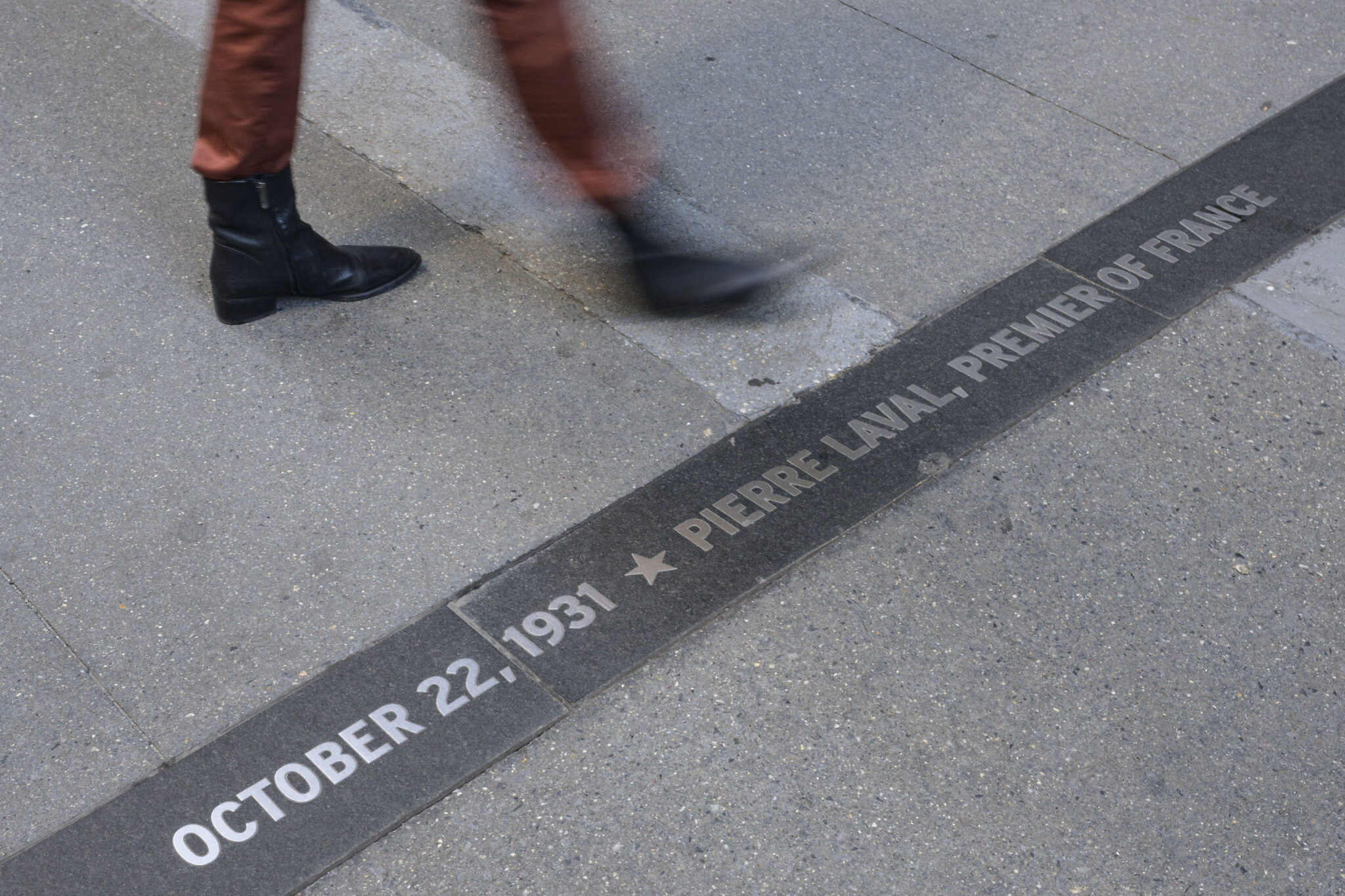
New York Jewish Week/JTA — Menachem Rosensaft was pleasantly surprised this week to learn that a historical marker honoring a Nazi collaborator that has been a bane of his existence for years had been removed months ago.
Then panic set in: After removing it, was New York City really planning to reinstall the plaque honoring Pierre Laval, the prime minister of Vichy France, the World War II-era Nazi puppet state, who was executed for treason?
“It’s one thing… making a decision to remove something,” Rosensaft told the Jewish Telegraphic Agency. “It’s quite another to make a conscious decision [to do] the work in order to replace it and put it back.”
For years, Rosensaft — general counsel emeritus of the World Jewish Congress and the son of Holocaust survivors — has lobbied against the plaques honoring Laval and Philippe Pétain, a hero of the French army during World War I who later, as Vichy’s president, became a chief collaborator with the Nazi regime. They are two of 206 names embedded on a half-mile stretch of Lower Broadway known as the “Canyon of Heroes.”
Rosensaft published an essay several years ago urging the removal of the plaques. He wrote another last month in conjunction with International Holocaust Remembrance Day.
What he didn’t know at the time was that Laval’s name had been removed back in November after city officials deemed it a tripping hazard. The city’s cold snap and winter weather have wreaked havoc on the pavement, causing more than a dozen markers in total to be removed.
They could return. The Alliance for Downtown New York, the nonprofit that installed the plaques, plans to eventually replace them, the New York Times reported. The Mayoral Advisory Commission on City Art, Monuments, and Markers has previously fended off calls to remove the markers.
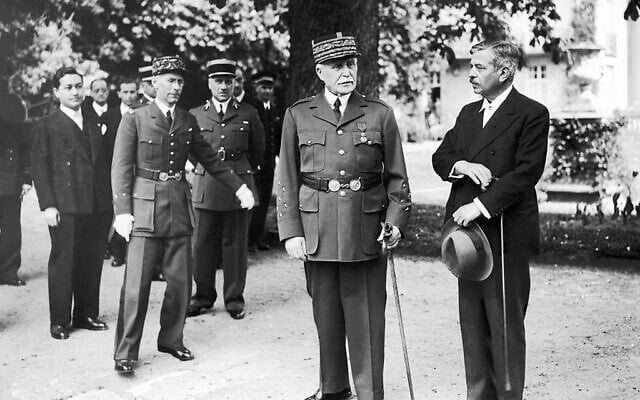
In 2017, following the white supremacist Unite the Right rally in Charlottesville, Virginia, then-New York City Mayor Bill de Blasio tweeted that his administration would remove all hate symbols from city property — starting with the Philippe Pétain plaque downtown. (That plaque is still in place.)
But in 2018, the monuments commission recommended that the Pétain plaque remain where it is — though it advocated for “re-contextualizing them in place to continue the public dialogue.” The commission also recommended the removal of all official references to the name “Canyon of Heroes,” so as not to mischaracterize the markers as a “celebration” of any historical figures.
In 2023, following a national American reckoning over Confederate statues that saw many of them torn down, then-Manhattan Borough President Mark Levine, who is Jewish, attended a Holocaust Remembrance Day event where he said it was “unacceptable” that Laval’s and Pétain’s names remained on the markers. Levine also sent a letter to the city’s Public Design Commission calling on the city to remove the plaques.
JTA has reached out to Mark Levine’s office — he is now the city’s comptroller — and City Hall for comment on the current situation.
The Alliance for Downtown New York contends that the removal of any of the plaques is a form of erasing history.
“Trying to render history free of mistakes, free of contradictions and horror, risks sanitizing our past and perhaps makes us more likely to repeat those mistakes,” Andrew Breslau, a representative from the Alliance for Downtown New York, told The New York Times, which first reported that Laval’s name had at least temporarily disappeared.
Before they became war criminals responsible for the deaths of more than 75,000 Jews, Laval and Pétain were honored in ticker-tape parades in 1931. Laval was even named Time Magazine’s “Man of the Year” that same year for his management of the Great Depression in France.
Rosensaft concedes that an additional plaque with the full context of who these men were would be “better than nothing.” But he said he would not give up advocating for their full removal.
“Controversial is one thing,” Rosensaft said. “And being convicted war criminals, both sentenced to death — one executed, the other had his sentence commuted — who were responsible for sending over 70,000 Jews, deporting them from France and sending them to their death, is in a separate category.”
Times of Israel staff contributed to this report.







The Times of Israel Community.