

After Duma firebombing, a child’s tragedy becomes his grandfather’s life
‘I won’t let him suffer alone,’ says grandfather of Ahmed Dawabsha, 5-year-old badly burned in attack that killed his father and baby brother
 Add ToI as a Preferred Source on Google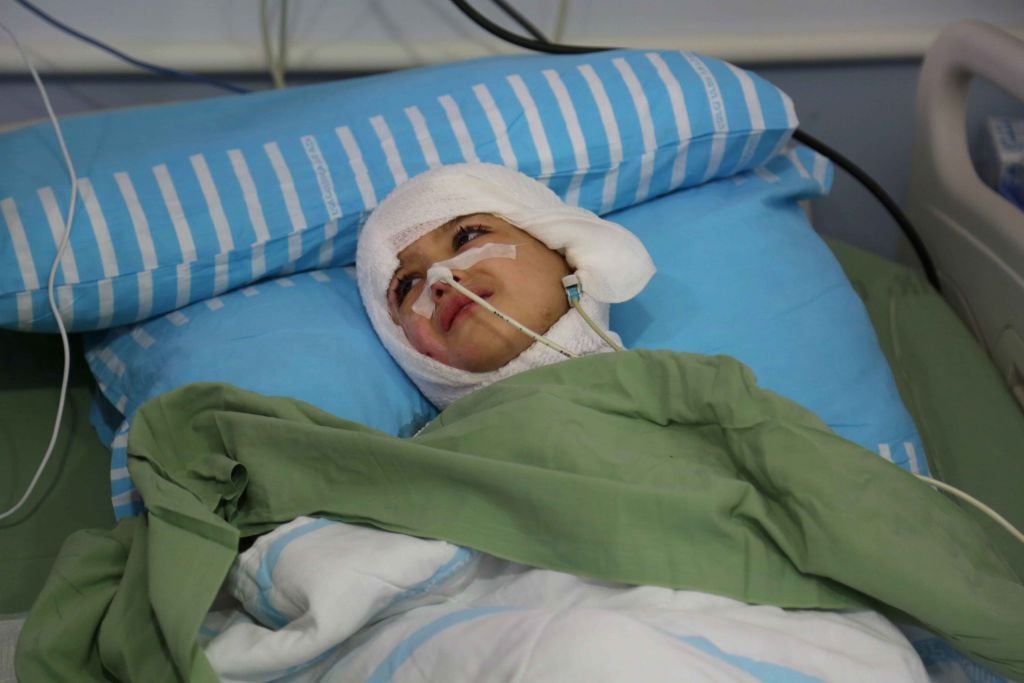
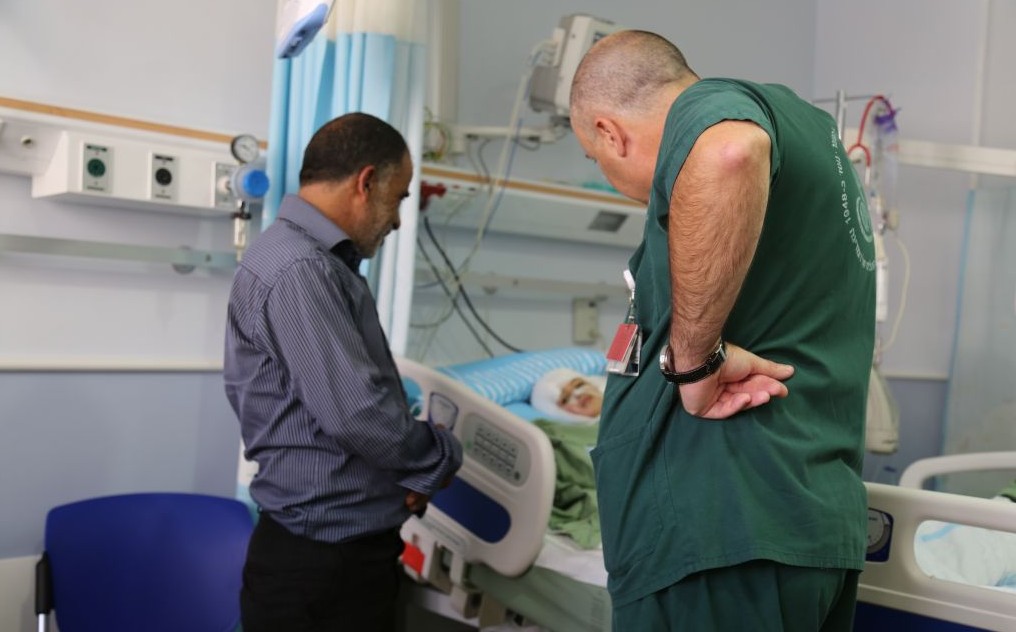
Sixteen years after Hussein Dawabsha was employed as a construction worker at the Sheba Medical Center in Tel HaShomer, he returned for the first time under tragic circumstances he never imagined possible.
For the past three weeks, Dawabsha has been spending every day in Israel’s largest hospital with his five-year-old grandson, Ahmed, whose entire body is wrapped in bandages with 90 percent burns.
“I have no choice,” Dawabsha told The Times of Israel, standing next to the boy sleeping on a gurney. “I have to be here for Ahmed. He lost his father. He lost his brother. His mother is unconscious. I won’t let him suffer alone.”
Ahmed’s hospital room has people coming and going – mostly family, but occasionally activists volunteering to help the Dawabshas get through the reality of living in a nightmare.
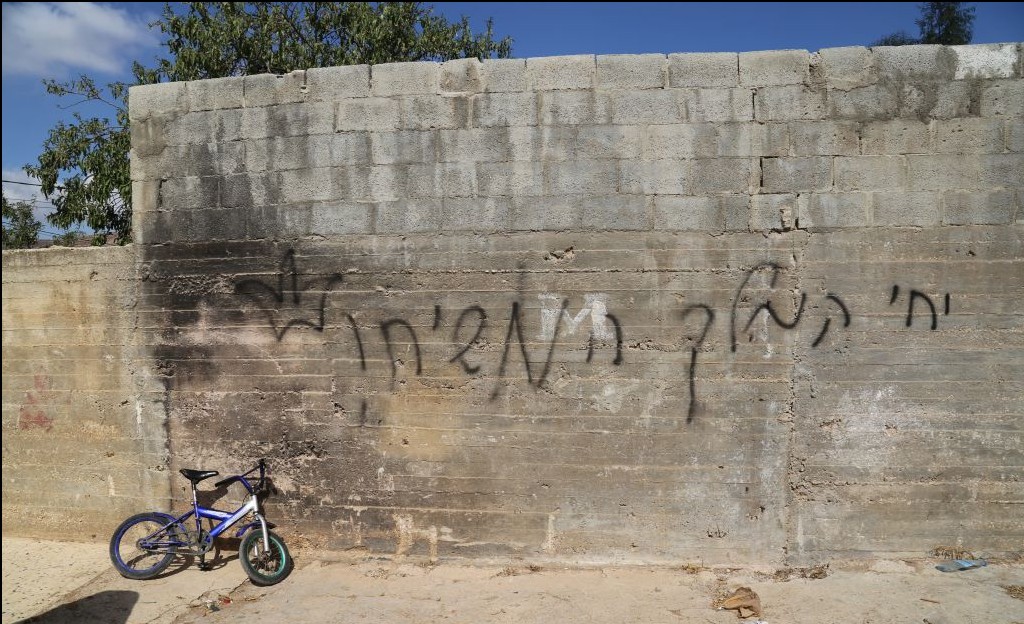
On July 31, Ahmed’s home in the West Bank village of Duma, south of Nablus, was firebombed in an attack suspected to have been carried out by Jewish extremists; the assailants spray-painted “revenge” and “long live the Messiah king” on the exterior walls of the house.
Ahmed’s younger brother, Ali, who was 18 months old, died in the fire; his father, Saad, died a week later, succumbing to his wounds; and his mother, Riham, remains in grave condition in a separate unit at Sheba.
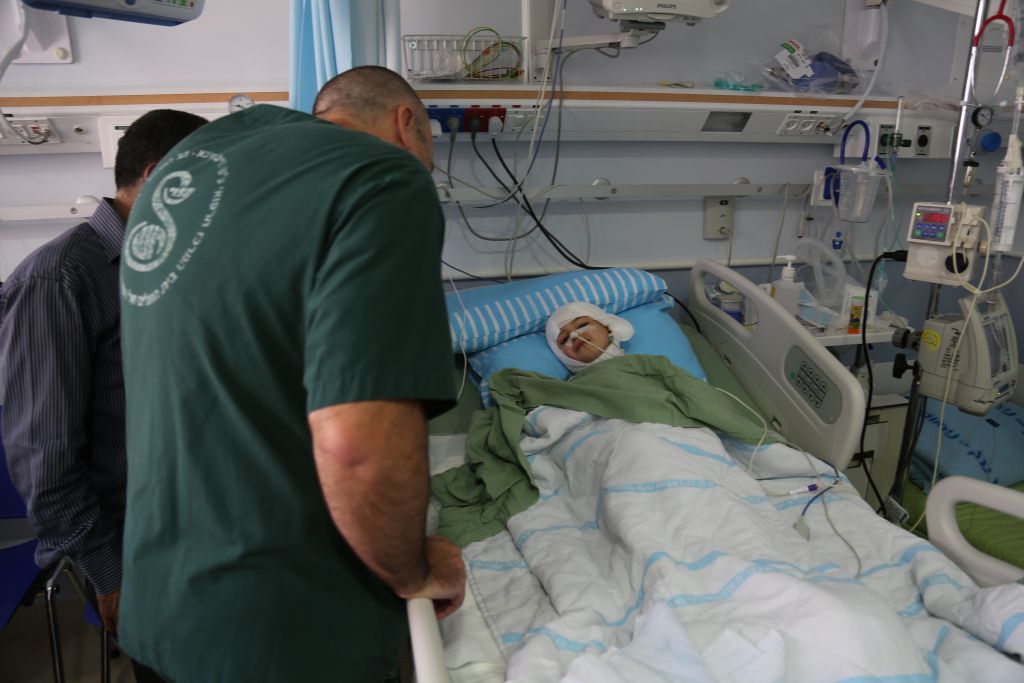
“Both my grandson and my daughter are here,” Hussein said. “Both are fighting to live, and I pray every day that God will help them make it out of here alive.”
Since their admission to Sheba, Hussein, 51, travels back and forth between two hospital rooms, but spends most of his time with Ahmed. “My daughter cannot talk, she cannot communicate, but little Ahmed is so scared and in so much pain, he needs me more,” he said.
Ahmed does not yet know what happened to the rest of his family. All he knows is that there was a fire in his home, and that he, his parents and his brother were burned. But no one has yet explained to him the nature of how the fire came about, nor the tragic fate of his father and brother.
“He has asked, ‘Where is my mother? Where is my father?” Satera Dawabsha, Ahmed’s grandmother, told The Times of Israel. “And we just ignore the question, saying, ‘They are not here.’”
That response was advised by the child’s doctors. They told the family not to tell Ahmed anything that might scare him further, hoping to spare the child more emotional pain in his already-fragile state.
“He has obviously experienced great trauma, emotionally and physically,” Mohammed Dawabsha, Ahmed’s uncle, said. “But we don’t want to upset him any more while he is trying to recover.”
“He can’t move. All he can do is lie in one place,” he added. “Other than sleeping, which he does often, he watches cartoons on the TV and talks with us. He is powerless and, in his condition, the doctors said it is better for him not to also know that he lost a parent and a brother, and that he may also lose his mother, the most precious relationship for a child.”
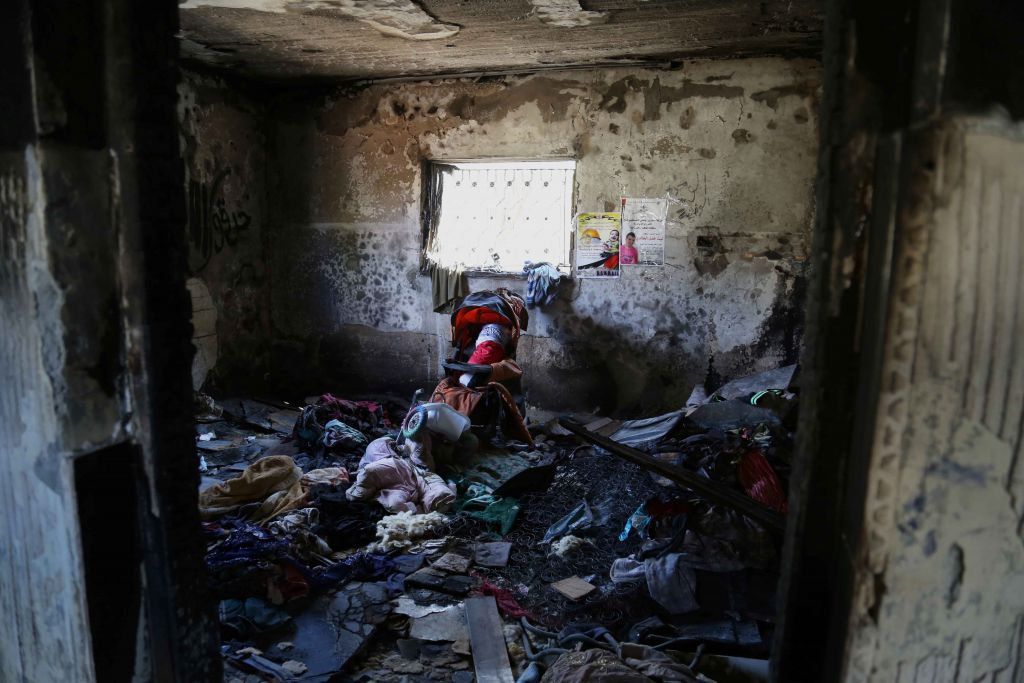
Since the attack, Israeli security forces have issued three administrative detention orders for men suspected to be involved in Jewish terror networks, but have yet to apprehend the perpetrators. That is a source of much frustration for the Dawabsha family. “How much longer will these murderers roam free while my Ahmed and Riham lie here in agony?” Hussein said.
While Dawabshe tries to comfort his grandson every day, he is also concerned over what he will tell his daughter if she wakes up. “I don’t know how I will explain this to her,” he said. “I fear seeing the look on her face when she realizes what she’s lost and that she could never go back to living a normal life.”
Meanwhile, the human consequences of the attack have also changed Hussein’s life. A construction worker in the settlement of Ofra, just north of Ramallah, he currently devotes his entire day to his grandson, which, he said, will continue as long as necessary.
“The three and half weeks I’ve spent here with him, it’s nothing,” he said. “I’m willing to be here another 20 years to be with Ahmed. He is my life now.”







The Times of Israel Community.