

Anti-government protests resume in Iraq after earlier bloody demonstrations
Rallies demanding overhaul of political system, end to corruption turned deadly in early October when security forces killed at least 157
 Add ToI as a Preferred Source on Google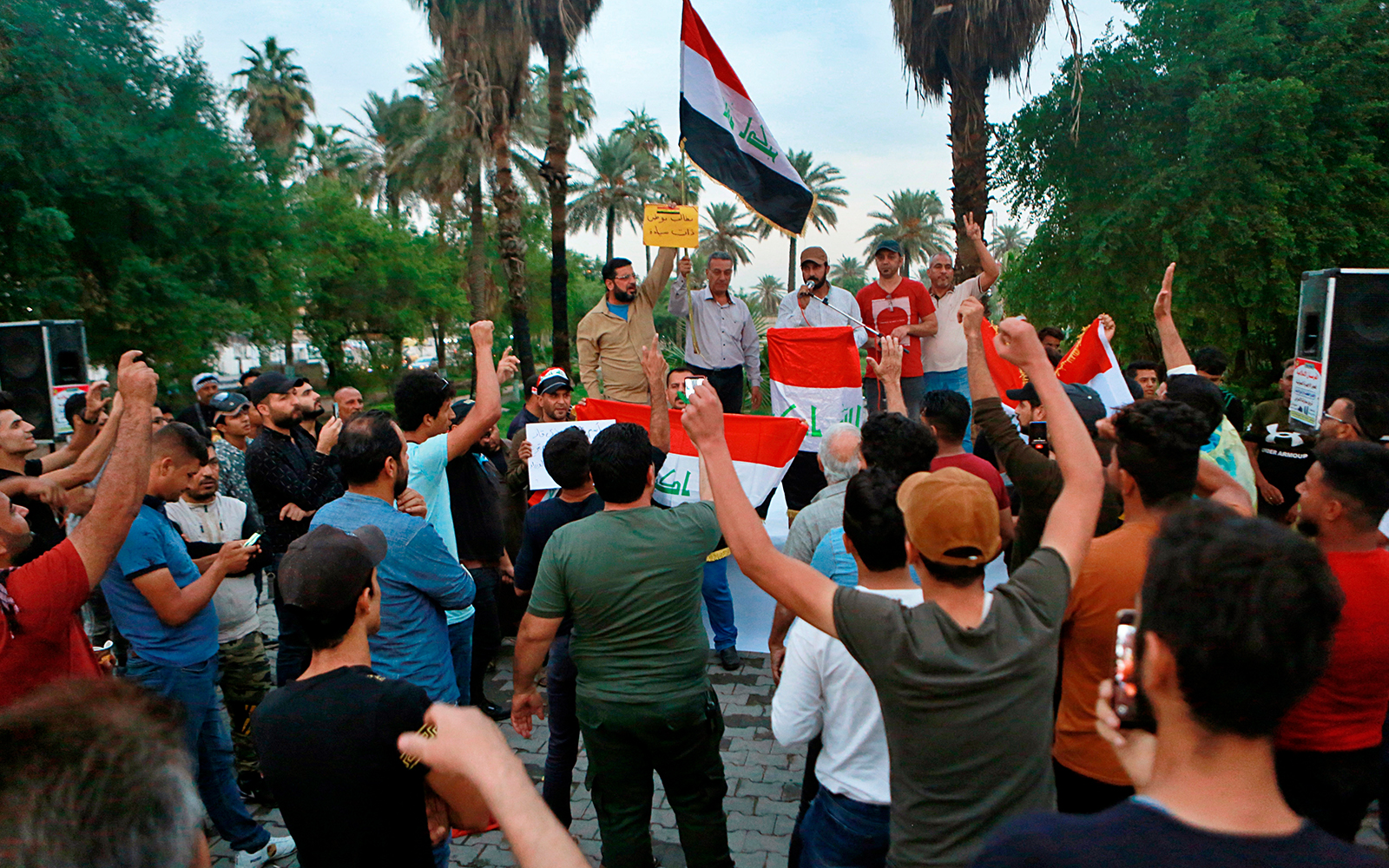
Anti-government rallies renewed across Iraq late Thursday, the second phase of protests that turned deadly earlier this month and which could balloon after the endorsement of populist cleric Moqtada al-Sadr.
Iraq was rocked by demonstrations in early October, first denouncing corruption and unemployment before evolving into calls for an overhaul of the political system.
They quietened down after a crushing response by security forces and were set to resume Friday, which marks a year since embattled Prime Minister Adel Abdel Mahdi came to power.
But hundreds descended into the streets of the Iraqi capital earlier than anticipated.
They gathered in Baghdad’s iconic Tahrir (Liberation) Square on Thursday night, carrying Iraq’s tricolor flag and calling for the country’s entrenched political class to be “uprooted.”
And in the southern city of Nasiriyah, demonstrators said they would remain in the streets “until the regime falls.”
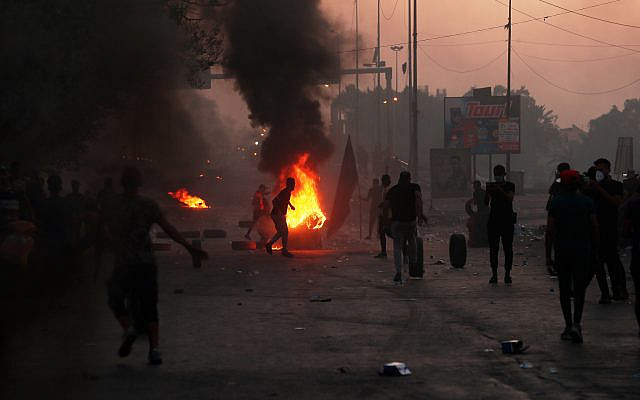
Their numbers are expected to swell on Friday, the deadline set by Iraq’s highest Shiite authority Grand Ayatollah Ali al-Sistani for the government to meet the protesters’ demands.
Indeed, Sistani’s weekly sermon at the Muslim noontime prayer on Friday will be the first signal of how the rest of the highly-anticipated day could develop.
But the real test will be the afternoon, when protests typically pick up and when many are expecting to see supporters of Sadr — an influential ex-militiaman who controls the largest parliamentary bloc — hit the streets.
Short-lived calm
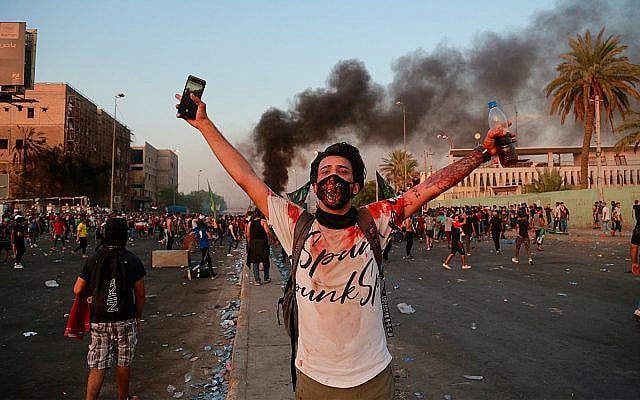
The mass rallies that erupted on October 1 were unprecedented in recent Iraqi history both because of their spontaneity and independence, and because of the brutal violence with which they were met.
At least 157 people were killed, according to a government probe published on Tuesday, which acknowledged that “excessive force” was used.
A vast majority of them were protesters in Baghdad, with 70 percent shot in the head or chest.
In response, Abdel Mahdi issued a laundry list of measures meant to ease public anger, including hiring drives and higher pensions for the families of protesters who died.
One in five people lives under the poverty line in Iraq and youth unemployment sits around 25%, according to the World Bank.
The rates are staggering for OPEC’s second-biggest oil producer, which ranks the 12th most corrupt state in the world according to Transparency International.

The country has been ravaged by decades of conflict that finally calmed in 2017 with a declared victory over the Islamic State group.
Thus began a period of relative calm, with security forces lifting checkpoints and concrete blast walls and traffic choking city streets at hours once thought too dangerous.
Restrictions even softened around the so-called “Green Zone,” where most government buildings and foreign embassies are based.
‘Lessons learned’
But restrictions were reinstated as demonstrations picked up in October in Tahrir, which lies just across the Tigris River.
Authorities also imposed an internet blackout, which has been mostly lifted although social media remains blocked.
Activists have circumvented these restrictions to call for Friday’s demonstrations.
The protest movement has brought many of Iraq’s deepest divisions to the surface, gripping the country’s Shiite-majority areas while the mostly-Kurdish north and Sunni west have remained quiet.
The powerful Hashed al-Shaabi paramilitary force, whose political branch is the second-largest parliamentary bloc, has also announced its support to the government.
It claimed the demonstrations were a “conspiracy” by the US and Israel and said it was “ready” to back authorities.
But others have extended a hand to the protesters, none more clearly than Sadr.
He called on the government to resign in early October but this week much more emphatically backed the protests, giving his supporters the green light to join them.
Sadr has instructed members of his own paramilitary force to be on “high alert,” and they could be seen in parts of Baghdad in a clear show of force.
The United Nations has urged the government to “draw lessons learned” to keep protests peaceful.
Thursday’s early demonstrations appeared to be peaceful, with no reported incidents of violence.
Interior Minister Yassin al-Yasseri was in Tahrir Square to reassure protesters that the security forces would “protect” them, his office said in a statement.



The Times of Israel Community.